By Monia Ayadi

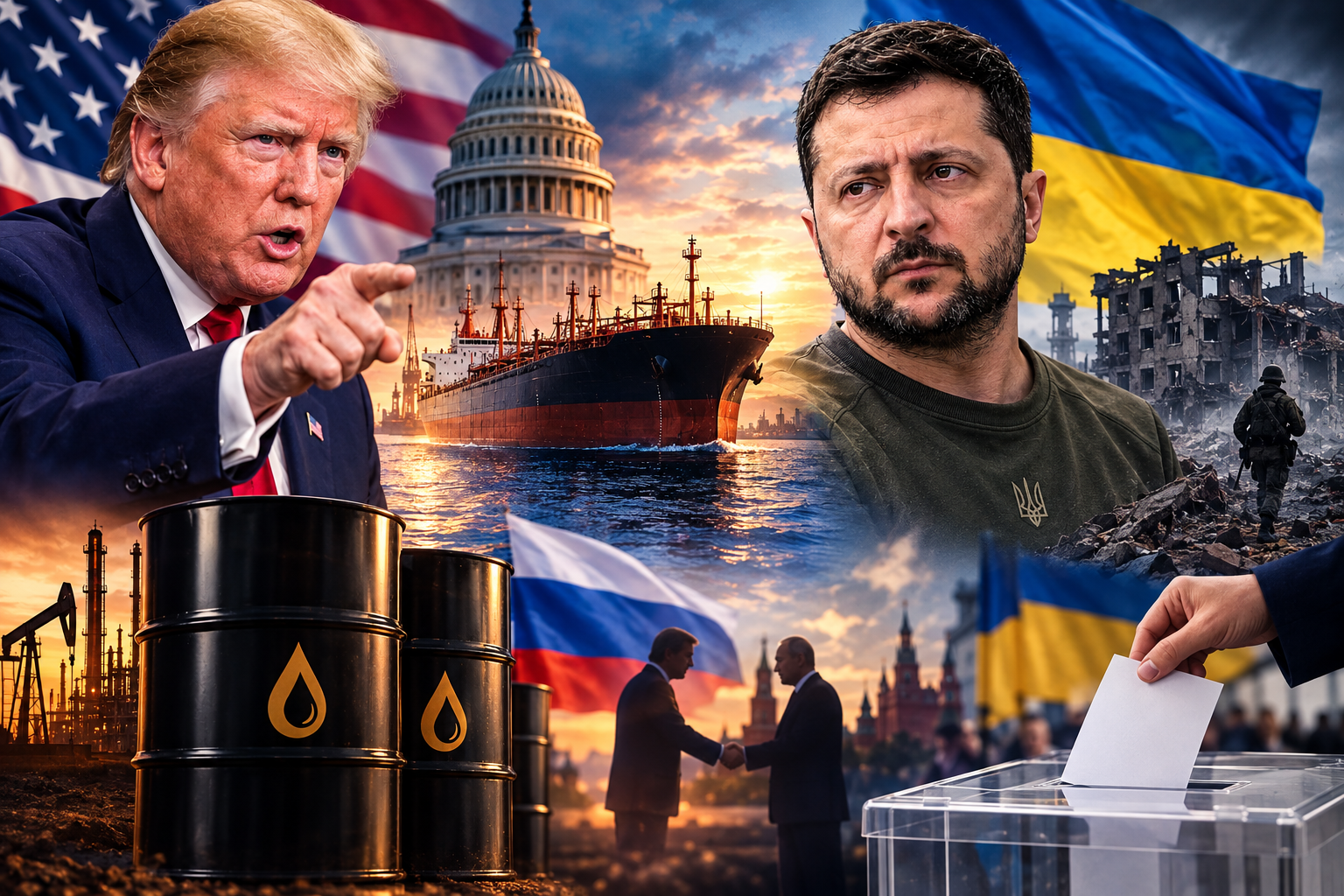
Amid American calls for a change in Ukraine’s leadership and a deal to market hundreds of thousands of tonnes of Russian diesel, the confrontation between Donald Trump and Volodymyr Zelensky is intensifying, as negotiations to end the war become increasingly intertwined with the energy crisis and American electoral calculations.
Disagreements between US President Donald Trump and his Ukrainian counterpart, Volodymyr Zelensky, are no longer limited to the terms for ending the war with Russia. They have taken a sharper turn following Washington’s announcement of a deal allowing large quantities of Russian diesel to be marketed, followed by Trump’s statement calling on Ukraine to elect a new president and accusing Zelensky of failing to seize previous opportunities to end the war.
These developments place Ukraine’s leadership before a complex political and diplomatic test, particularly as the American escalation comes at a time when Kyiv needs continued Western support to confront Russian military operations, while the White House seeks to contain rising fuel prices and revive negotiations with Moscow.
However, the central question is not merely whether Zelensky can remain in power, but also whether Washington is prepared to reorder its priorities between putting pressure on Kyiv, opening economic channels with Moscow, and reaching a settlement to end the war that began in February 2022.
The Russian Diesel Deal: The Breaking Point Between Trump and Zelensky
On October 9, 2026, Trump announced a deal concerning the availability of large quantities of Russian diesel on the markets, a move he said would help ease pressure on the fuel market. He explained that Russia would supply more than 300,000 tonnes of diesel to the American and global markets, with an additional 500,000 tonnes to follow in November.
The announcement came as pressure linked to energy prices was mounting in the United States, ahead of the congressional midterm elections scheduled for November, which represent a significant political test for the Trump administration and the Republican Party.
According to a report published by Reuters on October 12, US envoys Steve Witkoff and Jared Kushner informed Ukrainian officials during a meeting in Miami that the Russian diesel deal was part of American efforts to bring Moscow back to the negotiating table, following the failure of previous attempts to launch sustained talks aimed at ending the war.
Citing people familiar with the matter, Reuters reported that the envoys indicated that Russian President Vladimir Putin was not prepared at the time to negotiate an end to the war, and that the oil deal could help restart trilateral talks.
This development reveals an American approach based on using economic incentives in dealing with Moscow rather than relying exclusively on sanctions and pressure. However, this approach raises questions about Washington’s ability to persuade Russia to make political or military concessions in exchange for easing certain economic restrictions.
For Kyiv, allowing more Russian petroleum products to be marketed goes beyond the issue of fuel prices, since energy revenues are among the economic resources on which Moscow relies as the war continues.
Zelensky expressed his opposition to the American move, arguing that it offered Moscow an additional economic opportunity at a time when Ukraine needs clear guarantees that any understandings between Washington and the Kremlin will not come at the expense of its security and interests.
In this context, international media reported that Zelensky described the move as a “gift to Putin,” warning that allowing Russia to market petroleum products would not, in itself, bring peace.
These statements reflect a fundamental disagreement over how to end the war. While the Trump administration is betting on a combination of economic incentives and political pressure, Kyiv fears that easing restrictions on Moscow could strengthen its ability to continue military operations without making corresponding concessions.
Trump Calls for a New Ukrainian President: Has Ukraine’s Leadership Become a Subject of Negotiation?
On October 10, Trump intensified his criticism of Zelensky, saying he believed it was time for Ukraine to get a new president and accusing the Ukrainian leader of repeatedly undermining opportunities to reach an agreement to end the war.
The Washington Post reported Trump as saying that Zelensky could have settled the war many times but had failed to do so, adding that he believed Ukraine’s leadership needed to change.
Trump also criticized Ukrainian attacks targeting Russian oil-refining facilities, arguing that they were contributing to increased pressure on fuel supplies and prices.
This escalation comes amid a broader dispute over the nature of the settlement Washington is seeking to achieve and the pressure that should be exerted on both Kyiv and Moscow.
Trump wants to reach an agreement that ends the war, but he holds Zelensky responsible for failing to accept a settlement that the American president considers possible. Kyiv, meanwhile, insists that any agreement must include guarantees to prevent Russia from launching new attacks against the country after the fighting stops.
Trump’s statements carry additional significance because of their timing, with only a few weeks remaining before the congressional midterm elections. Energy prices and the cost of living have become politically sensitive issues in the United States, placing fuel at the center of the administration’s domestic political calculations.
However, calling for a change in Ukraine’s president does not, in itself, mean that Washington has the ability to bring about a direct change in Kyiv’s political leadership. The question of who holds the presidency remains tied to Ukraine’s constitutional framework, its domestic political process, and the security conditions imposed by the war.
In response to Trump’s statements, Ukrainian Foreign Minister Andrii Sybiha affirmed that Zelensky was leading the country in wartime, stressing that Ukrainians themselves had the right to choose their president.
The issue has therefore shifted from a disagreement over the terms of ending the war to a political confrontation over the legitimacy of Ukraine’s leadership and the limits of American pressure on it.
Ukrainian Elections Between American Pressure and Constitutional Constraints
Calls for new presidential elections in Ukraine face legal and security obstacles that cannot be ignored.
Ukraine has been under martial law since the beginning of Russia’s full-scale invasion in February 2022, and the current legal framework prohibits national elections during this period.
Zelensky had previously stated that he was willing to organize elections, but stressed the need to establish appropriate security and legal conditions.
In an interview with the American television network ABC, published on October 11, he said he was prepared to organize elections if Russia agreed to a 60-day ceasefire, allowing the necessary conditions for the electoral process to be established.
This condition seeks to link the electoral process to a halt in military operations rather than hold elections while bombardments and security restrictions continue.
In previous statements reported by the Ukrainian news agency Ukrinform, Zelensky also referred to the presence of approximately nine million Ukrainians outside the country, questioning how their participation in elections could be guaranteed. He also pointed to the challenges of voting in territories under Russian occupation and ensuring the security of the electoral process.
These challenges go beyond setting an election date. They include ensuring the participation of displaced people and refugees, securing polling stations, protecting candidates and voters, and guaranteeing election monitoring under wartime conditions.
Accordingly, Trump’s call for a change in Ukraine’s leadership does not automatically lead to early elections. Similarly, Zelensky’s willingness to hold elections remains conditional on establishing the necessary circumstances.
The issue continues to depend on developments in the war, the positions of the parties concerned, and the ability of Ukrainian institutions to provide the legal and security guarantees required for the electoral process.
American Electoral Calculations: Has Energy Become Part of Trump’s Strategy Toward Russia?
The Russian diesel deal cannot be separated from the economic and political pressures facing the American administration.
Rising fuel prices directly affect transportation, agriculture, and industrial costs. They also put pressure on American household budgets, making them a factor that could influence voters’ assessments of the administration’s performance.
The US-Russia deal comes ahead of the congressional midterm elections scheduled for November 2026, as Republicans seek to retain their majority amid intense political competition with Democrats.
In this context, Trump presented the agreement as a step toward increasing supplies and easing pressure on the fuel market, while his critics argue that easing restrictions on Russian petroleum products sends a contradictory message about American policy toward Moscow.
This contradiction highlights the difficulty of balancing short-term economic objectives with the strategic considerations associated with the war in Ukraine.
On the one hand, Washington wants to contain rising energy prices. On the other, any increase in Russian revenues could raise concerns about Moscow’s ability to finance the continuation of the war.
The relationship between diesel prices and electoral decisions is not automatic, however. Prices are influenced by several factors, including global demand, refining and transportation costs, geopolitical tensions, and the volume of supplies available on the markets.
Therefore, the agreement with Russia may serve an economic objective pursued by the Trump administration, but it does not necessarily guarantee electoral gains. Nor does it, by itself, prove that American policy toward Ukraine is now being dictated by electoral considerations.
The significance of this development lies in the growing overlap between energy issues and political negotiations, with petroleum supplies becoming one of the tools that may be used in attempts to influence the course of the war.
Moscow Benefits from the Dispute: But Does This Mean a Settlement Is Near?
The American position has prompted mixed reactions. Russian economic envoy Kirill Dmitriev welcomed Trump’s statements calling for a change in Ukraine’s leadership, arguing that Ukraine needed leadership focused on peace.
In contrast, European and Ukrainian parties have warned that easing restrictions on Russian petroleum products could allow Moscow to increase its revenues while military attacks continue.
These positions reflect differing assessments of the most appropriate ways to end the war. Some believe that opening the door to economic arrangements could encourage Moscow to return to negotiations, while others fear that Russia may secure economic benefits without making corresponding concessions.
In this context, the outcome of the deal will depend on whether Washington can turn it into an entry point for a broader political understanding or whether it remains a limited economic measure that does not alter the balance of the conflict.
It is also important to distinguish between the announcement of the agreement and its actual implementation, as well as between the announced quantities and the supplies that genuinely reach the markets. The legal and regulatory conditions governing transactions involving Russian petroleum products must also be verified.
The announced figures, involving hundreds of thousands of tonnes of diesel, reflect the supply volumes cited by Trump, but they are not sufficient on their own to determine the agreement’s ultimate impact on the Russian economy or American fuel prices.
Conclusion: An Open Political Crisis and an Uncertain Electoral Outcome
The escalation between Trump and Zelensky has placed US-Ukraine relations at a sensitive stage, in which peace negotiations are becoming intertwined with energy interests and electoral calculations in the United States.
The American president is pressing for a rapid settlement to the war, criticizing attacks on Russian oil facilities, and calling for a change in Ukraine’s leadership. Zelensky, meanwhile, insists on Ukrainians’ right to choose their president and links the holding of elections to a ceasefire and the provision of appropriate security and legal conditions.
At the same time, the Russian diesel deal offers Moscow a potential economic opportunity, but it does not provide conclusive evidence that the Kremlin will accept a settlement to end the war or that Washington will succeed in securing Russian concessions in exchange for easing restrictions.
In light of these developments, it cannot be stated with certainty that Zelensky is on the verge of losing his position. Nor can Trump’s statements be considered proof that a direct American mechanism exists to change Ukraine’s political leadership.
What is certain is that the dispute has gone beyond an exchange of conflicting statements and has become a test of the relationship between Washington and Kyiv, as well as of the American administration’s willingness to reorder its priorities between lowering energy prices, pressing for an end to the war, and maintaining its relations with European allies.
The question that the coming weeks will help answer is whether the diesel deal will become a genuine starting point for serious negotiations or deepen divisions between the United States and Ukraine without bringing a final settlement any closer.