Copenhagen Boosts Momentum Behind Autonomy:
What Does Denmark’s New Position Mean for the Sahara Equation?
The shift in European positions on the Sahara issue can no longer be seen merely as an accumulation of isolated diplomatic statements. Rather, it increasingly points to a gradual reshaping of the framework through which European capitals view the dispute and the conditions for its settlement.
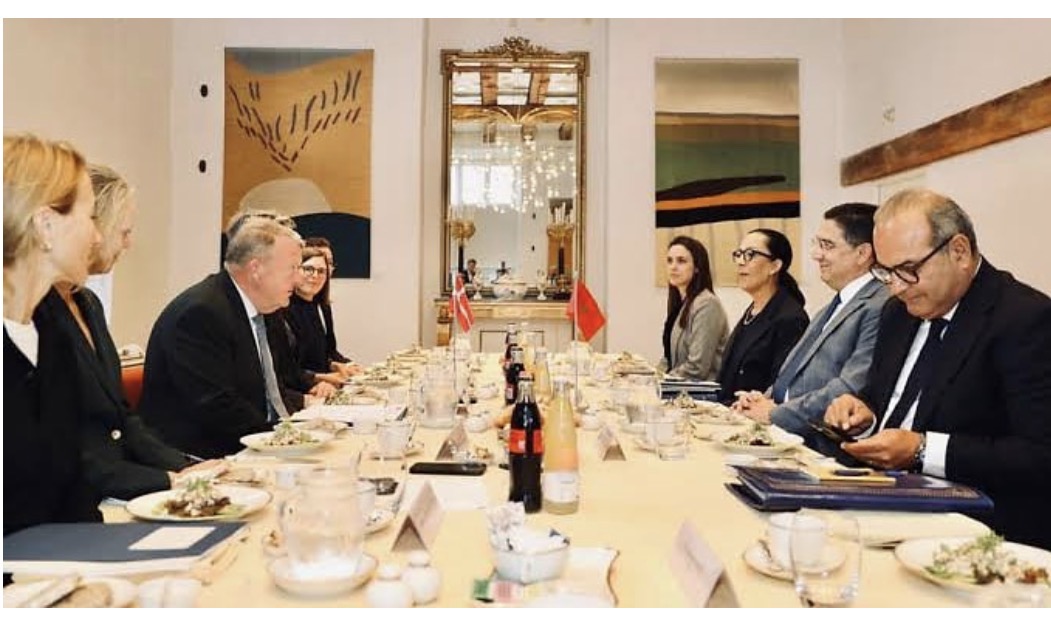
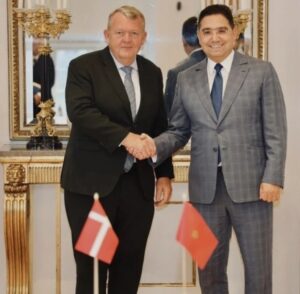
Against this backdrop, the position expressed by Danish Foreign Minister Lars Løkke Rasmussen during Moroccan Foreign Minister Nasser Bourita’s visit to Copenhagen takes on particular significance—not only because it once again describes Morocco’s Autonomy Initiative as a “credible” proposal, but also because it considers it a “good basis” for reaching a mutually agreed solution between the parties.
The significance of the Danish statement extends beyond bilateral relations between Rabat and Copenhagen. Denmark is currently a member of the UN Security Council, and Rasmussen explicitly linked his country’s position to UN Security Council Resolution 2797 and to the European position. This places the statement within a broader UN context in which the Autonomy Initiative is assuming an increasingly central role in discussions over the future of the political process.
From Supporting the “UN Process” to Defining the Basis for Negotiations
The political significance of Denmark’s position becomes clearer when viewed in its chronological context. Copenhagen did not begin supporting the Moroccan initiative this week. In September 2024, Denmark officially described the Autonomy Plan submitted by Morocco in 2007 as a “serious and credible” contribution to the UN-led process and as a “good basis” for a solution, should the parties be able to agree on it.
Notably, this position is not merely a Moroccan interpretation of a joint diplomatic statement. The Danish foreign minister had previously reaffirmed his country’s support for the UN-led process and for the efforts of the UN Secretary-General’s Personal Envoy, while describing Morocco’s Autonomy Plan as a serious and credible contribution and a good basis for a solution if the parties were to reach agreement on it.
What is new in 2026, therefore, is not a sudden Danish policy reversal, but rather the consolidation and further development of a position that began to emerge two years earlier—this time within an international environment that has changed significantly since then.
This is precisely where the turning point lies.
In the previous phase, several European countries used formulations such as “a serious, realistic and credible proposal,” while simultaneously maintaining a political and legal distance between praising the Moroccan initiative and treating it as the practical framework for negotiations.
The current development lies in the gradual shift in the focus of the debate from the question, “Is autonomy a proposal that should be taken seriously?” to a more advanced one: “How can autonomy be transformed into the basis for a mutually agreed political settlement?”
That is a fundamental difference.
Resolution 2797 Changed the Political Context of Denmark’s Position
To understand Copenhagen’s statements, they cannot be separated from UN Security Council Resolution 2797, adopted on October 31, 2025.
The resolution did more than repeat traditional language concerning the search for a just, lasting and mutually acceptable political solution. It brought the Autonomy Initiative more clearly into the architecture of the negotiating process, strengthening its position within the debate over the future of a political settlement.
Rasmussen’s announcement that Denmark welcomes Resolution 2797 is therefore more than a matter of diplomatic protocol.
By doing so, Copenhagen links its national position to the framework established by the Security Council and presents its support for autonomy as part of the UN settlement process rather than as an alternative to it.
This is diplomatically significant.
One of the pillars of Morocco’s strategy in recent years has been an effort to combine two tracks: expanding international support for the Autonomy Initiative on the one hand, while preserving the central role of the United Nations and the Security Council as the institutional framework for the political process on the other.
Denmark’s position is largely consistent with this equation: support for the UN process, while giving increasing weight within that process to Morocco’s Autonomy Initiative.
Why Does Denmark Matter in Particular?
Copenhagen is not a major power, nor does it possess the geopolitical weight of Washington, Paris or London. Yet the importance of its position stems from three interconnected factors.
The first is Denmark’s current membership of the Security Council, which makes its position more directly relevant to UN deliberations concerning the dispute.
The second is that Denmark is a member of the European Union and part of Northern Europe, a region that has historically adopted more cautious approaches to the dispute than some countries in Southern and Western Europe.
The third is that the position comes as Morocco expands its network of political relations with Northern European countries, rather than as an isolated diplomatic development.
The strategic value of the Danish position, therefore, cannot be measured solely by the number of additional voices it adds to the supporters of the Moroccan initiative. It must also be assessed in terms of the geopolitical environment from which that support is emerging.
The more support for autonomy expands beyond countries with traditionally close ties to Morocco and reaches Northern European states, the more difficult it becomes for opponents of the Moroccan proposal to portray such support as confined to Rabat’s traditional circle of allies.
Diplomacy of Accumulation Rather Than the Search for a “Major Recognition”
There has also been an important shift in the way Morocco manages the issue.
Rather than waiting for an immediate and comprehensive change in the European Union’s position as a single bloc, Rabat has largely pursued what could be described as a “diplomacy of accumulation”: building national positions within European countries one by one, before gradually transforming the sum of those positions into an influential political bloc within European institutions.
In this sense, Copenhagen is not an isolated target, but another piece within a broader structure.
Every European country that moves from traditional neutrality toward describing autonomy as “serious,” “credible” or a “good basis for a solution” narrows the gap between the national positions of EU member states and Morocco’s own approach.
However, it is important to distinguish between three levels that are often conflated in political discourse: supporting autonomy, considering it a basis for negotiations, and formally recognizing Moroccan sovereignty over the territory are not the same thing.
Denmark’s position is politically significant for Rabat, but it has been carefully framed in diplomatic terms. It continues to refer to a “mutually agreed solution” between the parties and to the UN-led process. This wording enables Copenhagen to support the Moroccan initiative while maintaining the UN framework as the reference point for the settlement.
Consequently, interpreting Denmark’s position as an unconditional legal recognition of Moroccan sovereignty would go beyond the wording of the diplomatic position itself. A more accurate interpretation is that it clearly strengthens the place of autonomy within Denmark’s vision of a final settlement. This distinction is essential to understanding the changes under way without political exaggeration from either side.
From the Sahara to a Broader Strategic Partnership
Bourita’s visit to Copenhagen also shows that the Sahara issue is no longer developing in isolation from Morocco’s broader interests with its European partners.
Relations between Morocco and Denmark are moving toward expanded political, security and economic cooperation, alongside collaboration in climate policy, investment and trade. This places the Sahara issue within a broader framework of mutual interests.
Here, one of the key instruments of Moroccan diplomacy in the current phase becomes apparent: linking positions on the Sahara issue to a broader redefinition of Morocco’s strategic value to Europe.
Morocco presents itself to European capitals simultaneously as a partner on security, migration and counterterrorism; as an investment and industrial platform connecting Europe with Africa; and as a partner in the energy transition, in addition to its geographical position on the southern shores of the Mediterranean and along the Atlantic.
The relationship therefore moves beyond the narrow question of “What does this country say about the Sahara?” toward a more complex equation: What kind of partnership does this country want with Morocco, and where does the Sahara issue fit within that partnership?
This partly explains why diplomatic shifts have, in a number of cases, coincided with the upgrading of economic, security or political relations.
A Message to Algeria and the Polisario Front
Conversely, the accumulation of European support for autonomy poses a strategic challenge for Algeria and the Polisario Front.
For them, the issue is not simply that another country has praised the Moroccan initiative. The more consequential development is that the international debate may gradually shift away from weighing several politically equivalent scenarios toward a discussion in which the Autonomy Initiative becomes the principal starting point for negotiations.
For the Polisario Front, the strategic risk is that the demand for independence could become less prominent as the reference scenario in the calculations of international powers, even if it continues to be advanced politically by the movement.
For Algeria, the continuation of this trend could increase the political cost of maintaining its traditional position, particularly if additional European countries come to regard autonomy as the most viable framework for a settlement.
This does not, however, mean that the dispute has been settled.
The conflict remains within the UN framework, and reaching a final agreement remains dependent on negotiations, the positions of the parties and the balance of power within the Security Council. There is also a considerable difference between political support for a particular initiative and bringing a decades-long international dispute to an end.
Morocco’s Real Gain: Changing the Starting Point
Perhaps the most important outcome of the diplomatic accumulation represented by Denmark’s position is that Rabat appears to have succeeded in changing the nature of the question being asked by a growing number of its partners.
Years ago, much of Morocco’s diplomatic effort was focused on convincing countries that autonomy was a solution worthy of serious consideration.
Today, Moroccan diplomacy is seeking to establish a different idea: autonomy should be the point from which negotiations begin.
The difference between the two stages is substantial.
In the first, the Moroccan proposal was one of several elements on the negotiating table. In the second, Rabat is seeking to make it the very framework of the table itself, so that the debate focuses on the substance of autonomy, its guarantees, powers and implementation mechanisms, rather than returning to square one to determine the nature of the solution.
If this shift becomes firmly established in a sufficient number of influential capitals and within the Security Council, the political center of gravity of the dispute will change even before a final agreement is reached.
Copenhagen as an Indicator of a Broader Trend
For this reason, the importance of Rasmussen’s statement lies not only in the strength of its wording, but also in the moment at which it was made.
Denmark had already adopted positive language on autonomy in 2024. Subsequent developments at the UN then gave the Moroccan initiative a clearer place within the political process, before Copenhagen reaffirmed in 2026 that the proposal is “credible” and represents a “good basis” for a mutually agreed solution.
It is, therefore, one stage in a cumulative process rather than an isolated event.
The most important indicator in the coming period will not simply be the number of statements supportive of Morocco, but the language used by other European countries: Will they limit themselves to describing autonomy as a serious and realistic proposal, or will they move toward considering it the basis for negotiations and the most viable solution?
It is precisely there that the true extent of the ongoing shift will become apparent.
If such formulations continue to gain ground, Morocco will have achieved one of its most important diplomatic objectives: shifting the debate from convincing the international community of the legitimacy and relevance of the Autonomy Initiative to negotiating how it can be transformed into a final political settlement.
If, however, European positions remain at the level of political endorsement without developing into a clearer institutional European stance, the progress will remain significant but will continue to be constrained by the balance of power within the United Nations and by the parties’ ability to translate diplomatic momentum into substantive negotiations.
In either case, the Copenhagen development shows that the issue is moving. What is changing at a deeper level is not merely the balance of international support between the parties, but the very framework through which a possible solution is being defined.