++ Tunisia and Russia Celebrate the 70th Anniversary of Diplomatic Relations
Monia Ayadi

Journalist specializing in Arab and international affairs
Africa News Info
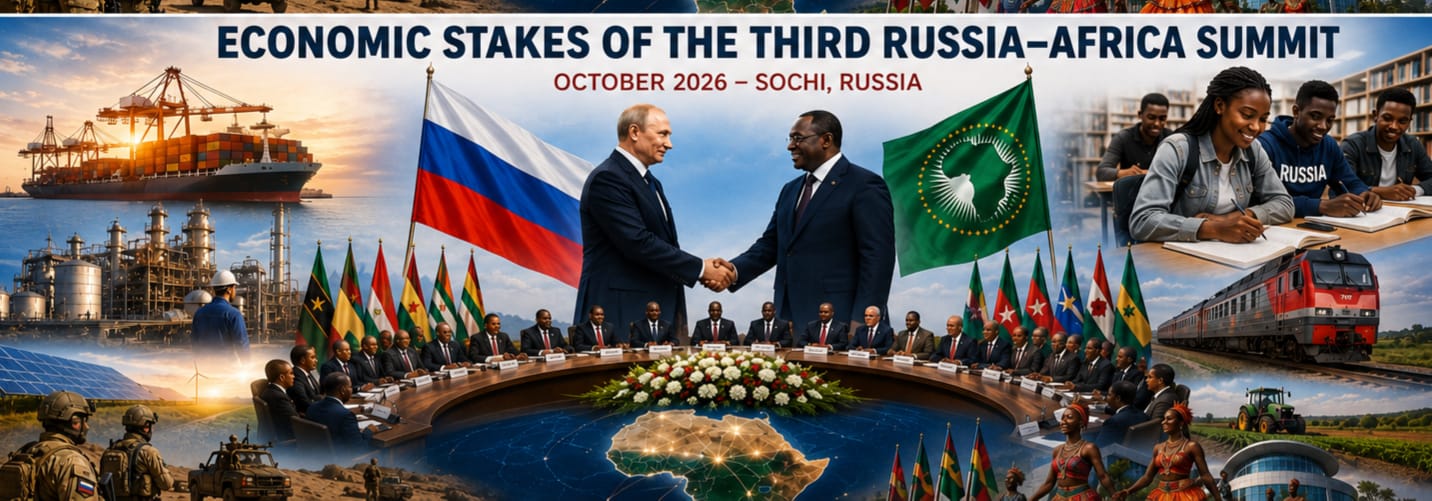
As preparations continue for the third Russia–Africa Summit, scheduled for next October, Tunisia and Russia are celebrating the seventieth anniversary of the establishment of their official diplomatic relations. This milestone reflects the depth of the historical ties between the two countries and comes at a time of accelerating international and regional geopolitical transformations, marked by intensifying competition among major powers to strengthen their presence on the African continent, which has become one of the key pillars of the emerging multipolar international order.
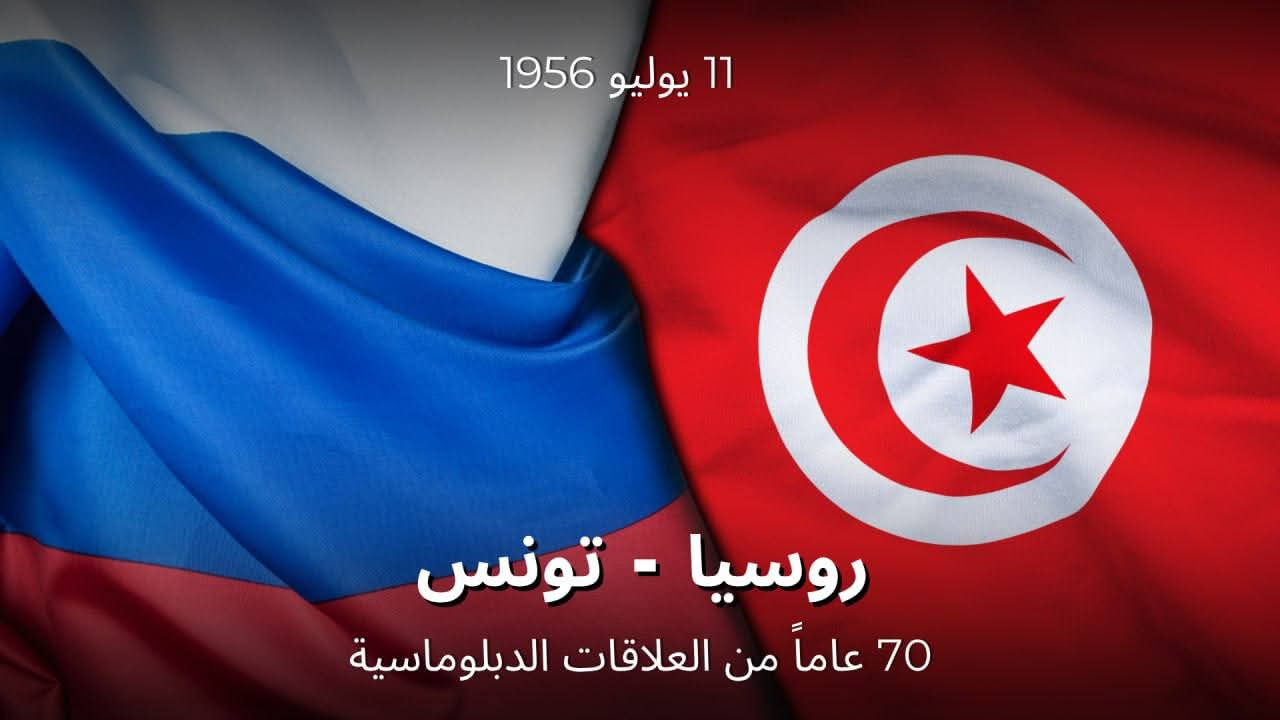
In this context, Tunisian-Russian relations assume particular significance, not only as a model of a bilateral partnership spanning seven decades, but also as part of Russia’s broader strategy to expand its presence in Africa through enhanced economic, security and diplomatic cooperation, while preparing for the third Russia–Africa Summit, which Moscow views as an opportunity to launch a new phase of practical partnerships with African countries.
Tunisia and Russia: Seventy Years of Diplomatic Relations and Economic Partnerships
Tunisia, which enjoys an important geostrategic position on the southern shore of the Mediterranean, represents an example of Moscow’s efforts to expand its presence in North Africa through partnerships based on economic and cultural cooperation alongside political dialogue. Bilateral relations gained particular momentum in 2026 as the two countries celebrated the seventieth anniversary of the establishment of diplomatic relations dating back to 1956. The occasion provided an opportunity to assess seven decades of political, economic and cultural cooperation, while renewing the commitment to developing the bilateral partnership in line with the transformations taking place in the international system and Russia’s growing interest in the African continent.
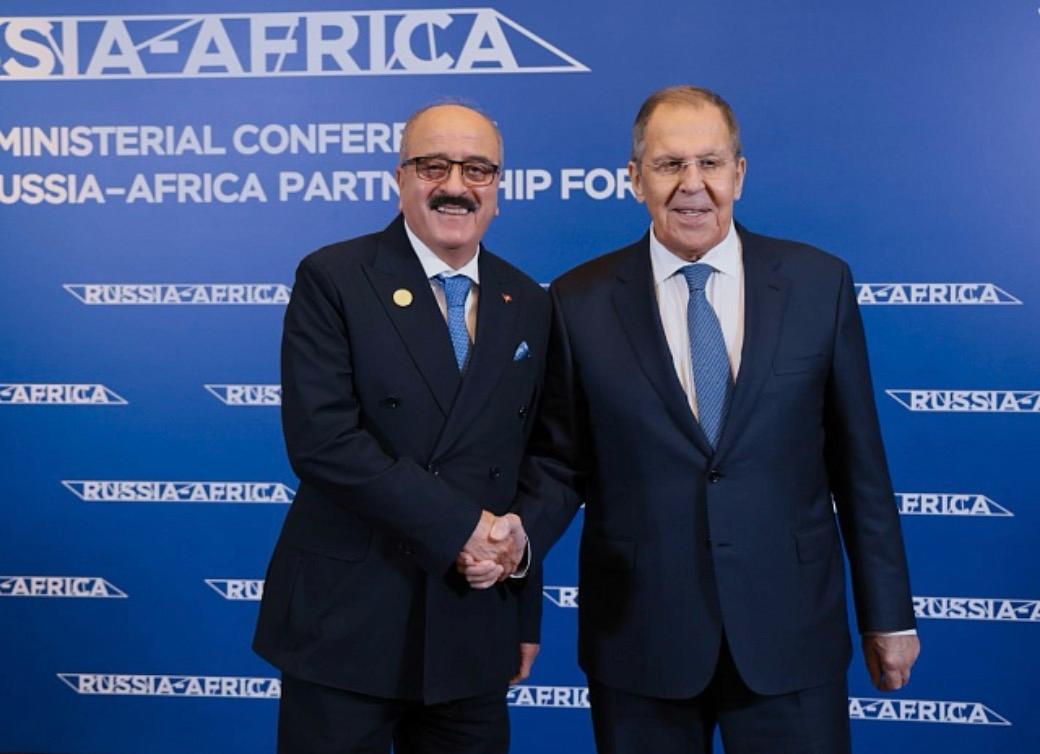
Russian Ambassador to Tunisia Alexander Zolotov emphasized that “Tunisia is a traditional and reliable partner that enjoys great esteem in Russia,” noting that both countries are working to expand prospects for economic cooperation in line with the new momentum characterizing Russia–Africa relations.
During the celebrations and official meetings organized on this occasion, both sides stressed the importance of elevating economic relations to the level of political relations, especially as bilateral trade has exceeded $1.8 billion in recent years. Russia has become one of Tunisia’s leading trading partners outside the European Union and continues to maintain its position as one of the principal suppliers of grain to the Tunisian market, at a time when food security is becoming increasingly important for North African countries. In addition, both countries continue to explore new opportunities for cooperation in the fields of energy, pharmaceuticals, transport, scientific research, technology and agriculture, while business communities on both sides are showing growing interest in establishing joint partnerships and investments.
Academic and cultural cooperation has also assumed a prominent place in bilateral relations. Over the past decades, thousands of Tunisians have studied at Russian universities and institutes, while scholarship programs and scientific and cultural exchanges continue to strengthen ties between the two peoples. In this context, Russian Ambassador to Tunisia Alexander Zolotov reiterated that “Tunisia is a traditional and reliable partner that enjoys great esteem in Russia,” adding that Moscow considers Tunisia an important partner in North Africa and seeks to expand areas of cooperation with it. This comes as Russia continues strengthening its diplomatic and economic presence across Africa. Russian Foreign Minister Sergey Lavrov announced that his country is expanding its diplomatic network on the continent, affirming that “trade with Africa is growing rapidly, but current figures show that there is still much work to be done.” From this perspective, Tunisia with its strategic geographical position linking Africa, Europe and the Mediterranean appears well placed to play a greater role in Russia’s strategy of expanding economic and logistical partnerships with the continent, amid a mutual drive to diversify partnerships and strengthen cooperation based on shared interests.
Africa: The Main Arena of Competition in a Multipolar World
Africa is no longer merely a continent rich in natural resources or a promising market of more than 1.4 billion people. In recent years, it has become one of the world’s foremost arenas of geopolitical competition. The changes that have reshaped the international order since the outbreak of the Russia–Ukraine war, the intensifying confrontation between Russia and the West, and the growing strategic rivalry between the United States and China have prompted all major powers to reassess their policies toward Africa, which now occupies a pivotal position in global food security, energy, strategic minerals, maritime routes, and political influence within international organizations.
In this context, Russia stands out as one of the countries most determined to strengthen its presence in Africa, not only to offset part of the pressure resulting from Western sanctions, but also because it views the continent as one of the fundamental pillars of the multipolar international order that Moscow has advocated for years.
Russia Announces Enhanced Military Cooperation with Sahel Countries

Recent diplomatic moves clearly reflect this direction. Moscow has intensified its contacts with the African Union and a large number of African capitals. Russian Foreign Minister Sergey Lavrov stated that his country seeks to elevate economic and trade relations with African states to a new level, alongside expanding Russia’s diplomatic presence on the continent and opening new missions, in preparation for the third Russia–Africa Summit scheduled to take place in Moscow next October.
This activity indicates that Russia no longer views Africa merely as a political partner, but as a long-term strategic space through which it can build a broad network of economic, investment and technological interests, thereby strengthening its global presence and granting it greater room to maneuver in the face of Western pressure.
This approach gains particular importance in light of the transformations taking place within Africa itself. Many African governments are now adopting a policy of diversifying international partners, moving away from dependence on a single power. They are taking advantage of intensifying international competition to secure investments, financing and technology transfer on more flexible terms. This has created a space in which Russia operates alongside China, India, Turkey and Gulf countries, while the United States and the European Union seek to regain part of the traditional influence they have lost in recent years.
Moscow also recognizes that winning partnership with Africa cannot be achieved through political rhetoric alone, but through tangible projects in the fields of energy, mining, agriculture, infrastructure, education, health and technology. Therefore, its recent meetings with African Union officials focused on expanding cooperation in these sectors and linking them to the African Union’s Agenda 2063 and the African Continental Free Trade Area (AfCFTA), reflecting Russia’s desire to present itself as a partner in development, not merely as a power seeking to expand its geopolitical influence.
However, this path is not without challenges. Russia is entering a crowded arena of competitors. China has established a broad economic presence and massive investments in infrastructure, while the United States and the European Union are redefining their relations with African countries through new investment initiatives and partnerships, recognizing that the future balance of international power will not be determined solely in Europe or Asia, but in Africa as well.
Economy and Security: Two Pillars of a New Russian Strategy in Africa
If the Cold War period was associated with the political and military support provided by the Soviet Union to African liberation movements, Russia’s current approach appears more pragmatic. It is based on combining economic interests with security partnerships within a vision that considers sustainable influence to be built not only through political alliances, but also through development projects and long-term mutual interests. From this perspective, Moscow is working to expand its presence in the sectors of energy, mining, agriculture and technology, while simultaneously strengthening military and technical cooperation with an increasing number of African countries.
Energy occupies a special place in this strategy. Russia’s Rosatom continues to expand its projects across the continent, whether in the field of peaceful nuclear energy, nuclear research centers or training. Other Russian companies are also seeking to increase their investments in oil, gas and rare minerals, which have become key elements of global competition amid the transition toward a green economy and the expansion of digital industries. Moscow also views Africa as one of the world’s major reservoirs of strategic minerals, such as lithium, cobalt, manganese, uranium and platinum, which have become essential to modern technological industries, battery production and electric vehicles.
In the agricultural sector, Russia has strengthened its position as one of the largest suppliers of grain to the African continent, benefiting from its trade relations with many countries that rely on Russian wheat to secure their food needs. It has also expanded cooperation in fertilizers, agricultural mechanization and expertise transfer, giving it a prominent position with many African governments facing growing challenges related to food security, climate change and rising commodity prices.
Russia’s Strategy Extends Beyond the Economy
Russia’s strategy is not confined to the economic sphere; it also encompasses security and military cooperation, which has expanded significantly in recent years. Moscow has signed defense cooperation agreements with more than twenty African countries covering the training of military personnel, the exchange of expertise, equipment maintenance, arms supplies, and cooperation in combating terrorism, organized crime and border security. Today, Russia ranks among the leading arms suppliers to the African continent, drawing on its military expertise as well as the desire of a number of African countries to diversify their sources of military equipment away from the political restrictions imposed by certain Western nations.
This cooperation is particularly significant in the Sahel and West Africa, where several countries face growing threats from armed groups and terrorist organizations, in addition to the increase in military coups and the decline in confidence in some Western partners. Several African governments have viewed cooperation with Moscow as an opportunity to obtain more flexible security support, contributing to the strengthening of Russia’s presence in a number of countries across the region. Nevertheless, this presence remains controversial and has drawn criticism from Western capitals, which accuse Moscow of exploiting security challenges to expand its political influence.
For its part, Russia insists that its military cooperation is carried out at the request of legitimate governments and is intended to support the stability of African states while respecting their sovereignty. Moscow rejects Western accusations portraying its actions as an extension of its geopolitical rivalry with Europe and the United States. Its position is based on the principle of an “equal partnership” and non-interference in the internal affairs of sovereign states—a message that resonates with a number of African governments critical of what they describe as Western double standards.
At the same time, Russian influence does not operate in a strategic vacuum. It faces intense competition from China, which has firmly established its economic presence through investments worth hundreds of billions of dollars in infrastructure, ports, roads and railways, as well as from the United States and the European Union, both of which have relaunched investment and development initiatives aimed at restoring part of their influence on the continent. As a result, Africa has become the arena for competition among three distinct approaches: a Chinese model centered primarily on financing and investment, a Western model combining aid, investment and political reforms, and a Russian model based on integrating security cooperation, economic partnerships and diplomatic support.
Many African countries, however, do not view this competition as a threat, but rather as an opportunity to renegotiate the terms of partnership with major powers in a manner that serves their national interests and provides them with greater strategic autonomy. African capitals are therefore increasingly moving away from a policy of alignment and instead adopting a strategy of diversifying partnerships while taking advantage of international competition to secure the best opportunities in investment, technology, energy, security and development.
Between Opportunities and Challenges: Where Is Russian Influence in Africa Heading?
The third Russia–Africa Summit, scheduled to take place in Moscow, represents a new milestone in the evolution of relations between the two sides. The Russian leadership is counting on the summit to move beyond declarations of intent toward the implementation of projects and the expansion of practical partnerships. Following the first two summits, Moscow has become increasingly aware that maintaining its presence on the continent cannot rely solely on political rhetoric, but must be supported by increased investment, higher trade volumes, improved financing mechanisms and stronger cooperation in technology, energy, agriculture, healthcare and education, in line with the development priorities of African countries.
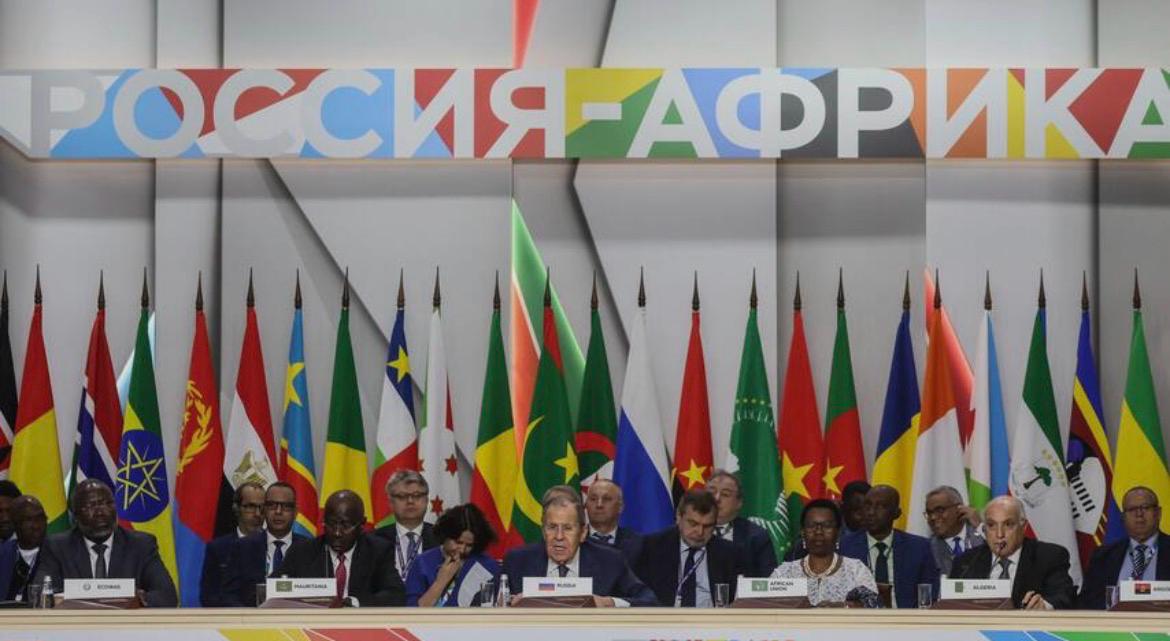
Photo from the Second Russia–Africa Summit.
Russia also appears to be relying on the profound changes reshaping the international system. The decline of unipolar dominance, the rise of new powers such as China and India, and the expanding role of the BRICS grouping have provided African countries with greater room for maneuver in their foreign relations. These countries no longer see themselves merely as recipients of aid but increasingly seek partnerships based on mutual interests, technology transfer and investment—an approach that aligns closely with Russia’s vision of a more balanced and multipolar international order.
Russia Seeks to Strengthen Its Position as Africa’s Strategic Partner Amid Global Transformations

Nevertheless, the road ahead for Moscow is not without obstacles. Western sanctions imposed on Russia since the outbreak of the war in Ukraine continue to affect the ability of Russian companies to finance and expand their overseas investments. Moreover, competition with China remains particularly challenging given the scale of Chinese investments and the widespread presence of Chinese companies throughout the continent. At the same time, the United States and the European Union are launching new initiatives targeting infrastructure, digital transformation and clean energy in an effort to regain part of the influence they have lost in recent years.
Russia Adopts a New Diplomatic Strategy That Classifies the United States…

Another major challenge facing Russia’s strategy lies in moving beyond agreements and memoranda of understanding toward measurable and implementable projects. Many African countries now assess their partnerships with international actors based on tangible achievements—such as investments, job creation and technology transfer—rather than on political positions or diplomatic promises alone. Consequently, Russia’s success in consolidating its presence on the continent will largely depend on its ability to secure financing, accelerate project implementation and establish long-term partnerships that generate concrete benefits for both sides.
At the same time, African countries themselves have emerged as the most influential players in the new equation of international competition. Rather than aligning with one bloc or another, most African capitals are pursuing a pragmatic foreign policy based on openness to all partners and on leveraging competition among them to advance their development goals, whether the partners are Russia, China, the United States, the European Union or emerging regional powers. This evolution reflects the growing maturity of African diplomacy and confirms that the continent is no longer merely an arena for geopolitical competition but has become an active player seeking to use that competition to serve its own strategic interests.
Ultimately, Russia’s return to Africa forms part of the broader transformations reshaping the international order. Africa is no longer a peripheral region in global politics; it has become one of its central pillars. Although Moscow has succeeded over recent years in restoring part of its political and security influence on the continent, the next phase will test its ability to transform that presence into sustainable economic and development partnerships.
The future of Russian influence in Africa will depend not only on Moscow’s success in implementing its projects but also on the ability of African countries to continue pursuing a balanced foreign policy among the major powers, safeguarding their national interests, strengthening their strategic autonomy and adapting to an international system that is rapidly evolving toward an increasingly complex and competitive multipolar order.