Special Tribunal for Ukraine:
International Justice Without Global Consensus?
++ How to end conflicts in Europe , Ukraine and Russia ?
By Kamal Ben Younes
Expert in International Studies

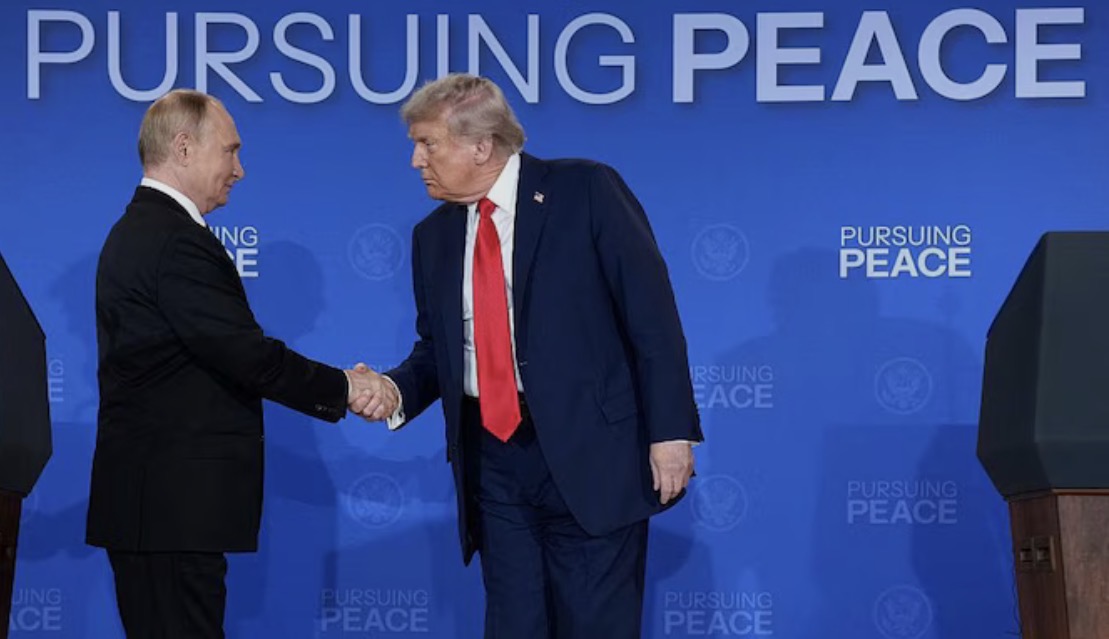
As direct and indirect contacts have intensified between the administration of President Donald Trump and the Kremlin to explore the conditions for a settlement of the conflict in Ukraine, another dynamic continues to unfold on the legal and diplomatic fronts. Several member states of the Council of Europe, supported by Western partners, have chosen to promote the establishment of a special tribunal tasked with prosecuting the crime of aggression against Ukraine.
For the supporters of this initiative, its purpose is to uphold the principle of leadership accountability and combat impunity, regardless of developments in political negotiations. Its critics, however, argue that such a move could complicate—or even delay—the prospects for normalization between Moscow and the West. Some political leaders and experts believe that opening a new judicial front at a time when diplomatic channels are being reactivated risks intensifying confrontation with Russia rather than facilitating a compromise. Others go further, viewing the initiative as part of a long-term strategy of pressure on Moscow rather than one driven exclusively by judicial considerations.
Beyond these divergent interpretations, the proposal for a special tribunal has become a revealing indicator of the deep divisions within the international community. It raises fundamental questions about the boundary between justice and diplomacy, the relationship between criminal accountability and the pursuit of peace, and the ability of international institutions to act without the benefit of genuinely universal consensus.
A “Legal” Initiative?
The creation of a special tribunal to prosecute the crime of aggression against Ukraine is undoubtedly one of the most ambitious legal initiatives undertaken since the adoption of the Rome Statute. Presented by its proponents as a necessary response to the International Criminal Court’s inability to exercise jurisdiction over the crime of aggression in the Ukrainian context, the tribunal has also become a symbol of a profound fracture in the international order.
Far from reflecting universal consensus, the project illustrates the limitations of an increasingly fragmented system of global governance. While the Council of Europe and several Western partners have chosen to circumvent the deadlock in the United Nations Security Council, a significant portion of the international community remains cautious—or openly critical. More than a debate about Ukraine, what is emerging is a confrontation between two competing conceptions of international legitimacy.
A Legal Innovation Born of Political Deadlock
The special tribunal originates from a well-defined legal obstacle: the International Criminal Court cannot exercise jurisdiction over the crime of aggression in this case because of the conditions established by the Rome Statute and the absence of a referral from the United Nations Security Council, where Russia holds veto power.
For European states, this paralysis could not be allowed to result in impunity. Consequently, an agreement between Ukraine and the Council of Europe has been presented as a pragmatic solution designed to preserve the principle of political leaders’ accountability.
However, this approach immediately raises a fundamental question: can a durable international court be established without the support of a broad segment of the international community?
International Legality but Contested Legitimacy
From a legal standpoint, the tribunal does have an international foundation, as it is established through an agreement with an international organization. Nevertheless, for many diplomats and legal scholars, the legality of a mechanism alone is insufficient to grant it universal political legitimacy.
The major international criminal tribunals that have shaped modern history—from Nuremberg to the tribunals for the former Yugoslavia and Rwanda—were created under exceptional circumstances, benefiting either from a recognized military victory or from an explicit mandate by the United Nations.
The special tribunal for Ukraine introduces a different model: a coalition of states decides to establish a judicial body outside the UN framework on the grounds that the UN system has become incapable of acting. For its supporters, this represents a necessary adaptation. For its critics, however, it risks weakening the very principle of the universality of international law.
The Critical Perspective of the Global South
The reservations expressed by many countries in Africa, Asia, and Latin America extend well beyond the Ukrainian case.
Across numerous capitals, the same question is repeatedly raised: why do some conflicts lead to the creation of exceptional judicial mechanisms while other equally serious violations fail to generate either a special tribunal or comparable international mobilization?
This perception reinforces a long-standing sense of selective justice. For decades, political leaders and academics across the Global South have criticized an international legal architecture perceived as more responsive when Western interests are involved than when similar crises affect other regions of the world.
Even when these critics do not dispute the necessity of prosecuting international crimes, they challenge the consistency of the institutional responses adopted.
Justice Without Universal Compromise
One of the tribunal’s principal political weaknesses lies precisely in the absence of a negotiated compromise among the world’s major geopolitical groupings.
Support from the Council of Europe, the European Union, and several close partners provides a strong Western political foundation. However, it does not replace a multilateral agreement that includes the major emerging powers and the countries of the Global South.
According to several international relations experts, this lack of consensus could permanently limit the tribunal’s moral authority. Traditionally, the strength of an international court derives not only from its founding statutes but also from the collective recognition of those who accept its authority.
A Tribunal Viewed as Symbolic
Beyond questions of legitimacy, some specialists question the tribunal’s practical effectiveness.
They point out that senior Russian officials are likely to continue benefiting from political protection and legal obstacles, particularly those associated with the immunities recognized for sitting heads of state. Without the surrender of the accused individuals, trials may be postponed for many years—or may never take place at all.
It is in this context that some scholars describe the tribunal as essentially “symbolic” or “declaratory.” In their view, its primary effect would be to establish a political and normative condemnation of the crime of aggression rather than to secure enforceable convictions in the near future.
Other observers even argue that the initiative could encourage the proliferation of ad hoc justice mechanisms, each established by a different coalition, thereby further fragmenting the international legal order.
Between Effectiveness and Universality
Supporters of the tribunal respond that the history of international justice demonstrates that several courts now widely recognized were themselves controversial when first established. They argue that waiting for an unlikely global consensus would effectively mean accepting impunity whenever a major power is involved.
The debate therefore extends far beyond the war in Ukraine. It reflects two competing visions of global governance: one prioritizes immediate effectiveness, even if it requires bypassing institutional deadlock; the other maintains that international justice can preserve its authority only if it is founded upon the broadest possible consensus.
A Precedent with Lasting Consequences
The special tribunal for the crime of aggression against Ukraine will undoubtedly set an important precedent. Its success or failure will not be measured solely by the number of convictions it delivers. Rather, it will depend primarily on its ability to demonstrate that international justice can evolve without sacrificing its universal character.
Otherwise, the initiative may reinforce an already visible trend: an increasingly fragmented international legal order in which legality is sometimes acknowledged, while legitimacy remains deeply contested. In a world marked by the rise of emerging powers and growing challenges to the liberal international order, this distinction between legality and legitimacy may become one of the defining issues of international justice in the twenty-first century.
Contradictions and Conflicts of Interest?
The special tribunal for the crime of aggression against Ukraine has now moved beyond the confines of the Russo-Ukrainian conflict. It has become a symbol of the transformation of the international order, where law, diplomacy, and geopolitics increasingly intersect. For its proponents, it represents an indispensable response to impunity when United Nations mechanisms are paralyzed. For its critics, it risks institutionalizing a system of international justice with variable standards, perceived as dependent on power politics rather than universal consensus.
At a time when several diplomatic initiatives seek to open pathways toward a settlement between Moscow and Kyiv, the coexistence of these efforts with the establishment of a special tribunal raises a fundamental question: can international justice accompany a peace process, or does it risk being perceived as an additional source of polarization? The answer to this question will determine not only the future of this tribunal but also the credibility of international law in an increasingly multipolar world.