Why Western commercial logic fails to understand Iran’s refusal to surrender
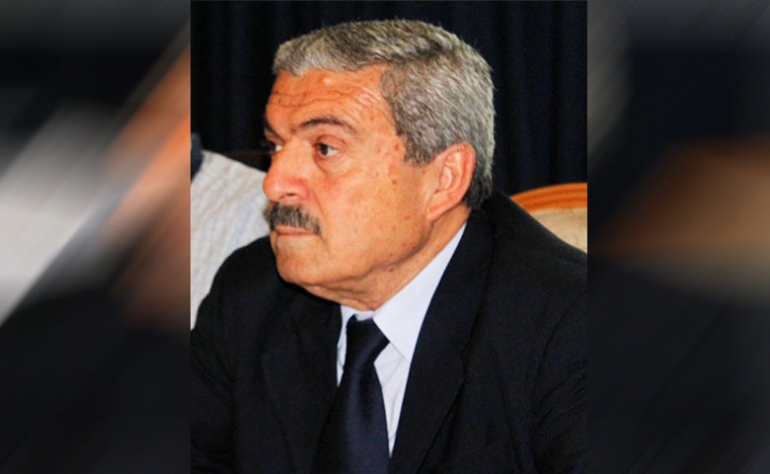
By Professor Hani Mubarak Al-Rousan
Palestinian academic and writer – Tunisia
When Donald Trump announced on February 28, 2026, the launch of “major combat operations” against Iran, he believed he was holding a winning card. In the days preceding the strikes, his special envoy, Steve Witkoff, was still negotiating with the Iranian side in Geneva, while he and his ally in Tel Aviv, Benjamin Netanyahu, were preparing for a single war perhaps with two different objectives. What matters here, however, is that for Trump the goal was to impose a “grand deal” on Iran through force and fire.
Yet what he discovered belatedly by his own admission was that the Iranians are “stubborn and want to fight.” This late acknowledgment reveals a deep gap in perception, not only regarding the nature of the adversary, but also the roots of the error within the very method of thinking itself.
Here we will briefly attempt to shed light on some of the reasons why the commercial “Art of the Deal” fails to understand Iran’s ideological “stubbornness,” and how Trump repeats a strategic mistake by interpreting the conflict as a material equation of profit and loss, while the other side is fighting an existential war summarized by the equation of “duty” rather than “gain.”
In his book The Art of the Deal, Trump reduces the world to a simple equation: apply maximum pressure, wait a little, and the opponent will eventually collapse allowing you to impose the deal you want. This simplified outlook has evolved into a doctrine in Trump’s political approach. Perhaps his success in the abduction of Maduro encouraged him to believe that he could repeat the same scenario with Iran through the policy of “maximum pressure,” which is based on the assumption that drying up financial resources and destroying military capabilities would force Tehran to kneel and seek negotiations.
But the fundamental problem is that this simplified logic does not work with an opponent who does not place “profit” at the top of its priorities, but rather “duty.” This concept summarizes the relationship between God and man as a set of commands and prohibitions issued by the former to the latter. In Iranian political thought, rooted in Twelver Shiite doctrine, negotiating under direct threat is not perceived as a “deal.” Rather, in their political and religious literature it is classified as “humiliation” a degrading submission a term that is forbidden in the political vocabulary of the Islamic Republic, founded upon the slogan: “No humiliation for believers.”
The fundamental error here, therefore, is not tactical but epistemological. Trump reads the world through a “catalog of deals,” while the Iranians operate in another universe built upon “ideological inheritances.” In other words, it is a clash between the language of numbers and the language of symbols.
What Trump describes as “stubbornness” is in fact the result of an ideological upbringing that spans a thousand years, rooted in the culture of “victorious victimhood” inspired by the epic of Karbala. Within this culture, “resistance,” even in the face of military imbalance, is viewed as an act of devotion, while “surrender” is regarded as an unforgivable spiritual fall.
This psychological formation makes “death” the beginning of “victory,” not the end of the game. When Trump says he has destroyed most of Iran’s forces or its nuclear capabilities, he is addressing a materialistic mindset that measures victory through battlefield losses. The ideological mindset, however, sees the “survival of the principle” as the real victory, regardless of human or material losses. Here lies the reason why the strategy of “pressure for a deal” may fail against the strategy of “steadfastness for doctrine.” The former requires an opponent seeking to minimize losses, while the latter treats losses as part of the price of preserving identity.
Perhaps the most dangerous aspect of the American strategy is the assumption that targeting the leadership particularly the Supreme Leader would lead to the collapse of the regime. This assumption is based on a narrow “rational” reading: cut off the head and the body will die. Yet what has happened on the ground suggests precisely the opposite.
In Twelver thought, the notion of “revenge” is linked to deferred divine justice. Targeting a symbolic figure such as the Supreme Leader who represents the deputy of the infallible Imam in Iranian political thought transforms the conflict from a war between states into an “existential duty” for every believer in this doctrine. Rather than causing collapse, the assassination of leadership may generate a collective quasi-suicidal energy under the banner of vengeance, making the cost of war for the attacker exceed any political gains it might achieve.
Indeed, some analysts have pointed to this when warning that the strikes could unify the Iranian front rather than divide it, creating internal cohesion in the face of “external aggression” instead of sparking popular protests demanding the overthrow of the regime.
In his recent statements, Trump appears to be recognizing a new reality that was not mentioned in The Art of the Deal. His admission that the Iranians are “stubborn and want to fight” reflects a late realization that his strategy may fail—or is already on the path to failure. This realization reveals an important truth: Trump, who detests material losses, is beginning to discover that entering a war of attrition with an opponent that “sanctifies death” could be a suicidal choice for his political career.
Many analysts have noted that Trump does not like long military adventures and prefers limited but painful operations rather than open-ended wars. Yet the problem is that Iranian “stubbornness” is not a negotiating tactic that can be broken with a severe strike; it is a fundamental element of faith. When you realize that your opponent is not fighting merely to lift sanctions, but to preserve the “dignity of the nation” and avenge Hussein, you understand that the game is entirely different.
In the end, it is likely that Trump whom Netanyahu may have deceived has fallen into the trap of a lesson he had not previously understood, and one he may pay dearly for: The Art of the Deal may work in managing corporations and building skyscrapers, but it fails in the face of peoples who derive their strength from history and belief. The war with Iran is not a boxing match decided on points, but a clash of wills in which one side sees its own death as the beginning of its victory.
However, this does not mean that Iran is immune to collapse or that its political system is beyond the possibility of failure. It simply means that a strategy based on “commercial pressure” and simplified assumptions will remain incapable of understanding the equation and may even produce the exact opposite of what it seeks. Iranian “stubbornness” is not a political whim but a deeply rooted doctrinal structure. Any attempt to interpret it outside its historical and religious context is bound to fail. In this equation of war, that “stubbornness” remains the weapon Trump failed to account for and it may prove to be a decisive factor.