Cairo News – Agencies
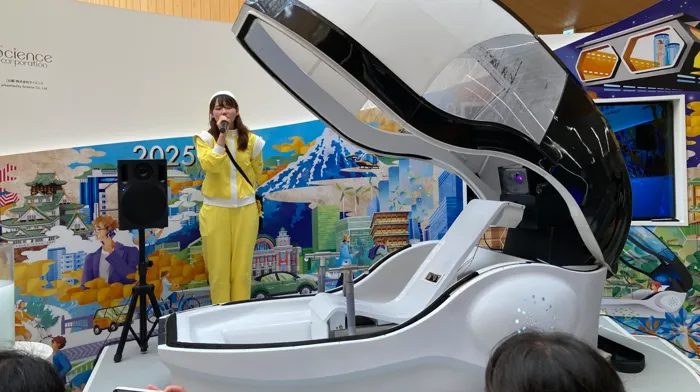
A Japanese company launched a unique device this week known as the “human washing machine,” after it made its debut at Expo Osaka 2025.
After months of public interest, consumers in Japan can now experience this innovation that combines advanced technology, healthcare, and personal well-being.
The machine functions as a high-tech, automated shower room, resembling a luxurious hydrotherapy (spa) capsule, where users’ bodies are washed from head to toe in just a few minutes. The person enters the capsule and lies down on a comfortable seat, after which the unit closes to begin the cleansing process.
Inside the capsule, tiny microbubbles are used that are able to penetrate pores to remove oils, dirt and dead skin, while advanced sensors monitor the user’s vital signs to prevent fainting, stress or any health emergency.
The machine also rinses away bubbles and dries the body, while playing soothing music designed to promote relaxation. Company spokeswoman Sachiko Maikura says the device not only washes the body, but also “washes the soul.”
The entire process takes about 15 minutes with minimal effort from the user.
The idea originated at the 1970 Osaka Exhibition when Sanyo Electric showcased the first prototype of this innovation, and that inspired the then-child Yasuaki Oyama, the current president of Science Corporation, to revive the idea, taking advantage of the tremendous developments in robotics and technological processing.
The capsule itself is 2.5 meters long, 1 meter wide, and 2.6 meters high, making it large enough for most users to lie comfortably inside. The microbubble technology used in it is based on advanced systems currently used in a number of high-end Japanese baths and resorts.
As with most future innovations, price remains the biggest obstacle; the device will be launched at a price of around 60 million Japanese yen (about 385,000 US dollars), and for this reason the machine is mainly aimed at luxury hotels, health resorts, traditional “onsen” and amusement parks, and not at homes.
The company plans to produce only 40 to 50 units, all of which will be handmade. A luxury Japanese hotel has already confirmed the purchase of the first unit, while several other parties have reserved between five and eight additional units.