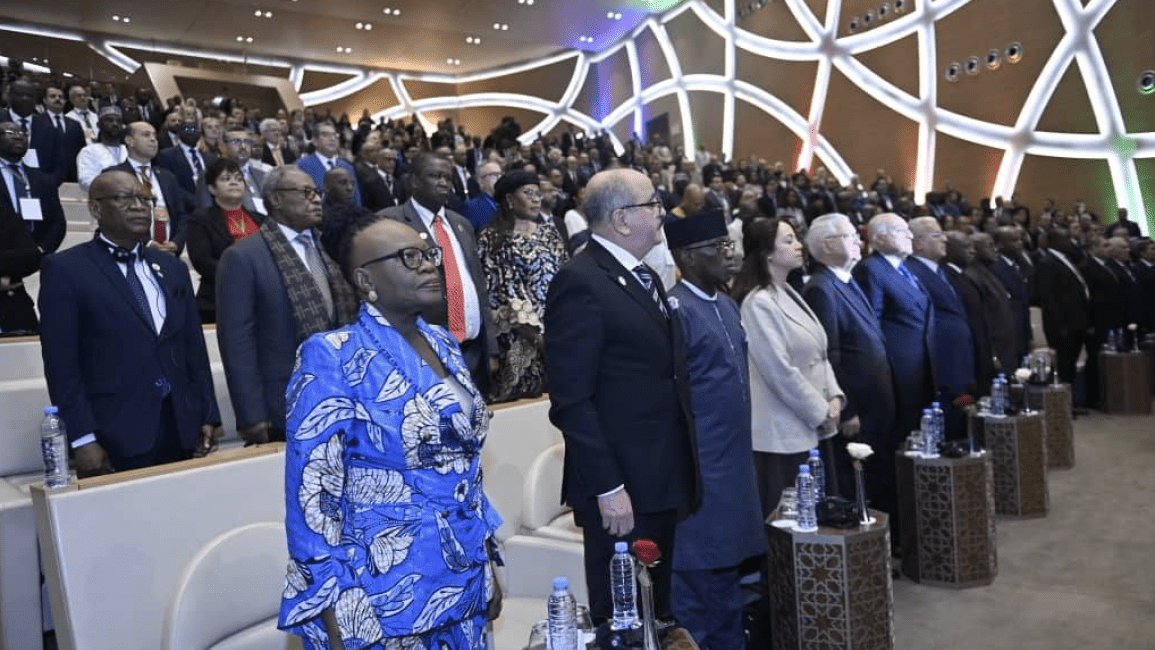
An African and international conference on rectifying historical injustices against the African continent opened in the Algerian capital. It is dedicated to discussing the criminalization of colonialism and the historical justice owed to African peoples, as well as demanding official recognition of the crimes committed against them during the colonial period. This takes place within the framework of an initiative approved by the latest African Union summit aimed at restoring the historical rights of African peoples.
Algerian Foreign Minister Ahmed Attaf said at the opening of the conference: “The time has come to criminalize colonialism itself, rather than merely condemning some of its practices and consequences,” adding: “Africa is right in demanding that colonialism be criminalized as a clear and unequivocal international legal norm. Just as the international community once criminalized slavery and slavery-like practices, as well as apartheid, Africa also has the right to demand fair compensation and the restitution of looted property. Justice cannot be achieved through empty speeches, false promises, or romantic goodwill. Compensation is not charity nor a favor, but a legitimate right guaranteed by all international laws and norms.”
In February, the African Union summit adopted the “African Charter on the Criminalization of Slavery and Colonialism, Reparative Justice, and Racial Healing for Africans and People of African Descent.” It calls for “building a common and unified front for the cause of justice and reparations” for the historical crimes and mass atrocities committed against Africans and people of African descent, including colonialism, apartheid, and genocide. It also calls for collective action to “overcome historical injustice, address the effects of colonialism, enslavement, apartheid, or discrimination, and achieve reparative justice,” under the leadership of the African Union Commission, tasked with “recognizing and documenting the historical impact of colonialism and slavery on African societies.”
Attaf stressed that “the crimes of colonialism have never been clearly or responsibly acknowledged,” and that “Africa is right to demand explicit official recognition of the crimes committed against its peoples during the colonial period, as a first essential step toward addressing the remnants of this era—remnants for which African states and peoples continue to pay a heavy price in terms of exclusion, marginalization, and underdevelopment.” He noted that “addressing the legacy of colonialism has become inevitable, through launching a project for historical justice, since colonialism interrupted the process of building our nation-states and deprived us of completing it in a way that would allow our peoples to fully exercise sovereignty over their destiny. Colonialism was never a civilizing mission; it was, in its essence, an enterprise of plunder and predation.”
He added that “Africa’s collective memory does not forget that colonialism excluded the continent from all political, economic, technological, scientific, and social revolutions enjoyed by the rest of humanity.” Referring to Algeria’s experience, he said: “Algeria’s bitter ordeal represents a rare model in history. French colonialism in Algeria was not merely exploitative; it was settler colonialism.” He also emphasized the need to address remaining colonial issues in Western Sahara and Palestine.
An Algerian Step Forward
Ministers from African countries, legal experts, historians, and academics from Africa, the Caribbean, and other parts of the world are taking part in the conference. The goal is to formulate a unified African position on historical justice, reparations, the restitution of cultural property, the preservation of collective memory, and to help establish an African framework for criminalizing colonialism, genocide, and slavery, as well as for demanding fair reparations for colonial injustices endured during decades of domination.
The African Union summit tasked Algeria, along with South Africa, Togo, and Ghana, with ensuring the implementation of this initiative.
Algeria has begun concrete steps toward issuing its first law criminalizing colonialism in Algeria. In March, the Algerian parliament officially formed a special committee consisting of six members representing major parliamentary blocs and various political orientations. The committee is responsible for drafting a proposed law criminalizing colonialism — a legislative step awaited for decades and arising amid political tensions with France. The committee has the necessary working conditions and relies on experts specializing in historical memory and colonial crimes committed against Algeria between 1830 and 1962.
The committee includes MP Zakaria Belkheir from the Movement of Society for Peace (Islamist), who proposed a previous draft law in 2021 consisting of 54 articles; MP Ismail Mira from the National Democratic Rally (progressive); MP Ismail Meziane Jouzi from the National Liberation Front (conservative); MP Fateh Barakat from the Future Front; MP Kamel Ben Khelouf from the National Construction Movement (Islamist); and independent MP Kadri Abdelrahman.
This law will be the first legislative initiative drafted by parliament and submitted to the government for review in decades, unlike most laws, which are drafted by the government and merely amended by parliament. Allowing parliament to lead this legislative initiative is believed to give the proposed colonialism-criminalization law greater popular legitimacy and legislative weight.
What does the African initiative for criminalizing colonialism entail?
The initiative is based on reparative justice for Africa and aims to achieve healing, equality, recognition of the rights of African peoples, and the criminalization of colonialism. It outlines several steps to address historical injustices caused by colonialism, slavery, and systemic discrimination, including recognizing and documenting the historical impact of colonialism and slavery on African societies.
Its mechanisms include demands for financial compensation — often in the form of reparations to countries and communities harmed by colonial exploitation. This may also include investments in infrastructure, education, and healthcare to support development. It also emphasizes land restitution, especially in countries where lands were taken from indigenous populations. This may involve returning land or compensating communities for lost land.
On international accountability, the initiative calls for engaging international bodies to hold former colonial powers responsible, which could reinforce global responsibility. This may involve diplomatic pressure or legal proceedings before international courts.
Furthermore, the initiative stresses empowering grassroots movements and enabling local communities to lead reparative justice initiatives, ensuring culturally relevant solutions. It also calls for continuous advocacy, education, public campaigns, and alliances to maintain momentum.
Finally, the initiative highlights the preservation of African culture, restoring and strengthening cultural heritage suppressed or destroyed during colonialism, funding cultural institutions and educational programs, and returning stolen artifacts. It also encourages political reforms and policy changes needed to eliminate persistent inequality and discrimination, especially in education, healthcare, and economic policies that disproportionately affect African communities.