Cairo News – Walaa Abdel Nasser
Amid a festive atmosphere filled with appreciation and recognition of artistic contributions, the 46th Cairo International Film Festival honored Egyptian cinematographer Mahmoud Abdel Samie by awarding him the Golden Pyramid Lifetime Achievement Award.
This honor comes in recognition of a long career full of creativity and excellence, and contributions that formed an essential part of the identity of Egyptian cinema and the richness of its visual and dramatic experience.
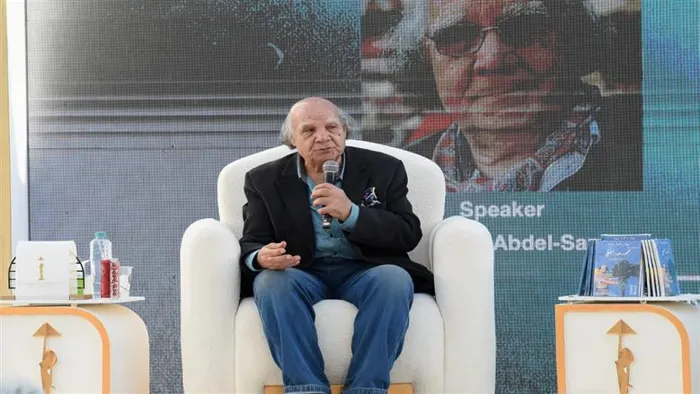
The tribute was accompanied by a special seminar that highlighted his artistic journey and creativity, and the attendees reviewed the most prominent milestones in his long career and his immortal works that left an unforgettable mark on the history of cinema.
An exceptional journey
Abdel-Samie revealed the most prominent milestones of his long journey with Egyptian cinema during his seminar held on Friday evening as part of the festival’s activities, recalling his memories with a number of iconic stars and his timeless works that shaped his artistic identity.
Abdel-Samie spoke about his special relationship with the late star Souad Hosny, explaining: “All the works I participated in were pure enjoyment. I faced lighting challenges with precise tools to reach the image that the viewer deserved, and with Souad there was something different. I understood her from the look in her eyes without her speaking, and I loved photographing her.”
He also touched on his artistic beginnings with Hussein Fahmy (currently the head of the festival), explaining that their first collaboration was not as planned, as Fahmy intended to direct his first film while Abdel-Samie was in charge of photography. However, Fahmy later turned to acting, leading to a long collaboration and a professional brotherhood that continues to this day.
Cairo Film Festival honors
Regarding the honor he received from the Cairo Film Festival, Abdel-Samie expressed his feelings, saying: “Throughout my life, I have received many honors inside and outside Egypt, but the Cairo Film Festival honor has a special significance. I have lived with the festival for years with passion, following films and building relationships, and to be honored after this long journey carries great emotional value.”
Regarding his most prominent cinematic works, he pointed out that each film has a different spirit and experience, but he considered the film “The Houseboat 70” to be the most important for him, describing it as a visual experience that went beyond the traditional style of Egyptian cinema. He also expressed his love for the film “The Amulet,” explaining that the camera in it was not just a tool, but a partner in the narrative that reflects the psychological state of the hero.
professional rituals
Abdel-Samie stressed his professional rituals and the importance of understanding the script before filming: “I cannot work without studying the script well. The director must speak to me first, then I read the script to imagine the image I will create.”
He also added a touch of humor when he recounted an incident from behind the scenes of the filming of “The Amulet,” when he was asked to perform a scene in which the genie appeared in an unconventional way: “I used an old narrow-angle lens to produce the scene as required and with minimal resources, because I never say no.”
Difficult challenges
He also touched on one of his most difficult professional challenges, which was filming documentaries during the War of Attrition, and said about it with pride: “When Fouad El Tohamy asked me to travel to the front, I felt that I was doing a national duty. In 1967, there were no cameras available and we had to borrow a news camera, and I was the first filmmaker to enter the front during the War of Attrition, and we faced great difficulties.”
He concluded by emphasizing that talent alone is not enough to make a successful director of photography, but also requires broad culture and visual awareness: “I always think about time and feelings during filming… Whoever wants to film a work must study it well, and I read a lot to understand the world of the film The Amulet and its implications.”