Europe’s Russian Gas Exit: Why Germany Is Paying a Higher Price Than France
+++ EU gaz measures softened the immediate impact on millions of consumers but shifted part of the cost onto public finances.
By Kamal Ben Younes
International reporter and Expert
Europe’s drive to eliminate Russian gas is entering its final phase. The shift has strengthened the bloc’s energy security, but at a significant economic cost — one that has fallen far more heavily on Germany than on France.
The European Union is approaching the final stage of one of the most consequential energy shifts in its history: ending its reliance on Russian natural gas.
Under the EU’s phase-out framework, Russian gas is due to disappear from the bloc’s energy system in 2027, with restrictions covering both liquefied natural gas (LNG) and pipeline supplies.
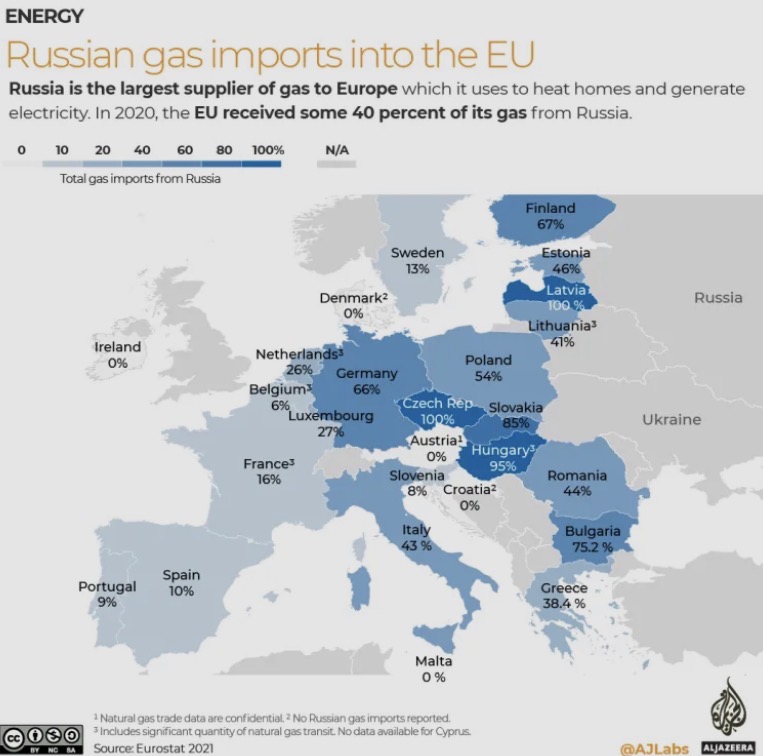
The policy marks a decisive break with the energy model that prevailed before Russia’s invasion of Ukraine, when Moscow supplied roughly 45% of the EU’s imported gas.
That share has since fallen dramatically as Europe has expanded LNG imports, increased supplies from Norway and sought alternative producers.
But reducing geopolitical dependence has come at a price.
For Germany, the loss of relatively cheap Russian pipeline gas has added pressure to an industrial economy already confronting weak growth, global competition and the costs of decarbonisation.
France, protected in part by its large nuclear fleet, has proved more resilient. Yet it has not escaped the consequences of higher European energy prices — and remains entangled in the final phase of Russian LNG imports.
Germany’s Industrial Model Under Pressure
Few major European economies were as exposed to Russian gas as Germany.
Before 2022, cheap and abundant pipeline supplies helped support the country’s energy-intensive manufacturing base. Chemicals, steel, glass, metals and other industries benefited from an energy system that reinforced Germany’s position as one of the world’s leading exporters.
The rupture with Russia changed that calculation.
Economic studies examining the consequences of an embargo have estimated potentially substantial losses for Germany, depending on assumptions about substitution, prices and industrial adjustment.
The longer-term concern, however, is less about a one-off GDP shock than about competitiveness.
German manufacturers now operate in an environment where energy can be significantly more expensive than in competing industrial regions.
That is particularly problematic for industries in which energy represents a large share of production costs.
Chemical producers are among the most exposed. BASF, Europe’s largest chemicals group, has become a prominent symbol of the pressure facing German industry as companies reassess investment and production decisions.
If higher energy costs persist, companies face an uncomfortable choice: absorb them through lower margins, pass them on to customers or move production to lower-cost regions.
That raises a broader question for Europe’s largest economy: how much of its energy-intensive industrial base can remain internationally competitive under the new energy regime?
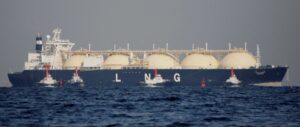
LNG Solved One Problem — and Created Another
Germany’s immediate response to the Russian supply shock was rapid.
Berlin accelerated the construction and deployment of LNG import infrastructure, including floating storage and regasification units.
The strategy helped prevent the worst-case scenario feared in 2022: severe physical shortages and widespread industrial rationing.
But LNG changed the economics of European gas.
Russian pipeline supplies relied on fixed infrastructure connecting producing fields directly with European consumers. LNG requires gas to be liquefied, transported by specialised vessels and regasified before entering the European network.
Europe has consequently moved from heavy dependence on a single pipeline supplier towards greater dependence on a global commodity market.
The United States has emerged as a major LNG supplier, while Norway has become even more important to European energy security. Qatar and other LNG producers have also gained strategic weight.
The new system is more diversified and therefore less vulnerable to political pressure from a single supplier.
But it also exposes Europe more directly to global LNG prices.
European buyers must compete with Asian consumers for cargoes. A cold winter, strong Asian demand or disruption to global shipping and energy infrastructure can quickly tighten the market.
Energy security has improved. Cheap energy is harder to guarantee.
France’s Nuclear Buffer
France entered the crisis from a stronger position.
Its large nuclear power fleet means natural gas plays a smaller role in electricity generation than it does in many other European countries.
That difference significantly reduced France’s direct exposure to the Russian gas shock.
Early economic assessments by France’s Council of Economic Analysis estimated that an embargo could reduce French activity by roughly 0.15% to 0.3% of GDP — substantially less than some estimates for Germany.
The contrast illustrates the strategic importance of a country’s electricity mix.
Nuclear power does not isolate France from European energy markets, but it provides a buffer that Germany did not possess to the same extent.
France has nevertheless paid a substantial indirect price.
Higher European energy costs affected households and businesses, while the government deployed extensive support mechanisms, including energy price caps and subsidies.
Those measures softened the immediate impact on consumers but shifted part of the cost onto public finances.
The economic burden of the energy crisis therefore extends beyond headline GDP figures.
France’s Russian LNG Paradox
France also occupies an unusual position in Europe’s remaining energy relationship with Russia.
Despite the EU’s commitment to eliminate Russian gas, French LNG terminals have continued to receive Russian cargoes.
Some of those supplies are linked to long-term contracts signed before the war, including agreements involving French energy group TotalEnergies.
That creates a complicated transition.
Companies cannot necessarily walk away from long-term contracts without potential financial or legal consequences. An EU prohibition changes that framework by providing a regulatory basis for ending Russian purchases.
Until the phase-out is complete, however, Europe faces an apparent contradiction: Russian gas can continue entering the market even as the bloc legislates for its elimination.
The increase in some Russian gas flows ahead of the deadline does not therefore necessarily indicate a reversal of European policy. It can also reflect the commercial incentives created by existing contracts before those contracts become legally unusable.
Europe’s New Gas Map
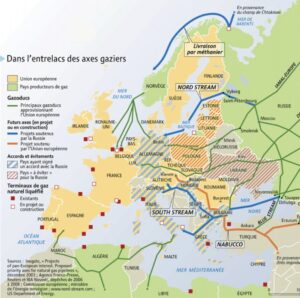
Russia’s retreat from the European market has reshaped the continent’s energy geography.
Norway has become an increasingly important supplier through its extensive pipeline connections. Its advantages include proximity and political stability, although production capacity cannot expand indefinitely.
The United States has emerged as a critical LNG supplier, offering large volumes and flexible maritime deliveries. That flexibility comes with higher infrastructure and transportation costs compared with traditional pipeline supplies.
Algeria remains strategically important, particularly for southern Europe, through pipeline connections to Italy and Spain. Its ability to increase exports, however, is constrained by production capacity and growing domestic consumption.
Qatar and other LNG producers provide additional diversification.
Collectively, these suppliers have enabled Europe to reduce Russian dependence much faster than many analysts initially considered possible.
But diversification should not be confused with lower costs.
Europe has effectively purchased greater geopolitical resilience at the expense of some of the cost advantages associated with its previous energy system.
Security Versus Competitiveness
That trade-off lies at the centre of Europe’s energy strategy.
Before 2022, the economic logic was straightforward: Russian pipeline gas was abundant, geographically accessible and commercially attractive.
The war exposed the strategic weakness behind that model.
A low-cost supplier can become a major geopolitical vulnerability when political relations deteriorate and energy itself becomes an instrument of pressure.
European governments have therefore increasingly treated energy security as having an economic value of its own.
From that perspective, higher costs are not simply a policy failure. They can also be understood as an insurance premium against excessive dependence on a single geopolitical supplier.
The problem is that the premium is not distributed equally.
France can rely on nuclear power to limit part of its exposure.
Germany must simultaneously secure alternative energy supplies, decarbonise its economy and preserve an industrial sector that was partly built around competitively priced Russian gas.
The Next Test Is Winter
Europe’s ability to complete the transition without another major price shock will depend on several factors outside policymakers’ direct control.
Weather remains one of the most important.
A mild winter reduces heating demand and preserves storage levels. A prolonged cold spell can rapidly increase consumption and push prices higher.
Global LNG demand matters as well. If Asian consumption rises sharply at the same time as European demand, competition for available cargoes could intensify.
Geopolitical disruptions affecting production, shipping routes or energy infrastructure would add another layer of risk.
Europe is considerably better prepared for such shocks than it was in 2022. Its supplier base is broader, LNG import capacity has expanded and governments have gained experience managing storage and demand.
But the underlying vulnerability has changed rather than disappeared.
Europe is less dependent on Russia. It is more exposed to the global LNG market.
The Bigger Question Is Industrial
The ultimate consequences of Europe’s Russian gas exit will not be measured solely by energy prices or storage levels.
They will be measured by investment, industrial production and competitiveness.
For Germany, the challenge is particularly acute. The country must determine whether its energy-intensive industrial model can adapt to structurally different energy economics without accelerating the relocation of production and investment.
For France, the challenge is to convert its nuclear-heavy electricity system into a durable competitive advantage while containing the fiscal cost of protecting households and industry.
The strategic case for reducing Russian energy dependence has become deeply embedded in European policy.
The economic question remains unresolved.
Europe has demonstrated that it can sharply reduce its reliance on Russian gas. The next test is whether it can do so while preserving the industrial competitiveness on which much of its prosperity depends.
The success of Europe’s energy divorce will therefore be judged not simply by whether Russian gas disappears from the market in 2027, but by whether the continent can replace dependence on Moscow without replacing it with permanently higher costs and a weaker industrial base.
Cette version est particulièrement adaptée à une rubrique Economy / Energy / Geopolitics, avec un angle central plus net : energy security versus industrial competitiveness.