Sahara: Chile and Panama strengthen their support for Morocco’s position
Two new positions from Latin America have reinforced in New York the approach advocated by Rabat on the Sahara issue.
Chile and Panama expressed support for Morocco’s sovereignty over its territory and, in distinct terms, reaffirmed their backing for the Moroccan autonomy initiative presented in 2007.
The announcements were made on Monday in New York, on the sidelines of the 81st session of the United Nations General Assembly, following separate meetings between Morocco’s Minister of Foreign Affairs, African Cooperation and Moroccan Expatriates, Nasser Bourita, and his Chilean and Panamanian counterparts.
Chile supports Moroccan sovereignty
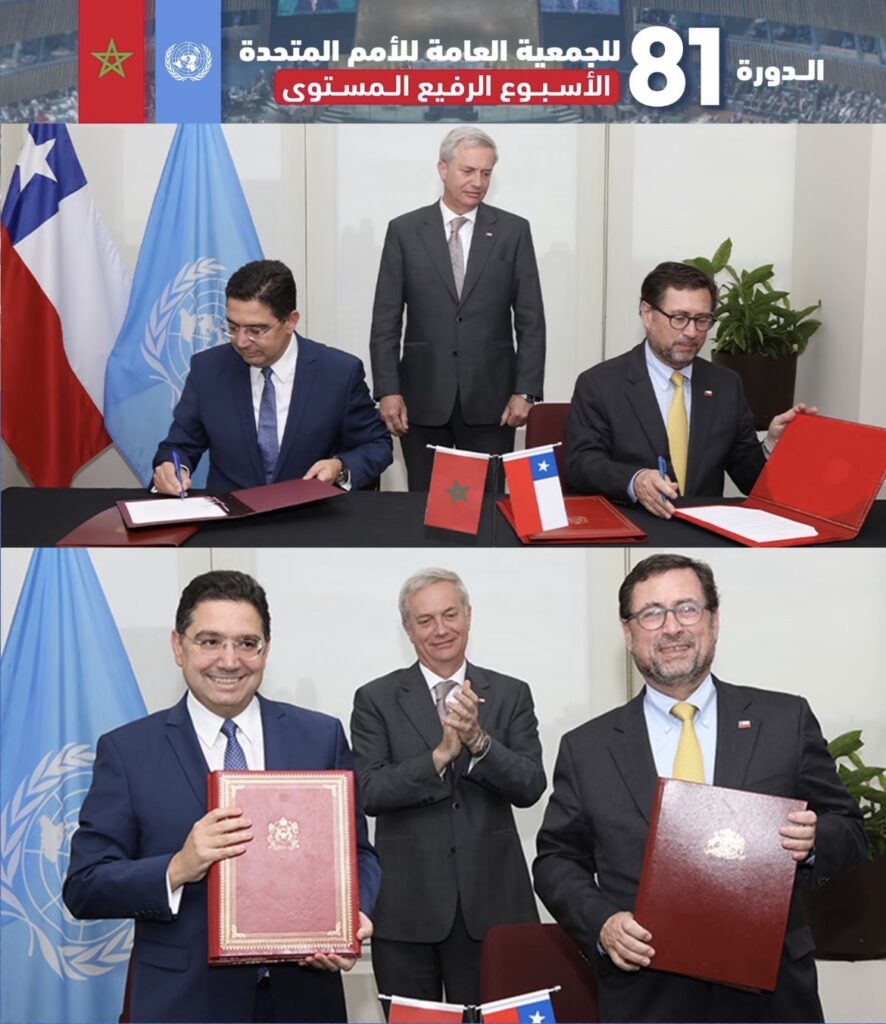
In a joint statement issued following talks between Nasser Bourita and Chilean Foreign Minister Francisco Pérez Mackenna, Santiago expressed its support for the sovereignty of the Kingdom of Morocco over its entire territory, including the Sahara region.
Chile also considers the autonomy proposal presented by Morocco in 2007 to be a “just, lasting and mutually acceptable” political solution. The meeting took place in the presence of Chilean President José Antonio Kast.
This development brings Santiago’s position closer to the approach advocated by Rabat, which presents autonomy under Moroccan sovereignty as the basis for a final settlement of the dispute within the framework of the UN-led political process.
Chile also expressed its support for the momentum generated by UN Security Council Resolution 2797 of 2025 and joined calls for talks without preconditions, based on Morocco’s autonomy proposal, with the aim of reaching a final political solution acceptable to the parties.
Santiago also intends to give an economic dimension to this new orientation. Chile plans to promote opportunities for economic and trade cooperation in the Sahara region, particularly in the areas of investment, trade and productive development.
The two ministers also signed terms of reference paving the way for negotiations on a free trade agreement between Morocco and Chile, adding an economic dimension to the political rapprochement between Rabat and Santiago.
Panama also expresses its support
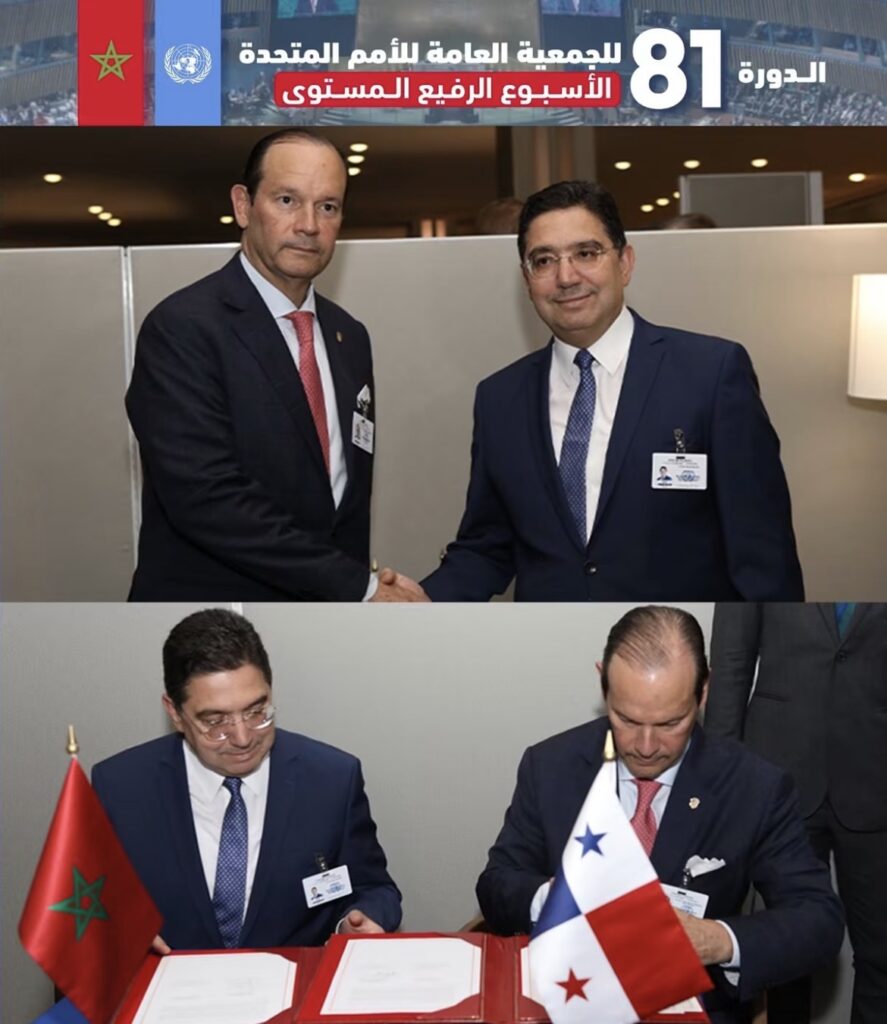
On the same day in New York, Panama also expressed its support for the sovereignty of the Kingdom of Morocco over its entire national territory.
The position was outlined in a joint statement issued following talks between Nasser Bourita and Panamanian Foreign Minister Javier Eduardo Martínez-Acha Vásquez.
Panama further stated that its embassy to the Kingdom of Morocco fully exercises its consular jurisdiction throughout Moroccan territory, thereby giving a diplomatic and consular dimension to the position announced.
At the political level, Panama welcomed the momentum generated by UN Security Council Resolution 2797 of 2025 and reaffirmed its support for the autonomy plan under Moroccan sovereignty.
According to the joint statement, the Panamanian authorities consider Morocco’s 2007 autonomy proposal to be “the only serious, credible and realistic basis” for reaching a political solution to the dispute.
Following his meeting with Nasser Bourita, Javier Eduardo Martínez-Acha Vásquez also stated that his country had decided to support Morocco’s autonomy plan, expressing the view that the Sahara region should remain under Moroccan sovereignty.
The Panamanian foreign minister also highlighted the current level of relations between Rabat and Panama, under King Mohammed VI and President José Raúl Mulino, while underscoring Morocco’s role in promoting regional and continental stability.
A significant diplomatic development for Rabat
The positions expressed almost simultaneously by Chile and Panama represent a notable diplomatic development for Morocco in Latin America, a region where the Sahara issue has historically been the subject of differing political positions.
Although the wording used by the two countries is not entirely identical, both announcements converge on two central elements of Rabat’s position: support for Moroccan sovereignty and recognition of the autonomy initiative as a basis for a political solution.
Chile has added an economic dimension to its position, with the prospect of investment and trade in the region, as well as the opening of negotiations for a free trade agreement. Panama, for its part, has emphasized the diplomatic and consular implications of its position by stating that its embassy exercises its jurisdiction throughout Moroccan territory.
For Rabat, these two developments further strengthen the diplomatic convergence it has sought to build around its autonomy initiative. The dispute, however, remains part of the political process conducted under the auspices of the United Nations, involving the parties concerned.