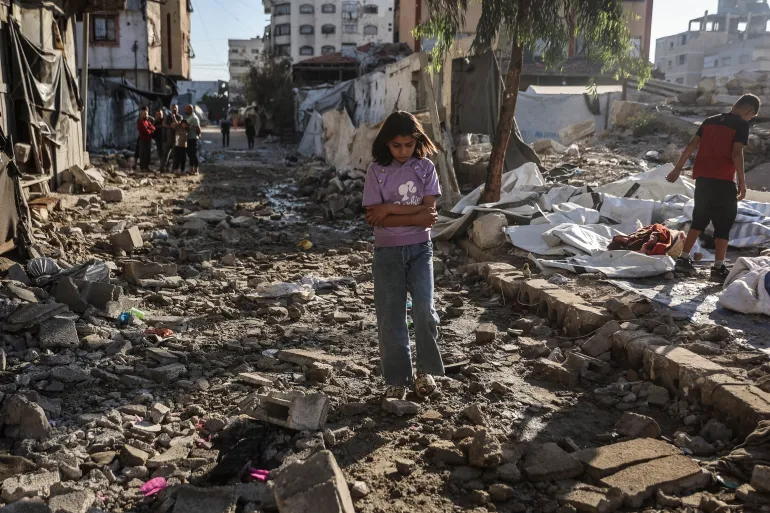
One thousand days have passed since the outbreak of the war in the Gaza Strip. Far more than a mere passage of time, this period has marked a profound turning point that has reshaped the territory on every level. As military operations continue, the human toll keeps rising and the humanitarian crisis continues to deepen. Gaza’s residents face increasingly harsh living conditions amid widespread destruction, repeated displacement, and the collapse of essential services.
According to the latest statistics released by the Government Media Office in Gaza, more than 2.4 million Palestinians are living under extremely difficult humanitarian conditions. More than 90 percent of the Gaza Strip has been affected by destruction, while over 80 percent of its territory is now subject to military incursions or evacuation orders, forcing the majority of the population into repeated displacement.
The human cost remains the defining feature of the war. The number of fatalities whose bodies have reached hospitals has risen to 73,066, in addition to nearly 9,500 people reported missing, while the number of injured has exceeded 173,000. Statistics also indicate that more than 21,500 children and 12,500 women have been killed during the conflict. Children, women, and elderly people account for more than 55 percent of all casualties, highlighting the devastating impact of the war on civilians.
The conflict has also crippled vital sectors. Thirty-eight hospitals have gone out of service after being destroyed or targeted, while the healthcare system is suffering from a severe shortage of medical resources. Meanwhile, thousands of patients and injured people require urgent treatment and medical care both inside and outside the Gaza Strip.
On the humanitarian front, famine and malnutrition have become among the most visible features of the crisis. As the blockade continues and shortages of food, water, and medicine persist, 460 people have died from hunger and malnutrition, including 164 children. Hundreds of thousands more face worsening food insecurity and deteriorating health conditions unless border crossings are fully reopened.
The war has also inflicted severe damage on the education and housing sectors. More than 620,000 students have been deprived of continuing their education, while over 510,000 housing units have been damaged or destroyed, leaving hundreds of thousands of families displaced. Most continue to live in overcrowded shelters or makeshift tents that lack even the minimum requirements for a dignified life.
The consequences of the war extend well beyond the humanitarian sphere to the economy and infrastructure. Initial direct losses are estimated at around 80 billion US dollars following the systematic destruction of the housing, healthcare, education, agriculture, and essential services sectors, making the reconstruction of the Gaza Strip a historic, complex, and long-term undertaking.
After one thousand days, these figures are no longer mere statistics; they have become the daily reality of Gaza’s residents. As military operations continue and humanitarian needs expand, these indicators stand as testimony to the scale of an unprecedented catastrophe and to a suffering that has yet to come to an end.
Politically, efforts to secure a permanent ceasefire continue to face complex challenges amid ongoing military operations and stalled diplomatic initiatives. While international calls persist for the protection of civilians, the unhindered delivery of humanitarian assistance, and the creation of conditions conducive to reconstruction, the future of the Gaza Strip remains dependent on the success of these efforts to end the war, address its humanitarian consequences, and establish a genuine political process capable of achieving lasting security and stability.