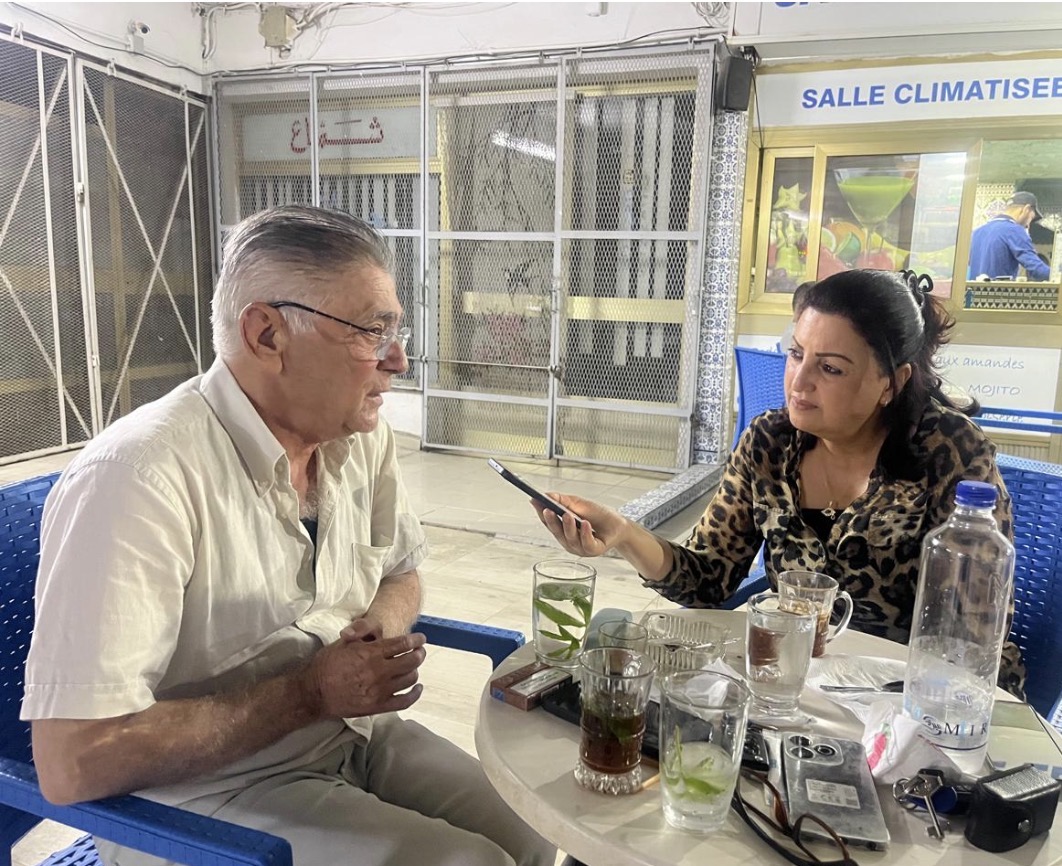

Professor of International Law Ibrahim Al-Rifai to “Africa News Info”:
The aggression against Palestine, Lebanon, and Iran supports the option of “permanent war”
++ The Fatah Movement conference is a political safeguard for the Palestinian cause and an important mechanism for achieving national unity
***The Israeli war on the Gaza Strip, the West Bank, and Lebanon is part of a dangerous international conflict
The war on Iran also aims to weaken “the growing Sunni Islamic current” and the rising power of China
Interview by Sonia El-Ftouhi
The eighth conference of the Palestinian National Liberation Movement, Fatah, held last month in the city of Ramallah in the West Bank, was not merely an electoral event. Observers of Palestinian affairs consider it a pivotal moment in the history of the Palestinian struggle, in both its political and armed dimensions.
This conference comes amid major regional and international geopolitical changes, as well as an Israeli war of extermination in the Gaza Strip and the West Bank, which has brought the Palestinian cause back to the forefront of the global scene. This makes the conference an opportunity to break the wall of silence surrounding the Palestinian people’s right to self-determination and to establish an independent, sovereign state with Jerusalem as its capital.
In an exclusive statement to “Africa News Info,” Palestinian professor of international law and political science researcher Ibrahim Al-Rifai said that the broader context of the Fatah conference goes beyond being a purely Palestinian event. Rather, it represents a means of safeguarding the existing Palestinian political system in light of the changes taking place on the international stage.
He added that holding the conference after years of delay constitutes a response to a number of challenges, foremost among them the need to reorganize the Palestinian internal political structure through the outcomes of the conference and to lay the groundwork for drafting a Palestinian constitution.
Al-Rifai said:
“One of the main objectives of the conference, regardless of the results that emerged from it, is to achieve Palestinian national unity based on dialogue with all components of the political spectrum and the Palestinian factions. The aim is to unify positions and reach common ground in confronting the growing ambitions of the Zionist occupation, which are primarily based on displacing Palestinian citizens from both the Gaza Strip and the West Bank, continuing the policy of Judaization through the construction of additional settlements, and imposing occupation laws that would eliminate Areas A and B established under the Oslo Accords.
“These ambitions also include extending religious and political control over Al-Aqsa Mosque and taking control of Palestinian religious, cultural, and intellectual heritage.”
Ibrahim Al-Rifai noted that “the ongoing comprehensive war of extermination in the Gaza Strip and the West Bank is fundamentally aimed at displacing Palestinians from their homeland, in clear violation of international law.”
He continued:
“Therefore, unifying the Palestinian people politically and at the popular level will necessarily serve as a starting point for creating a Palestinian environment that strengthens the Palestinians’ attachment to their land in the face of reckless Israeli policies.”
Growing recognition of the Palestinian state because of the Israeli war of extermination, and calls to make use of the international solidarity movement
It can be said that the Fatah conference, held in Ramallah after nearly ten years, represented an outstretched hand amid the consequences of the war of extermination against the Gaza Strip and the deaths and injuries it has caused.
The number of Palestinians killed since October 2023 has exceeded 72,000, in addition to the security challenges facing the West Bank and Jerusalem. Palestinian leader Jibril Rajoub described the conference as “the most important in the history of the national movement and the Palestinian struggle.”
Despite criticism directed at the Palestinian Authority because of delays in implementing internal political reforms, particularly the holding of legislative and presidential elections, the conference also has a regional dimension.
These criticisms have coincided with the Israeli military escalation in the West Bank, the increase in settler attacks, and the expansion of settlement activity since the beginning of the war of extermination in the Gaza Strip.
In this context, Ibrahim Al-Rifai stressed that the growing international support for the Palestinian cause, after the world had witnessed the brutal reality of the Israeli occupation, could be used as leverage to upgrade Palestine’s status from a non-member observer state at the United Nations to a state with full membership.
It could also provide the necessary space for the Saudi-French initiative to secure additional international recognitions of the State of Palestine.
According to Al-Rifai, such political events, including the Fatah conference, could “strengthen the internal Palestinian situation and prevent the enemy from achieving its objective of displacement by supporting the resilience of the Palestinian people on their land and preventing the occupation from implementing its plans as part of the ongoing war of extermination in Gaza and the West Bank.”
He added:
“They also respond to the Palestinian blood that continues to be shed. However, the principal framework protecting Palestinian rights remains international legitimacy, which requires Israel to withdraw from all Palestinian territories within the 1967 borders, the establishment of a state with Jerusalem as its capital, and the protection of Palestinian economic sovereignty, which the occupation is seeking to control.
“Israel has already begun seizing many Palestinian resources, including lands containing Palestinian gas reserves in the Gaza Strip.”
Resistance is legitimate, but under certain conditions
Asked about armed struggle against the occupation and its legitimacy, Ibrahim Al-Rifai said that armed resistance remains legitimate as long as the occupation continues. It derives its legitimacy from the Palestinian national project, which recognizes resistance in its various intellectual, cultural, political, and armed forms.
However, according to Al-Rifai, armed struggle must be based on a careful strategic reading of reality and a precise assessment of the situation in order to determine its chances of success.
He explained that “the use of armed struggle must depend on the circumstances, which may give greater importance to one option over another or prioritize one form of resistance over others.”
Al-Rifai added:
“The principle of resistance has been recognized in international law, in the United Nations Charter, and in the right of peoples to self-determination. Strengthening the political system therefore means strengthening the Palestinian people’s ability to resist in all its forms, while taking into account the balance of power and regional and international changes.”
He also argued that “confronting the extremist and racist Zionist ideology promoted by the occupation in its educational curricula, and exposing the narratives used to legitimize the extermination and displacement of the Palestinian people, constitute a form of resistance.”
He called for intensified efforts to challenge the Zionist narrative comprehensively, beginning with redefining concepts and refuting what the occupation describes as terrorism.
This approach, he said, would help preserve the Palestinian truth and confront attempts to confuse the various forms of Palestinian resistance with terrorism. The United Nations has not yet reached a specific and universally accepted definition of terrorism.
This lack of a clear definition maintains an ambiguity that, according to Al-Rifai, the occupation seeks to exploit in order to classify the right to armed resistance as terrorism.
The war on Iran as a gateway to reshaping the Middle East and reaching China and Russia
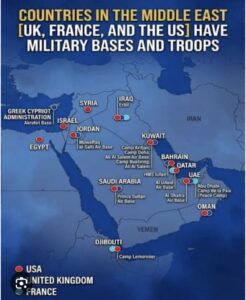
Amid the changes taking place in the Middle East, the true intentions of the Zionist project, which seeks expansion and the imposition of new colonial rules, are becoming increasingly evident.
Ibrahim Al-Rifai believes that current developments in Iran and Palestine are aimed at reshaping a new Middle East in which Israel would be openly and fully integrated.
He noted that the main objective is not limited to Iran but also includes Arab countries, which could be turned into human shields behind state structures that can easily be manipulated.
Al-Rifai added that what is known as the “framework agreement for confidence-building” between the United States and Iran was allegedly conditioned by a sudden demand from US President Donald Trump, directed primarily at the mediators, requiring the prior signing of the Abraham Accords.
According to him, this demand was part of an American-Israeli attempt to counter the growing Sunni influence in countries such as Saudi Arabia, Pakistan, Türkiye, and Egypt, as well as in other Arab countries supporting an end to the war on Iran, alongside China and Russia, under the pretext of eliminating a declining Shiite influence.
The concept of permanent war in Zionist doctrine
In the context of contradictions in US political positions on the international stage, particularly those relating to truces and ceasefires in Iran, Lebanon, and Palestine, Ibrahim Al-Rifai said that every such agreement is regarded in Zionist doctrine as a deceptive agreement falling within the concept of permanent war promoted by Israel.
Israel, he said, translates this doctrine into practice through its repeated violations in Lebanon, Syria, and the Gaza Strip.
Al-Rifai noted that every escalation in Iran, Palestine, and Lebanon ultimately targets China and Russia in the medium and long term. It forms part of an agenda for the post-Iran phase, within the framework of global Zionist hegemony and American-Israeli policies aimed in particular at preventing China from becoming the world’s sole superpower.
He linked this objective to China’s growth rates, which exceed global standards, as well as to its significant capabilities in cyber warfare, missile technology, electronics, and advanced technologies. China also possesses important resources of rare minerals and energy supplies.
In conclusion, Al-Rifai said that the American-Israeli conflict in the Middle East, alongside the Russian-Ukrainian war of attrition, is fundamentally a struggle to control the world and contain China’s growing power.
He emphasized that Israeli Prime Minister Benjamin Netanyahu, a supporter of the concept of permanent war, now finds himself in a difficult position because he is no longer capable of continuing his expansion in the region.
According to Al-Rifai, the developments Netanyahu presents as achievements cannot be maintained in the long term, whether in Lebanon, Palestine, or even Syria. They will eventually become a heavy burden on which he will be unable to build any lasting project.
He concluded that any structure based on such policies would be fragile. In his current situation, Netanyahu is unable either to retreat from his aggression or to continue moving forward. He is not even able to remain where he is, given the current political changes and the growing global momentum in support of international law and the Palestinian cause.