++Calls for Washington and NATO countries to withdraw tens of thousands of their soldiers
++Foreign bases have evolved from a protective umbrella into a strategic burden
Monia Ayadi
Tunisian journalist and writer
The current aggressive war against Iran and its allies in Iraq, Lebanon, Yemen, Palestine, and the entire region has revealed the fragility of the massive military and security bases established by Washington and NATO countries in a large number of Arab and Islamic countries, especially in the Gulf and Jordan…
These bases have failed to protect countries that spent billions for them…
Since the end of the Cold War, the United States has consolidated its military presence in the Middle East through a complex network of bases and military installations extending from the Gulf to the Levant. Estimates indicate the existence of between 15 and 20 major military sites, in addition to smaller sites and logistical facilities, distributed across more than 10 Arab countries. The number of American soldiers in the region ranges between 40,000 and 50,000 soldiers, with the possibility of rapidly increasing this number in times of crisis.
Al Udeid Air Base in Qatar is considered the beating heart of this deployment, accommodating around 10,000 soldiers and used as a command center for air operations in Iraq, Syria, and previously Afghanistan, in addition to its central role in managing regional operations. In Bahrain, the headquarters of the U.S. Fifth Fleet constitutes one of the most important pillars of maritime control, ensuring supervision over vital strategic routes, especially the Strait of Hormuz. In Kuwait, bases such as Camp Arifjan and Camp Buehring are used as major logistical hubs for ground forces and strategic storage sites for military equipment.
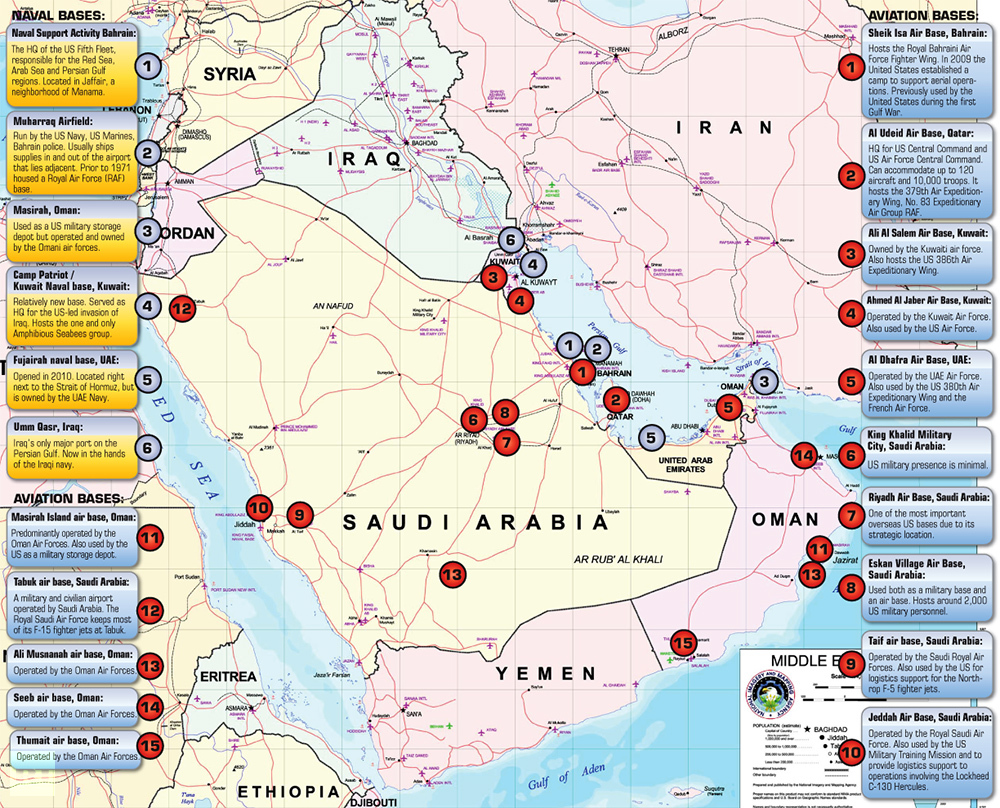
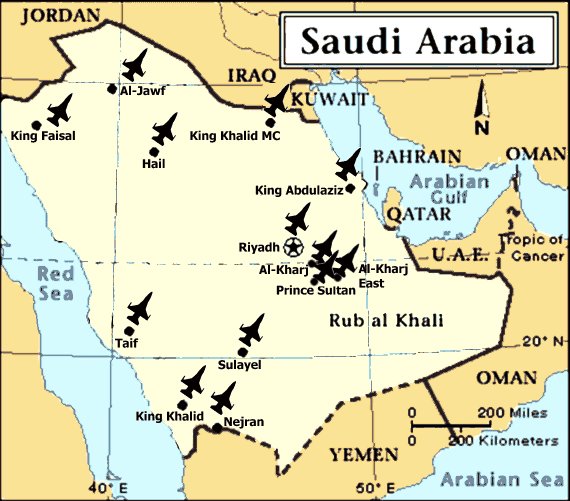
In the United Arab Emirates, Al Dhafra Air Base plays a vital role in reconnaissance and airstrike operations, while Saudi Arabia hosts Prince Sultan Air Base, which has been reactivated in recent years to strengthen air defenses against regional threats. The U.S. military presence also continues in Iraq through bases such as Ain al-Asad and Erbil, and in Jordan through Muwaffaq al-Salti Air Base, reflecting a geographical deployment covering the most important strategic points in the region.
This deployment is not limited to a traditional military presence, but represents an integrated system that includes command and control, intelligence, logistical support, and rapid deterrence, making these bases a fundamental element in the structure of global American influence.
Host countries: between a protection umbrella and the risk of becoming a battlefield.
Despite the sense of security that U.S. bases provide to some regimes, they actually place host countries at the heart of complex security equations. The presence of such large military installations makes these countries an integral part of any potential conflict, even if they are not a direct party to it.
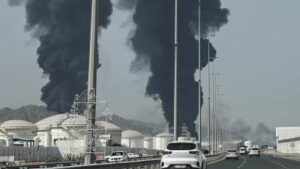
Recent events have shown that U.S. bases are no longer immune from targeting, as they have become targets for missile strikes or drone attacks, whether directly or through indirect deterrent messages.
This reality creates a clear paradox: bases that are supposed to provide protection may become a cause for attracting threats. Their presence also raises internal questions about national sovereignty, especially given the limited ability of governments to fully control the nature of operations conducted from these bases.
In addition, the close association with these bases may restrict the political maneuvering margin of host countries and bring them closer to alignment within regional and international axes, which may affect their relations with other parties in the region. With rising tensions, this association becomes more costly, not only in security terms, but also politically.
The United States: from military influence to the dilemma of attrition
For the United States, military deployment in the Middle East has for decades represented an effective tool to ensure influence and protect strategic interests, especially regarding energy and the security of allies. However, this model has begun to face increasing challenges in recent years.
Financially, these bases cost billions of dollars annually, whether in terms of operation, maintenance, or protection. Militarily, these bases have become vulnerable to sophisticated attacks, which imposes additional investments on Washington in air defense systems and anti-drone technologies. Non-traditional threats have also made it difficult to fully guarantee the security of these installations, regardless of the level of fortification.
Politically, the U.S. military presence faces increasing criticism, both within the United States and in the region, where it is sometimes viewed as a source of tension rather than a factor of stability. With the shift of U.S. strategy toward other regions such as Asia and the Pacific, a fundamental question arises regarding the feasibility of continuing this extensive deployment.
Will the United States withdraw from its bases after the latest war?
Following the recent military escalations in the region, a wave of analyses has emerged discussing the possibility of a broad U.S. withdrawal from the Middle East, or at least a significant reduction in the number of bases and forces.
However, analysts’ views almost agree that this scenario, despite its media appeal, does not accurately reflect the existing strategic complexity.
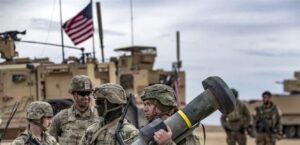
A number of military experts believe that the United States is not heading toward a “withdrawal” in the traditional sense, but toward a restructuring of its military presence. They emphasize that Washington seeks to reduce reliance on large fixed bases, in favor of enhancing rapid deployment capabilities, using smaller or temporary bases, and increasing reliance on technology such as drones and cyber capabilities.
On the other hand, other analysts point out that any broad withdrawal could be interpreted as a decline in U.S. commitment to its allies, which may open the way for competing powers such as China and Russia to strengthen their presence in the region. Therefore, Washington finds itself facing a delicate equation: reducing costs without losing influence.
Some researchers also note that previous experiences, particularly in Iraq and Afghanistan, have shown that “withdrawal” is often relative and temporary, where direct presence is replaced by other forms of military or security presence. Accordingly, what is happening today may be part of a transformation in the nature of military deployment rather than its end.
In the same context, strategic analysts believe that U.S. bases will remain in place in the foreseeable future, but with changes in their size and function, shifting from massive bases to more flexible platforms less vulnerable to targeting. This trend reflects a growing awareness within U.S. decision-making circles that the security environment in the Middle East no longer allows traditional models of military deployment.
Conclusion
Current developments show that foreign bases in the Middle East, especially American ones, are no longer merely tools of influence or guarantees of security, but have become a complex strategic burden. They expose host countries to increasing risks and impose intertwined financial, military, and political challenges on the United States. Between the desire to reduce presence and the need to maintain influence, the future appears to be heading toward a reconfiguration of this presence rather than its end, in a world whose balances are changing at an unprecedented pace. ة