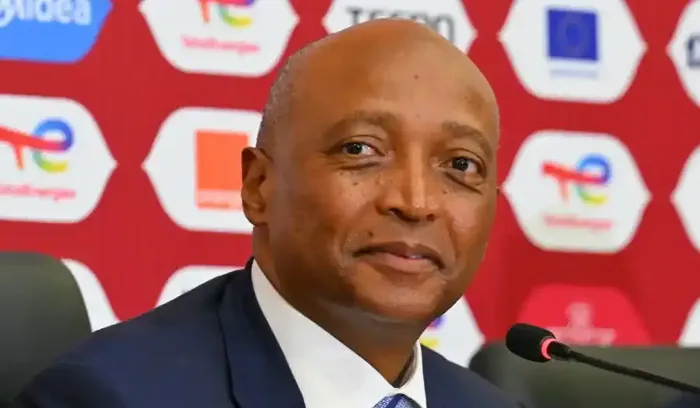
South African Patrice Motsepe, president of the Confederation of African Football (CAF), confirmed on Friday that the number of teams participating in the Africa Cup of Nations finals may rise to 28 teams, noting that the tournament will be held every four years in the future.
Motsepe said at a press conference in Dar es Salaam, the capital of Tanzania, on Friday that there are plans to increase the number of teams participating in the finals to 28, without specifying a date for the change.
Twenty-four teams participated in the finals in the last four editions of the continental tournament, after increasing from 16 teams.
The 24 participating teams were divided into six groups of four teams each, but Motsepe did not explain how four more teams would be accommodated in the tournament in the future.
CAF comprises 54 national federations, so the participation of 28 teams would constitute more than half of the members.
However, Motsepe reiterated that the Africa Cup of Nations will be held every four years after 2028, a decision that drew a lot of criticism when it was first announced last December.
The tournament has been held every two years since 1968.
Motsepe denied media reports that the 2027 finals would be moved from Kenya, Tanzania and Uganda – which are scheduled to host the next edition – due to concerns that the infrastructure in the three East African countries would not be ready in time.
Motsepe added: “CAF and African football will achieve tremendous success this year and in the coming years. We believe that Kenya, Tanzania and Uganda will deliver a good tournament next year.”
The CAF president explained that African football was embarrassed by the incidents that marred the 2025 final, as the Senegalese team left the field after a penalty kick was awarded against the team.
He concluded: “I am deeply disappointed by the unacceptable events that took place during the final match. We will amend the federation’s statutes and disciplinary rules to ensure that our judicial bodies have the authority to impose sanctions that reflect the seriousness of such conduct.”