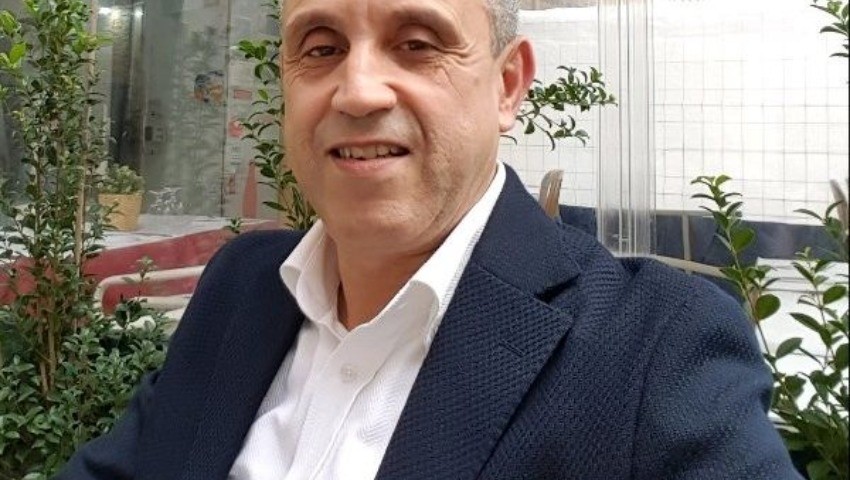
Arslan Chikhaoui is a member of the Advisory Council of Experts at the World Economic Forum and of the expert committee of the United Nations’ “Track II” mechanism. In this interview with L’Expression, he primarily addresses the significance of this new industrial revolution in Algeria’s path toward economic emergence.
L’Expression:
Is there a historical correlation between the opening of the Ghar Djebilet mine and the nationalization of hydrocarbons in 1971?
Arslan Chikhaoui:
Algeria is reclaiming control over its mineral resources, and we witnessed a clear expression of this process yesterday. All projects aimed at strengthening sovereignty and independence, such as the Ghar Djebilet mine, are inherently strategic. They demonstrate a genuine ambition for economic emergence and a strong commitment to political and geopolitical sovereignty.
To answer your question, a state needs three key levers to assert itself as a sovereign and independent entity: control over fossil and renewable energy, strategic and critical mineral resources, and agriculture.
Energy independence has already been achieved through the nationalization of hydrocarbons in 1971, particularly in the fossil fuel sector. Moreover, Algeria’s renewable energy program is among the most ambitious on the African continent. One clear example is that the Ghar Djebilet mining complex will be powered by a solar power plant, in addition to several solar projects totaling around 3,500 megawatts.
Agriculture also plays a crucial role in national sovereignty, with large-scale strategic farming projects being developed in southern Algeria. As for the mining industry, it provides essential inputs for agriculture and renewable energy. In recent years, this sector has been expanding, and the first tangible results are now visible with the development of the Ghar Djebilet iron mine. However, this remains only a promising beginning that requires the establishment of a robust downstream processing industry.
An analysis of the development plan reveals that each mining deposit will be accompanied by processing and transformation facilities. This clearly demonstrates a strong correlation between the nationalization of hydrocarbons in February 1971 and the launch of an integrated mining industry in February 2026.
L’Expression:
Will Algeria’s rise as an emerging mining power have geopolitical implications for the region?
Arslan Chikhaoui:
There are seventeen elements in the periodic table known as “critical minerals” or “rare earth elements,” which play a decisive role in global economic and geopolitical strategies. Algeria possesses several of these resources, placing it among countries with significant economic and geopolitical leverage.
When combined with full and respected sovereignty, this endowment qualifies Algeria as an emerging mining power. Rare earth elements are essential inputs for 21st-century industrial society. They are vital for high-tech products, including smartphones, energy conversion systems such as wind turbines and solar panels, as well as military technologies like radar and laser systems.
Some of these metals, such as indium and gallium, are critical for semiconductor manufacturing, a cornerstone of advanced industries and a key geopolitical imperative amid the intense rivalry between the United States and China. This gives producing countries a strategic advantage on the global stage.
In the near future, Algeria is expected to join this exclusive circle and effectively leverage its growing influence in international geopolitics.