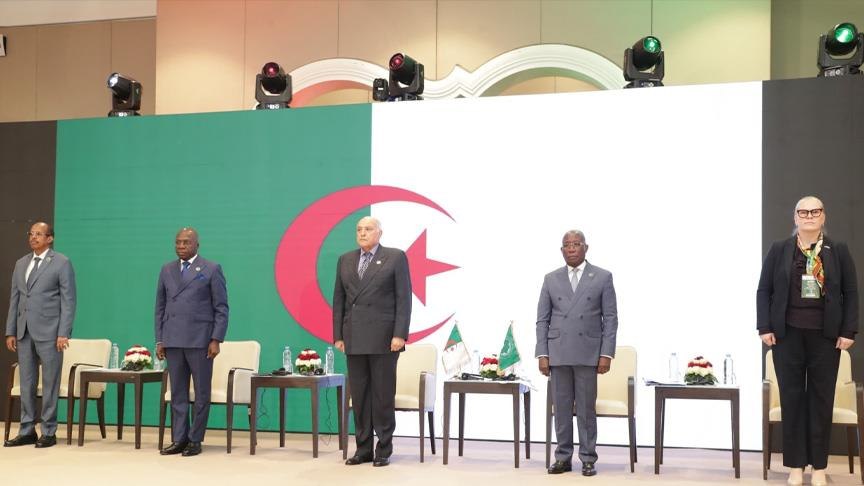
The twelfth edition of the High-Level Seminar on Peace and Security in Africa – the Oran Process was held in Algeria on Monday and Tuesday, 1–2 December 2025, at the “Abdelatif Rahal” International Conference Center in Algiers.
The opening session was chaired by the Minister of State, Minister of Foreign Affairs, the National Community Abroad and African Affairs, Ahmed Attaf, who conveyed the greetings of the President of the Republic, Abdelmadjid Tebboune, who supports this process, grants it great attention and ensures its continuity and strengthening.
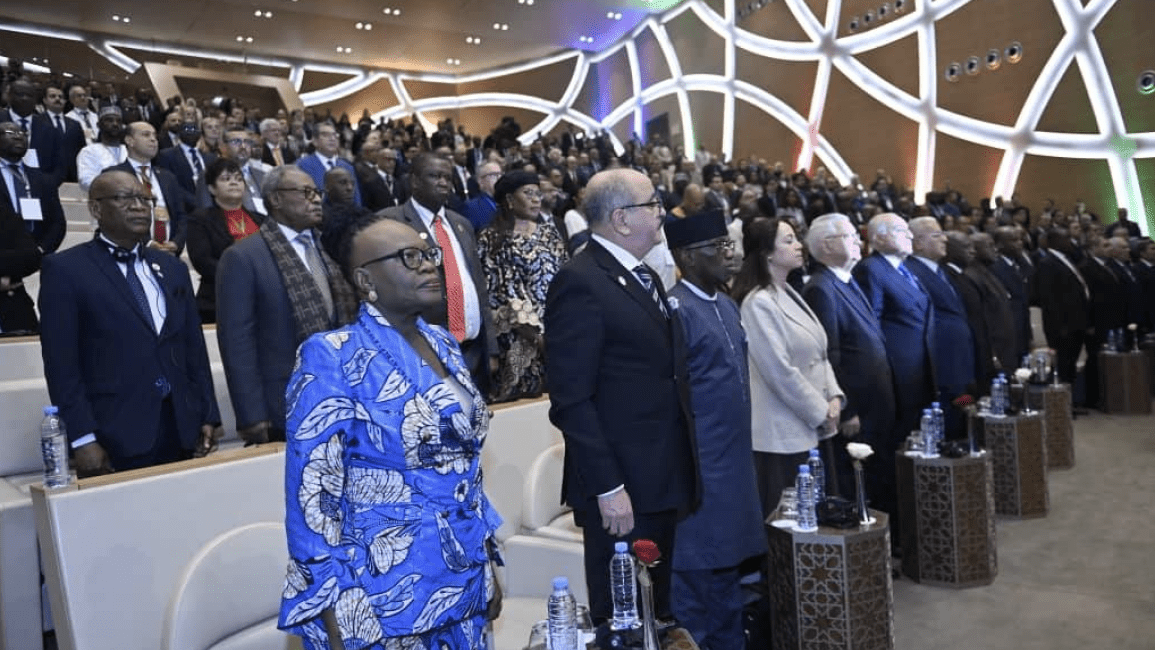
The seminar was attended by foreign ministers from numerous African countries, high-level African officials, members of the African Union’s Peace and Security Council, the current, incoming and outgoing African members of the UN Security Council within the A3 mechanism, as well as friends of the seminar, representatives of the AU Commission, the United Nations and various partners.
Algeria, the Initiating State
The 2025 edition is marked by Algeria’s dual participation as an African member of the UN Security Council (A3) and as a member of the African Union’s Peace and Security Council (PSC), in addition to being the host and initiator of the Oran Process.
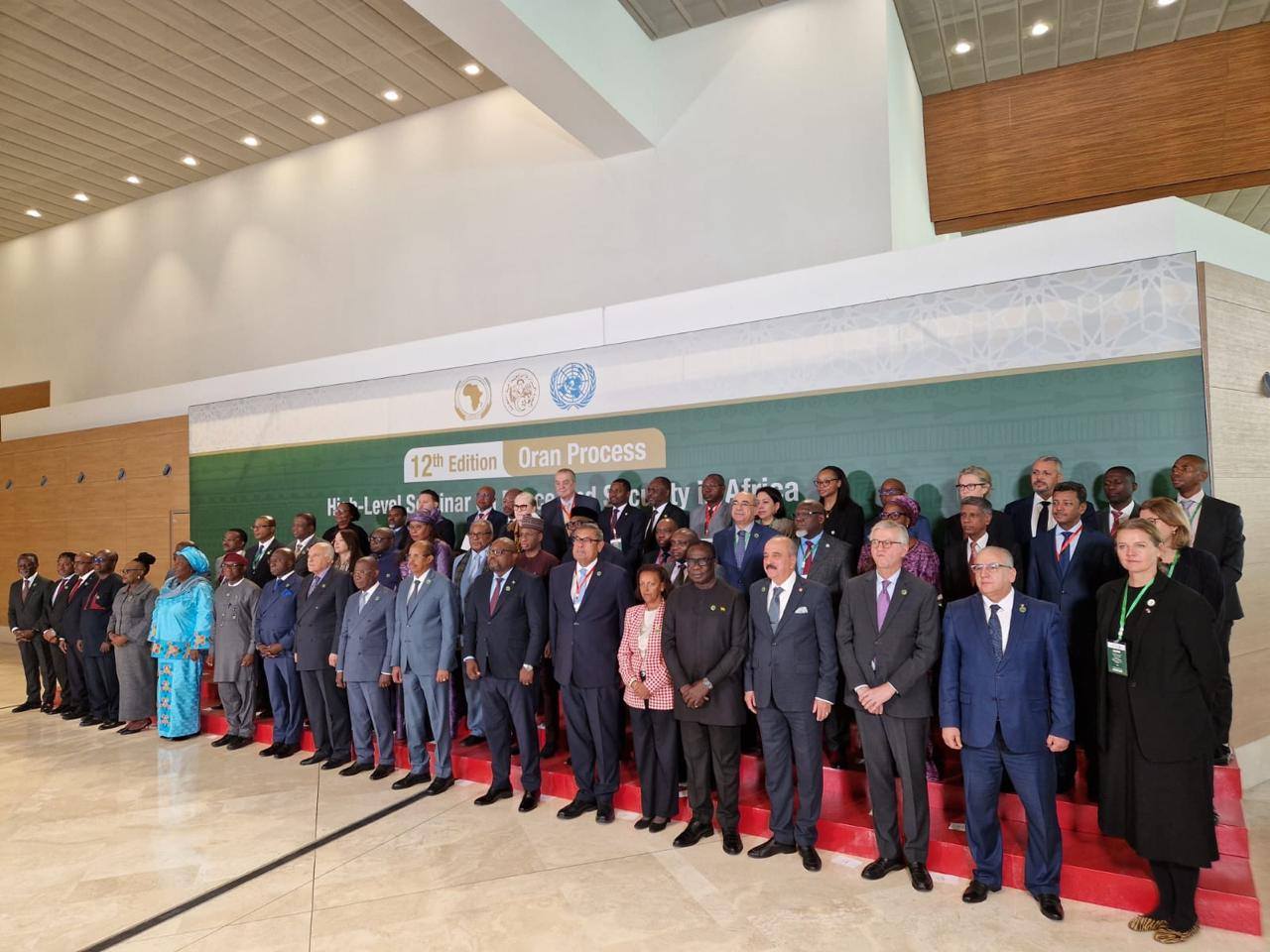
Algeria established this high-level seminar on peace and security in Africa in 2013. Today, it is an indispensable platform for discussions and reflections on peace and security issues on the continent, as part of Algeria’s continued efforts to strengthen joint African action.
Since its inaugural edition in December 2013, this annual gathering has served as a dedicated African platform for coordination between the A3 members of the UN Security Council and the PSC members of the African Union, in order to amplify Africa’s voice at the Security Council and defend common African positions effectively.
In recognition of Algeria’s efforts to strengthen the synergy between the A3 and the PSC, the eighth session held in Oran from 2 to 4 December 2021 adopted a resolution institutionalizing this forum under the name “Oran Process”, and designating the city of Oran as its permanent venue.
Exceptionally, the 2025 edition was held in Algiers, following the international conference on colonial crimes in Africa.
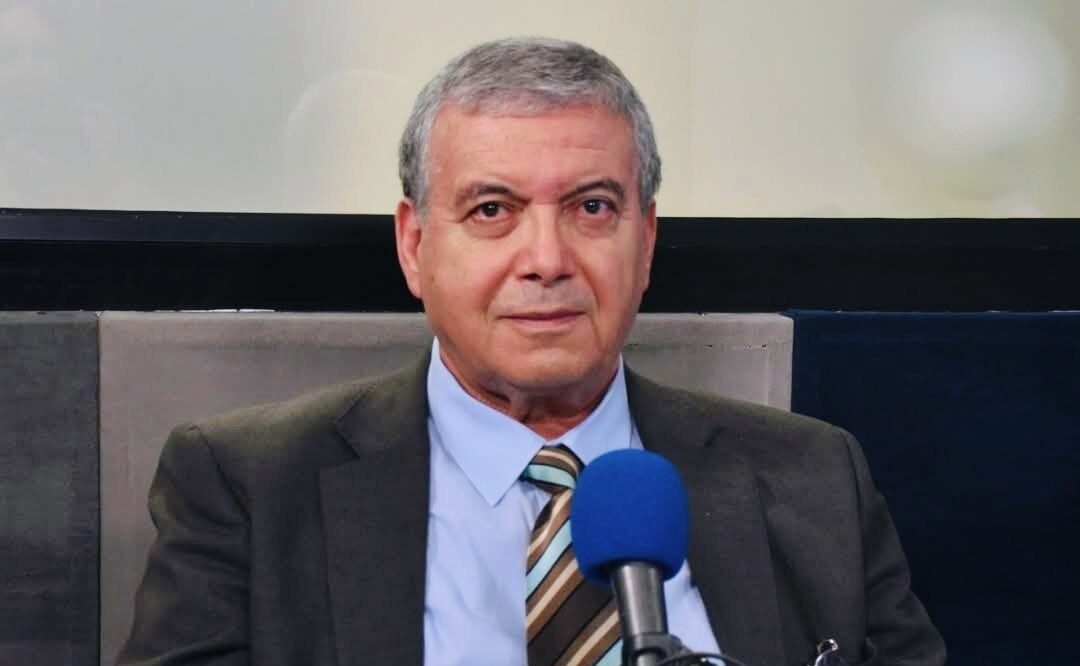
During his participation in the 12th High-Level Seminar, Tunisian Minister of Foreign Affairs, Migration and Tunisians Abroad, Mohamed Ali Nafti, delivered a speech highlighting the following points:
First: Conflicts, in addition to the immense human suffering they cause, represent a heavy economic and social burden due to displacement, disruption of trade, instability of the business environment and destruction of infrastructure. Countries most affected by conflict have recorded drops of up to 30% in their GDP within a single year.
Second: We bear today the responsibility of building an African security system founded on cooperation, solidarity and shared sovereignty. This requires closer coordination between states, strengthening preventive diplomacy, developing military and security cooperation, exchanging intelligence information and harmonizing national strategies to combat crime and terrorism.
Third: Sustainable security in Africa cannot be achieved without strengthening our institutions, modernizing defense and security forces, and investing in education, digitalization and the green economy. Combating violent extremism also requires fighting poverty, marginalization and the exploitation of vulnerable groups.
Tunisia’s Commitment to Multilateral Values
During the seminar, Minister Nafti emphasized that climate crises, desertification, water scarcity and forced displacement have become major security challenges, as they fuel local conflicts and exacerbate community tensions. Climate diplomacy must therefore be integrated at the heart of our peace-building strategies.
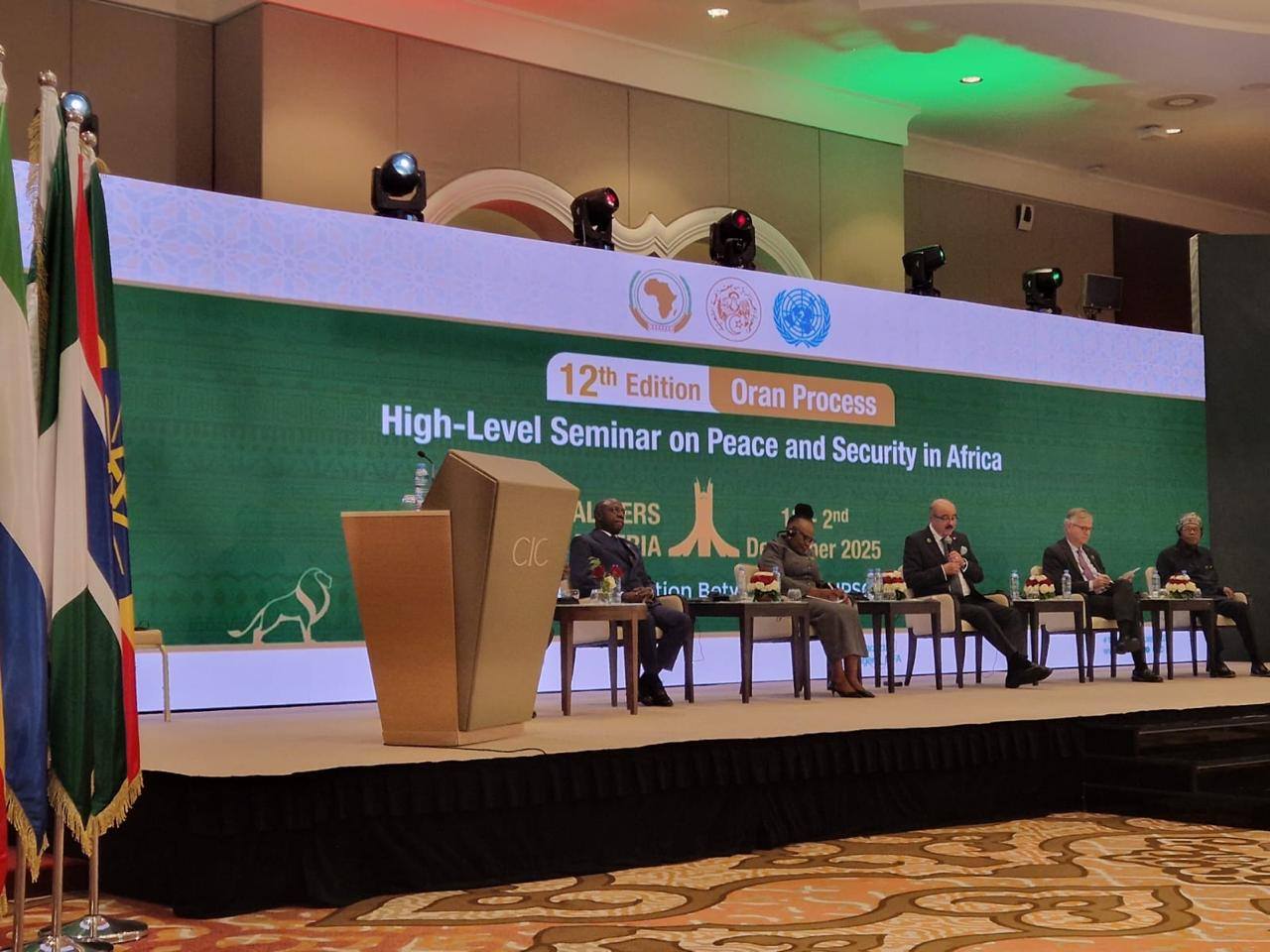
He stressed that countries most affected by conflicts have recorded GDP losses of 30% in a single year. He noted that Tunisia has represented Africa at the UN Security Council on four occasions, dedicating its non-permanent membership to defending African causes and advocating for a comprehensive understanding of peace and security in African contexts, including development, structural fragility and the drivers of violence and conflict.
At the end of his intervention, he reaffirmed Tunisia’s deep commitment to multilateralism within UN and African frameworks and to the principles of solidarity and cooperation. Tunisia has always contributed actively to African and international peace efforts through its participation in UN and AU peacekeeping missions.
On the sidelines of the seminar, the minister met UN Under-Secretary-General for Peacekeeping Operations, Jean-Pierre Lacroix, with whom he discussed the continuation of cooperation to strengthen peace and stability in Africa, in accordance with the UN Charter.
Mr. Lacroix praised the success of the UN conference hosted by Tunisia in July, confirming that work is ongoing to implement its recommendations. He also highlighted the financial, logistical and technological challenges facing peacekeeping missions, commending the high competence of Tunisian personnel.
Africa and the Challenge of Colonial Crimes
In this context, Ms. Salma Bekhta Mansouri, Secretary of State for African Affairs, stated during the closing session of the international conference on colonial crimes in Africa that “colonial crimes are not a matter of the past but a system of living effects that continue to shape growth trajectories, instruments of power and power balances on the continent.”
She added that addressing them “cannot remain limited to condemnation but must become a comprehensive political, legal and economic project placing Africa in a position of initiative rather than reaction.”
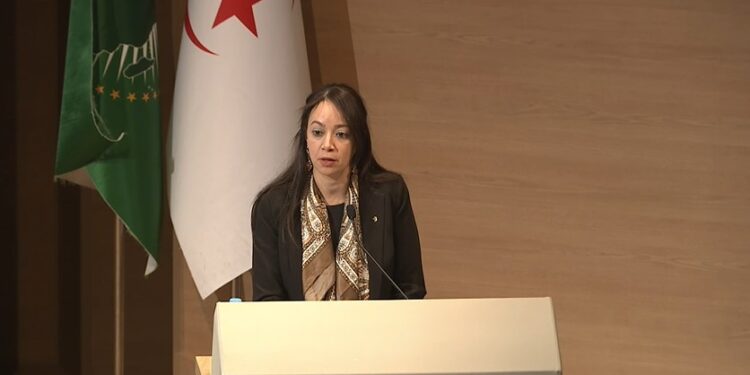
She stressed that Africa today possesses a new consciousness that allows it to transform memory into a strategic tool for building international legitimacy. The Algiers Conference, she said, made it clear that “Africa will no longer allow its history to be rewritten outside its institutions and will not accept that memory remain a weapon in others’ hands.”
European colonial rule and the African wars of liberation continue to weigh heavily on Afro-European relations. Algeria occupies a particular place in this history due to the tragedies suffered by its people. History also teaches us that the colonial system fundamentally contradictory to the values proclaimed by Western democratic revolutions led to massacres of hundreds of thousands of Africans, uprooting them from their land, dispersing them and destroying entire communities, as described by French researcher Germain Tilion.
As many countries of the Global South gained independence and pursued development within the framework of capitalist globalization, the gap widened between industrialized Western nations and the developing world, which remained dependent, impoverished and stagnating despite possessing immense natural resources.
In Latin America, this prompted major intellectual debates and the emergence of scholars capable of challenging the dominant paradigms of advanced capitalist nations.
Historically, European companies purchased enslaved Africans in exchange for destructive goods such as alcohol, weapons and glassware, provided by local elites who delivered captives in return. Today, the system is different: the modern slave becomes self-delivered through urban migration.
To understand this system, one must observe African elites today: why are health and education systems deteriorating? Because elites do not use local services, preferring those of the North. They abandon rural areas, pushing their inhabitants to migrate. Multinational corporations benefit from the system, but it cannot function without the complicity of these national elites. The tools may vary from alcohol and rifles to 4×4 vehicles and Kalashnikovs but the logic remains.
After independence, Africans believed that strong state power similar to the colonial state and single-party rule would ensure development and progress. They envisioned catching up with Europe by the year 2000. Yet the fetishization of the state brought no results: elites who seized power used it to enrich themselves and stifle private initiative.
The system collapsed in the late 1970s, and former colonial powers called upon the IMF and the World Bank to intervene. These institutions undermined state legitimacy and assigned the market the task of driving development, causing deeper social disasters.
Throughout the 1990s, austerity measures destabilized African societies. The removal of agricultural subsidies drove mass rural-to-urban migration, overcrowding cities and fueling unrest. Governments were forced to accept the proliferation of NGOs, which provided services that states could no longer ensure and helped structure the new public sphere.
However, elites soon diverted part of these resources, spending them on ineffective conferences and luxury vehicles symbolizing their status.
The Return of Nationalism in Africa
After 2020, Africa entered a new era characterized by military coups in Mali, Burkina Faso and Niger in 2023, and the overthrow of Ali Bongo Ondimba in Gabon in a coup led by General Ngouema. These countries maintain close relations with Russia and China, leading analysts to argue that Africa is witnessing the beginning of the end of neocolonialism.
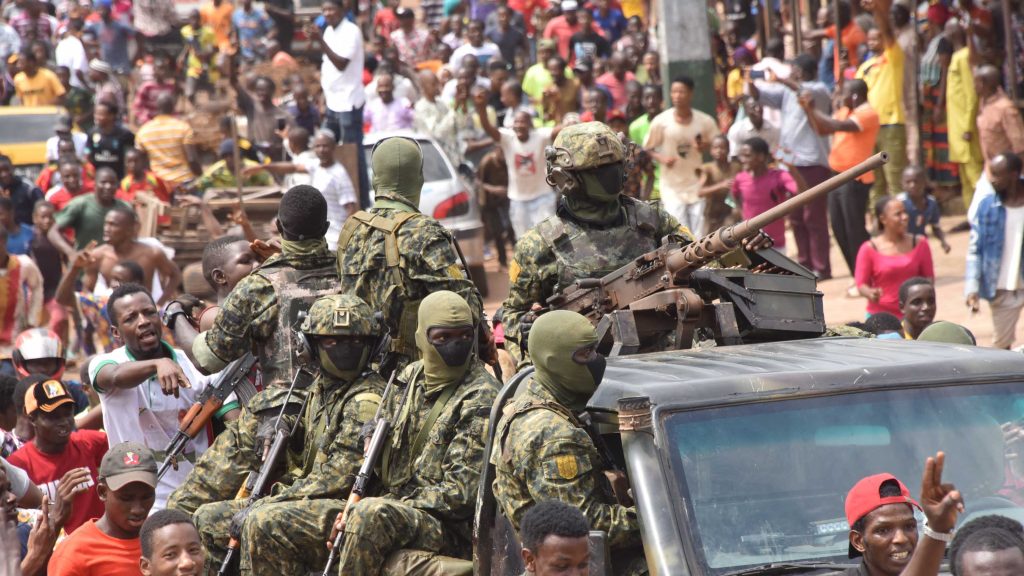
Africa has entered a second independence struggle against the neocolonial system that has persisted since the 1960s. Yet American and French imperialism attempted to counter these dynamics through armed interventions, organized uprisings and “color revolutions” orchestrated by Western intelligence agencies to overthrow African governments aligned with China.
They also activated terrorist groups, which remains particularly dangerous given Africa’s ongoing battle against terrorism.
Color revolutions often coincide with election periods. Moreover, US and French imperialism provoked separatist terrorist groups in Mali in 2013, leading to military intervention.
In the same year, the US and France supported the Seleka coalition in the Central African Republic against President François Bozizé, plunging the country into civil war. They also imposed an opposition figure as prime minister in Zimbabwe in an attempt to depose Robert Mugabe.
Gabon witnessed the first attempts of an “African Spring” between 2014 and 2016, which failed. Yet the attacks of neoliberal globalization continued, aiming to dismantle national states.
But in Mali, Burkina Faso and Niger, the unity between the army and the people halted these attempts, marking what many describe as the beginning of the end of Western neocolonialism in Africa.
The conclusion is clear: the West has lost Africa, which it exploited for its wealth and prosperity. Even when color revolutions temporarily succeed as in Gabon or Senegal the coups in the Sahel have shown that the army, allied with the people, has become the key defender of national sovereignty against imperialism.
Conclusion
Despite achieving political independence, many African states have not succeeded in breaking free from the world capitalist system and remain dependent on former colonial powers.
When we consider that 65% of African development programs are externally funded, the scale of this dependence becomes clear.
Powerful capitalist monopolies control most exploration, extraction and marketing of African natural resources.
During the so-called “transitional period”, former colonial powers established mechanisms to prevent the collapse of their military apparatus in Africa and restructure it in line with the needs of contemporary neocolonialism.