Cairo News – Mohamed Omran
- The Grand Egyptian Museum embodies the genius of the Egyptians with the spirit of Japanese technology.
- The Grand Egyptian Museum is a locomotive for sustainable development and a beacon of international cooperation.
- The museum is a cultural bridge linking Egypt and Japan.
- Egypt is one of the world’s leading countries in the field of antiquities, thanks to its cultural heritage.
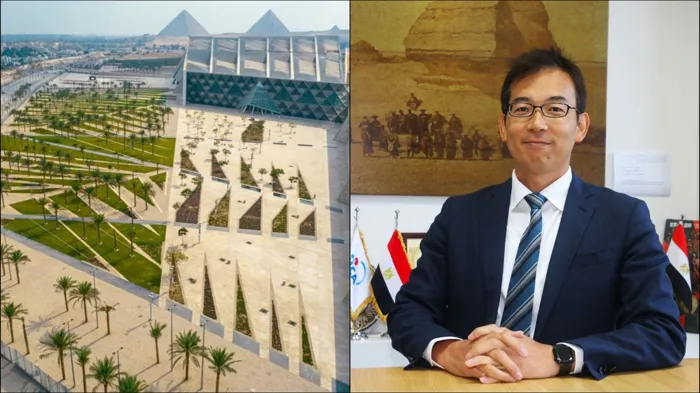
In a moment that marks one of the most significant milestones in the history of cultural cooperation between Egypt and Japan, the world awaits the opening of the Grand Egyptian Museum, scheduled for November 1. It will be one of the largest museums in the world and a new icon of human civilization. For more than two decades, the Japan International Cooperation Agency (JICA) has been a key partner in this dream, which has become a global symbol of cooperation and understanding between peoples.
In an exclusive interview with Ebisawa Yu, JICA’s representative in Egypt, the Japanese official spoke about the museum’s construction journey, the feelings of pride felt upon its completion, and the importance of the Egyptian-Japanese partnership, which combined Japanese technology and expertise on the one hand, and Egyptian vision and creativity on the other, to present to the world a monument that embodies the genius of the past with the spirit of the present.
How do you feel about the grand opening of the Grand Egyptian Museum, the culmination of years of cooperation between the Egyptian Ministry of Tourism and JICA? What are your most memorable moments from this massive project, both in transporting the artifacts and in the meticulous restoration efforts?
For us at JICA, the Grand Egyptian Museum is more than just a cultural project; it is a strategic symbol of the deep cooperation between Japan and Egypt, embodying our shared commitment to preserving human heritage and promoting cross-cultural understanding. Our support for the museum aligns with the Japanese government’s vision of comprehensive development, which believes that development is not limited to material aspects, but also includes building bridges between peoples and strengthening cultural identity. From this perspective, our support for the museum came through concessional financing in 2006 and 2016, in addition to technical cooperation projects that began in 2008, including training Egyptian personnel in the fields of conservation and restoration and preparing an archaeological database, both in Egypt and Japan.
The museum project also embodies the essence of JICA’s philosophy of collaborative work, combining Japanese funding, expertise, and technology with Egyptian vision, creativity, and capabilities. A prominent example of this collaboration is the project to transport and restore the Khufu II boat, which is expected to be one of the museum’s most prominent features upon its opening.
Let’s not forget that cultural cooperation between the two countries spans decades, beginning with the Egyptian Opera House, which opened in 1988 as a gift from Japan and which remains to this day a living symbol of partnership and mutual respect.
The Grand Egyptian Museum is not only a massive cultural project, but a beacon of international cooperation and proof that true development includes people, identity, and cultural memory.
How do you assess the importance of this massive project in strengthening cultural relations between Egypt and Japan, especially after it was described as an “enduring symbol of friendship”?
In addition to the financial funding provided by the Government of Japan for the construction of the museum building, JICA has been keen to provide comprehensive and sustainable technical support to the Grand Egyptian Museum, based on our belief that preserving cultural heritage requires more than just infrastructure, but also knowledge transfer, capacity building, and the exchange of expertise.
Since 2008, with the establishment of the Grand Egyptian Museum Conservation Center (GEM-CC), we have embarked on a series of technical cooperation projects, including the registration and archiving of artifacts through the development of an integrated database that has contributed to the formation of the museum’s collection, which includes antiquities from across Egypt. Japanese experts have worked side by side with their Egyptian counterparts in the fields of conservation, restoration, and transportation, including delicate projects such as the restoration and assembly of the Khufu II boat.
We also offered specialized training programs for the restoration center’s staff, including training and study opportunities in Japan, in addition to a joint restoration project for 72 selected artifacts, including rare pieces from the treasures of King Tutankhamun. The cooperation was not limited to the technical aspect only; it also included supporting the museum authority’s institutional capabilities in the areas of management and operations, to ensure the long-term sustainability of this cultural edifice.
Over the years of joint work, a wealth of shared expertise has been built between the two sides, enabling all parties to present this project to the world in the most beautiful way possible, a project we all take pride in. This cooperation embodies JICA’s development philosophy, which is based on equal partnership, mutual respect, and joint action for a better future.
When did JICA’s collaboration with the Egyptian government begin on the museum project, and what were the most important stages of this collaboration?
JICA’s support for the Grand Egyptian Museum began more than twenty years ago, in response to an official request from the Egyptian government to support what was then considered one of the most ambitious cultural and tourism projects in the region. The project is located in a unique location in front of the Giza Pyramids, giving it unique cultural and historical symbolism.
Japan’s primary motivation was a deep respect for Egypt’s cultural heritage and a shared belief in the importance of preserving it, not only for the benefit of the Egyptian people, but for humanity as a whole. Japan saw the Grand Egyptian Museum as an opportunity to contribute to the protection of world heritage and, at the same time, a powerful symbol of friendship and mutual trust between the two countries.
One of the most important phases of the project was the Japanese government’s decision to provide a second soft loan in 2016 to complete the museum’s construction, especially after local, regional, and international challenges impacted the project’s timeline. This made it the largest funding JICA has provided for a similar project.
One of the most important phases of cooperation was the initiation of technical support in preparing the archaeological database containing the exhibits included in the museum, as well as training staff at the restoration center since its establishment and subsequent support, whether in joint restoration or in capacity building in museum management and display.
The second Khufu ship project is also one of the most important phases of the collaboration, which involves extracting, restoring, documenting, and reassembling approximately 1,650 wooden pieces. The ship will become one of the museum’s most important exhibits.
For us, the Grand Egyptian Museum is not just a project, but a cultural and human bridge linking the past and the future, and Japan and Egypt, within a framework of respect, cooperation, and a shared vision.
How were the efforts coordinated between Japanese experts and Egyptian personnel at the museum’s restoration center?
It is important to emphasize that Egypt is a global leader in the field of archaeology and Egyptology, thanks to its unique cultural wealth and accumulated expertise. Therefore, the cooperation between JICA and the Grand Egyptian Museum was not based on a unilateral transfer of knowledge, but rather on equal cooperation based on the exchange of expertise and knowledge, with the goal of achieving the highest quality standards in the areas of safe transportation, restoration, and preservation of artifacts, including the delicate and precious pieces from King Tutankhamun’s collection.
JICA experts have contributed their advanced expertise in specialized fields such as preventive conservation, a highly developed field in Japan, to ensure the long-term preservation of the museum’s distinguished collections.
In addition, JICA provided advanced technical support by equipping the restoration center with modern equipment, such as a digital microscope, a portable X-ray machine, a portable 3D scanner, and an electric forklift to safely transport heavy artifacts.
This integration of Egypt’s long-standing expertise and advanced Japanese technology is what distinguishes this collaboration and makes the Grand Egyptian Museum a model to be emulated in cultural heritage preservation projects worldwide.
What were the most prominent challenges faced by JICA and the Egyptian government during the museum’s construction period, and how were they overcome?
One of the most significant challenges we faced in the early stages of our collaboration was the differences in conservation and restoration principles and methods between Japanese experts and their Egyptian counterparts. Successful preservation of precious artifacts requires a shared understanding and consensus in vision and methodology among all parties involved.
To address this challenge, JICA has been keen to provide specialized training programs in both Egypt and Japan, with the aim of enhancing mutual understanding and unifying concepts related to preventive preservation, restoration, and the safe transportation of artifacts. This investment in capacity building has had a significant impact in establishing a common ground for technical cooperation, paving the way for the success of joint restoration projects, especially for delicate and rare artifacts, such as those of King Tutankhamun.
This mutual understanding was not just a technical achievement; it was a fundamental pillar of the project’s success as a whole, and one of the most prominent manifestations of a true partnership based on mutual respect and the complementarity of expertise between the two parties.
Now that the museum is operational, what are JICA’s plans to support its sustainable management and operation? Are there any new cooperation projects under consideration?
JICA supported the necessary operational and management arrangements from the early stages of the project through Japanese and international experts, ensuring that it met visitor expectations and fulfilled its role as a world-class museum. It also dispatched a First Assistant to the Executive Director from Japan.
This cooperation between JICA and the Grand Egyptian Museum will continue through the new project, which began in May 2025 and will continue until May 2028. The project aims to develop the Grand Egyptian Museum Authority’s capabilities and enhance the museum’s operational and management efficiency by recruiting experts in various fields, such as museum management, public-private partnerships, marketing and promotion, visitor experience, and museum education. The project also includes the continued deployment of a Senior Assistant to the Executive Director from Japan to support the museum’s executive management.
Speaking of cultural projects, I am also pleased to note a new grant to the Egyptian Opera House, which we are very proud of, for the purpose of renovating the Grand Theatre. This project is currently underway and is a natural extension of the long-standing cultural cooperation between our two countries.
These initiatives confirm that cultural development, for JICA, is not a temporary endeavor, but rather a long-term process, during which we strive to support sustainability, build capacity, and promote cultural dialogue among peoples.
What about the Grand Egyptian Museum International Center for Conservation and Scientific Research project? What is its role and objectives in enhancing the museum’s capabilities as a global institution?
In addition to our previously mentioned support, JICA is now preparing to launch a new project, scheduled to begin in December 2025 and continue until December 2028. This project aims to establish a global center for conservation and scientific research within the Grand Egyptian Museum. This project builds on previous cooperation in the field of conservation, transforming the museum into a regional and international center in this field by promoting scientific research, academic publishing, and providing advanced training programs for cultural heritage institutions and museums in Egypt, the Middle East, and Africa.
What is JICA’s vision for the Grand Egyptian Museum as a driver of cultural tourism in Egypt? And how can it contribute to supporting the Egyptian economy?
JICA believes that the Grand Egyptian Museum is not just a cultural landmark, but a strategic tool for stimulating economic and social development in Egypt, through its pivotal role in promoting tourism, one of the country’s most important economic sectors.
The museum’s unique location in front of the Giza Pyramids, one of the world’s greatest archaeological monuments, gives it a global competitive advantage as an integrated tourist destination. From this perspective, JICA believes the Grand Egyptian Museum has the potential to become a global attraction, not only for archaeology enthusiasts but also for researchers, students, and investors in the cultural tourism sector.
Through our ongoing support for the museum, whether through financial funding or technical cooperation programs, we aim to enhance its capabilities in the areas of museum management, visitor experience, cultural marketing, and museum education. This will ensure the provision of a comprehensive cultural experience that meets international standards and contributes to increasing the number of international visitors, raising average tourist spending, and extending the length of stay.
Through its new project to establish a global center for restoration and scientific research, the museum will contribute to transforming Egypt into a regional hub for knowledge and innovation in the field of cultural heritage, opening new horizons for international cooperation and enhancing Egypt’s position on the map of cultural and educational tourism.
In short, JICA’s vision for the Grand Egyptian Museum goes beyond being a museum to becoming a vehicle for sustainable development, combining heritage preservation, human capital empowerment, economic revitalization, and the promotion of intercultural dialogue among peoples.