++ Why did the leaders of Iran, Saudi Arabia, and Hamas abstain from attending the Sharm El-Sheikh Summit?
++ Is Trump “handing over” the Syrian, Lebanese, and Iraqi files to Ankara?
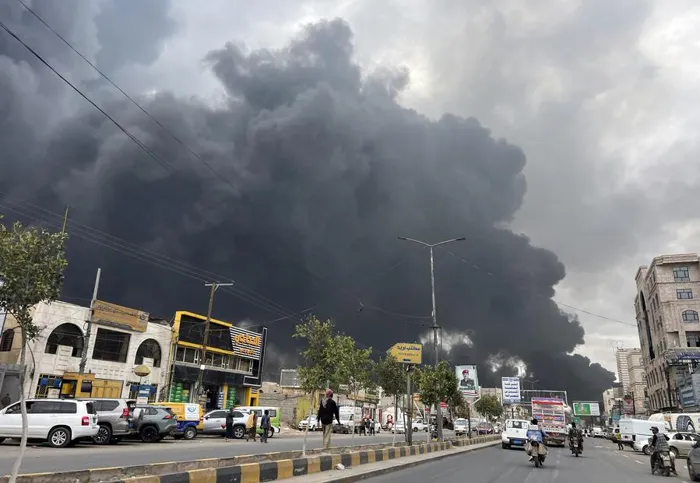
The war on occupied Palestinian Gaza and other Palestinian cities in the West Bank came to a halt after hundreds of thousands of deaths and injuries caused by Israeli and American bombs and missiles…
It has temporarily stopped… while the American and Egyptian presidents, along with Gulf rulers and Western leaders, pledged that the wars across the entire region would come to an end — including in Lebanon and Iran (?!)
This is a significant achievement.
It is an important development, despite all the remarks and criticisms regarding the document signed at the international Sharm El-Sheikh Summit by the presidents of the United States, Egypt, Turkey, and Qatar, in the presence of about twenty kings and presidents from Arab, Islamic, and European countries, including Jordan, Gulf states, Britain, France, Italy, and Indonesia…
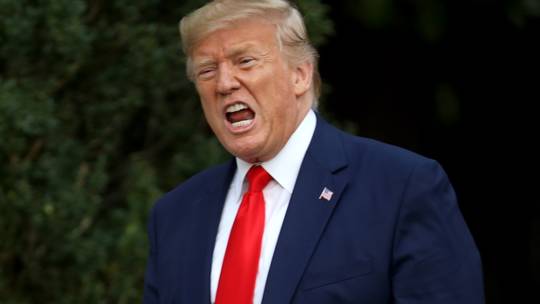
++ What stood out was the American president’s consistent praise of Turkey and Turkish President Recep Tayyip Erdoğan throughout the summit and in the days leading up to it. He highlighted their personal friendship and the ongoing communication between their advisors — even after Trump left the White House in 2020.
During a photo opportunity before the Sharm El-Sheikh summit, Trump deliberately praised Erdoğan personally and raised “victory” signs with him (?!)
++ This came just weeks after Turkish and American presidential meetings, along with their aides, in New York and Washington, on the sidelines of the United Nations General Assembly. These meetings also saw the signing of new bilateral agreements, including a deal for Turkish Airlines to purchase 250 Boeing planes, and promises to provide Turkey with F-35 fighter jets — previously denied due to Ankara’s massive military deals with Russia, including S-400 missile systems…
During those meetings, the American president made it clear that he enjoyed a special relationship with Ankara, the Turkish president, and his team…
In fact, he stated that Erdoğan had succeeded in ending the “crisis and wars in Syria” — achieving what no one else had managed for decades, or even a thousand years (?!)
It became evident that Washington and Ankara had agreed on “new balances” in the region — which include expanding Turkey’s role in Syria, occupied Palestine, Lebanon, Iraq, and the Gulf Arab states — at the expense of the “Axis of Resistance” led by Iran, and also at the expense of Palestinian and Lebanese resistance movements previously aligned with Tehran, particularly Hezbollah and the Iraqi and Yemeni “Ansar Allah” movements.
_ Thus, Washington — whose president and officials claimed a role alongside Turkey and its allies in toppling Bashar al-Assad’s regime and expelling Iranian forces from Syria — appears to be seeking further “partnership” with Ankara throughout Syria and the “Middle East,” including with certain Palestinian and Lebanese resistance leaders who have maintained “very advanced” relations with Turkish and Qatari authorities for over 20 years.
Many observers believe that several Western and Arab capitals have long encouraged Ankara and Doha to engage with armed Palestinian resistance movements, as well as the Palestinian Authority and the PLO leadership, in order to prevent them from aligning with Iran and its leaders on one hand, and with Hezbollah and the Houthi government in Sana’a on the other.
_ The U.S. administration and some NATO leaders are betting on “entangling” Turkey in a number of their conflicts and pushing it toward conducting “proxy wars” on their behalf, for several reasons, including:
– Turkey’s long-standing NATO membership and participation in most U.S.-led wars around the world and in the region.
– Turkey’s military, political, and economic support for Iran, Russia, and China’s rivals — including Ukraine, which has been engaged in a bloody war with Russia for years in partnership with NATO countries.
-Its military and political alliance with Washington and its allies in the Mediterranean, including in Libya, Syria, and Africa — with large Turkish military bases established in Libya after receiving support from the White House during Trump’s first administration (2016–2020).
-Turkey’s advanced military, security, and political ties with most Syrian, Iraqi, and Palestinian armed groups over the past 15 years — including “Salafi-jihadist” groups previously designated as “terrorist” by Washington, such as Al-Nusra Front and Al-Qaeda in the Levant and Iraq.
-Turkey’s frequent military, security, economic, and political interventions in geo-strategic areas important to Washington in its conflicts with China, Russia, and Iran — including Azerbaijan, the Black Sea and Caucasus regions, and the “Turkic Republics Alliance.”
But do all these factors justify the “unprecedented American support” for Turkish leadership and President Recep Tayyip Erdoğan — especially considering that Erdoğan had previously accused Washington and its “agents” of being involved in the bloody 2016 coup attempt?
Is the Trump administration working to “redraw the map” of the region by involving some of its allies — such as Italy, Turkey, Morocco, and Poland — against other NATO members like Spain and Belgium?
And does Trump’s excessive praise of Turkey and its leadership suggest efforts to assign Ankara “greater” global roles — especially after its involvement in Assad’s downfall in Syria, and in “convincing” Palestinian resistance leaders to accept Trump’s initiative to halt the war and siege on Gaza as a prelude to a new peace process across the region?
Or was the Trump administration’s praise of the “roles of Turkey, Qatar, and Egypt” in the Gaza ceasefire deal an attempt to push Ankara again toward “full normalization” of ties with Tel Aviv — a move that could encourage major Arab and Islamic countries such as Saudi Arabia, Malaysia, and Indonesia to take similar steps?
++ Many scenarios are on the table amid rapidly unfolding events and increasing American and Israeli pressure to thwart the recognition of the “State of Palestine” by more than 156 countries — including nations that contributed to the founding of Israel and its nuclear and military arsenal 70 years ago, such as France and the UK…
Amid this confusion, Iran, Saudi Arabia, and the leaders of the Palestinian resistance deliberately boycotted the Sharm El-Sheikh Summit — which contributed to other countries pressuring for the exclusion of Netanyahu on the grounds that he is “wanted by the International Criminal Court.”
At the same time, as Gulf states — especially Qatar, Saudi Arabia, and Iran — diversified their partnerships, their leadership’s “apology” for not attending the Sharm El-Sheikh summit confirmed that the region is heading for deep transformations in its geopolitical landscape.