Sanctions Delay “Breakthrough” and “Negotiations”
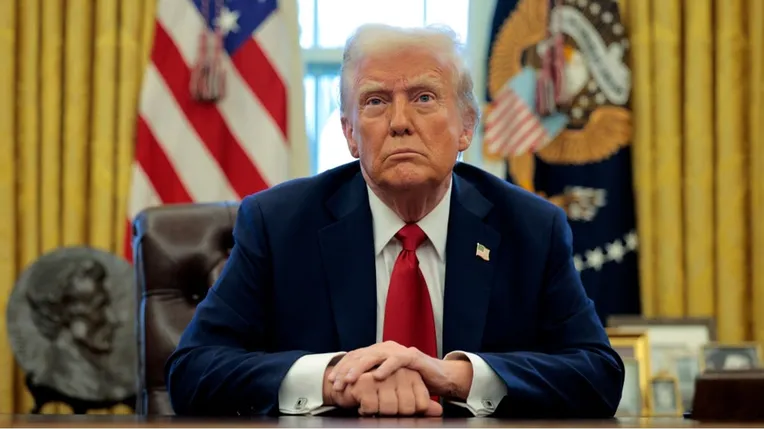
Despite multiple promises by U.S. President Donald Trump during his election campaign and later in his contacts with Russian President Vladimir Putin, the major conflict in Ukraine keeps growing more complicated.
We are far from his famous declarations claiming that he could “end the war in Ukraine in one day” (?!!).
The result?

Simply a “headlong rush” in Brussels, Washington, and other capitals directly or indirectly involved in this new showdown between Moscow and the leaders of NATO, the Western military alliance led by Washington for decades.
New Sanctions… and Then What?
The European Commission has decided on a new series of sanctions against Russia—its “19th package,” according to the president of the so-called “Brussels Club.”
Washington is using this development to call for a “total boycott” by European governments of Russian and Chinese products, including hydrocarbons.
Trump goes even further, trying to “promote” the U.S. economy and the “military and economic superpower” status of the United States.
The American president devotes parts of his speeches to campaigns denigrating the leaders of China, Russia, and even Washington’s competitors in Europe and in the “projects for Ukraine’s reconstruction.”
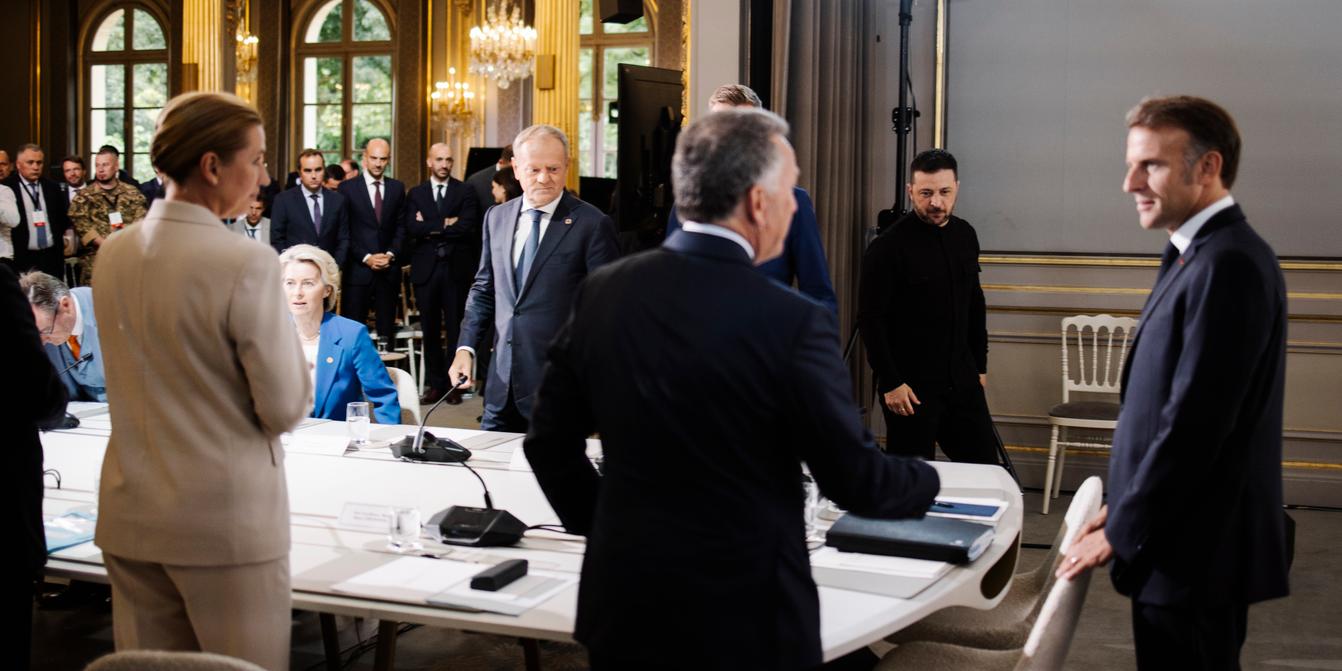
These political “one-upmanship” games among NATO leaders confirm that their last concern is achieving a lasting resolution of international conflicts over Ukraine, the resources of Eastern European and Asian countries, and the regions where NATO might claim a military role.
Expanding the “NATO Zone”
Beyond economic stakes and competition over Ukraine’s immense resources and those of its surroundings, the political and military conflicts for years among millions of Russian, Ukrainian, and NATO troops also carry a regional and global geostrategic dimension.
These disputes are not new.
Historically, Kyiv was the capital of old Russia.

The Soviet Union’s nuclear arsenal was largely based in Ukraine.
Most Ukrainians speak Russian and have Russian origins.
Family and marriage ties are extremely close.
Why, then, this conflict?

Quite simply because Moscow accuses NATO leaders of failing to honor their 1989–1990 commitments made during the “fall of the Berlin Wall” and the “dissolution of the USSR.”
The agreement included a “consensus” to avoid “NATO’s eastward expansion” beyond Germany—
and, above all, a “compromise” stipulating that no NATO bases would be installed in countries or regions close to Russia’s borders.
This agreement, Moscow insists, was not respected.
A New “Deal”
After some twenty years of a “convergence of interests,” conflicts erupted in Georgia, Crimea, and Ukraine.
Under Joe Biden, diplomacy attempted to contain NATO–Russia tensions around Ukraine.

But the arms and energy lobbies prevailed.
It is a vicious circle.
Trump had promised during his summit with Putin in Alaska “an immediate deal.”
But once again, there is “deadlock.”
Some European leaders still fail to understand that economic and military embargoes will not bring about the “collapse” of a superpower like Russia.
It is forgotten that the “confiscation” of Russian assets abroad—amounting to hundreds of billions of dollars—will not lead to an “unconditional withdrawal” by Russia from Ukraine and other annexed or satellite territories once under Moscow’s control.
Toward a New World Order?
How can this deadlock be broken?
Does Europe really have an interest in prolonging this war?
The “overbidding” by certain leaders in Brussels, Paris, London, and Washington could make the situation even more complicated.
But for how long?
Divergences within Europe and among NATO countries risk further weakening the European Union.
Moreover, strategic issues—including hydrocarbons and military commitments—could encourage the emergence of new conflicts between Washington, Paris, London, and Berlin.
Following the rapprochement of countries in the “Shanghai Alliance,” as well as states in Asia, Africa, and the Global South, the process of building a New World Order has already begun.
The contradictory measures and statements of Trump and his aides may even accelerate this trend.
(Expert in International Studies)