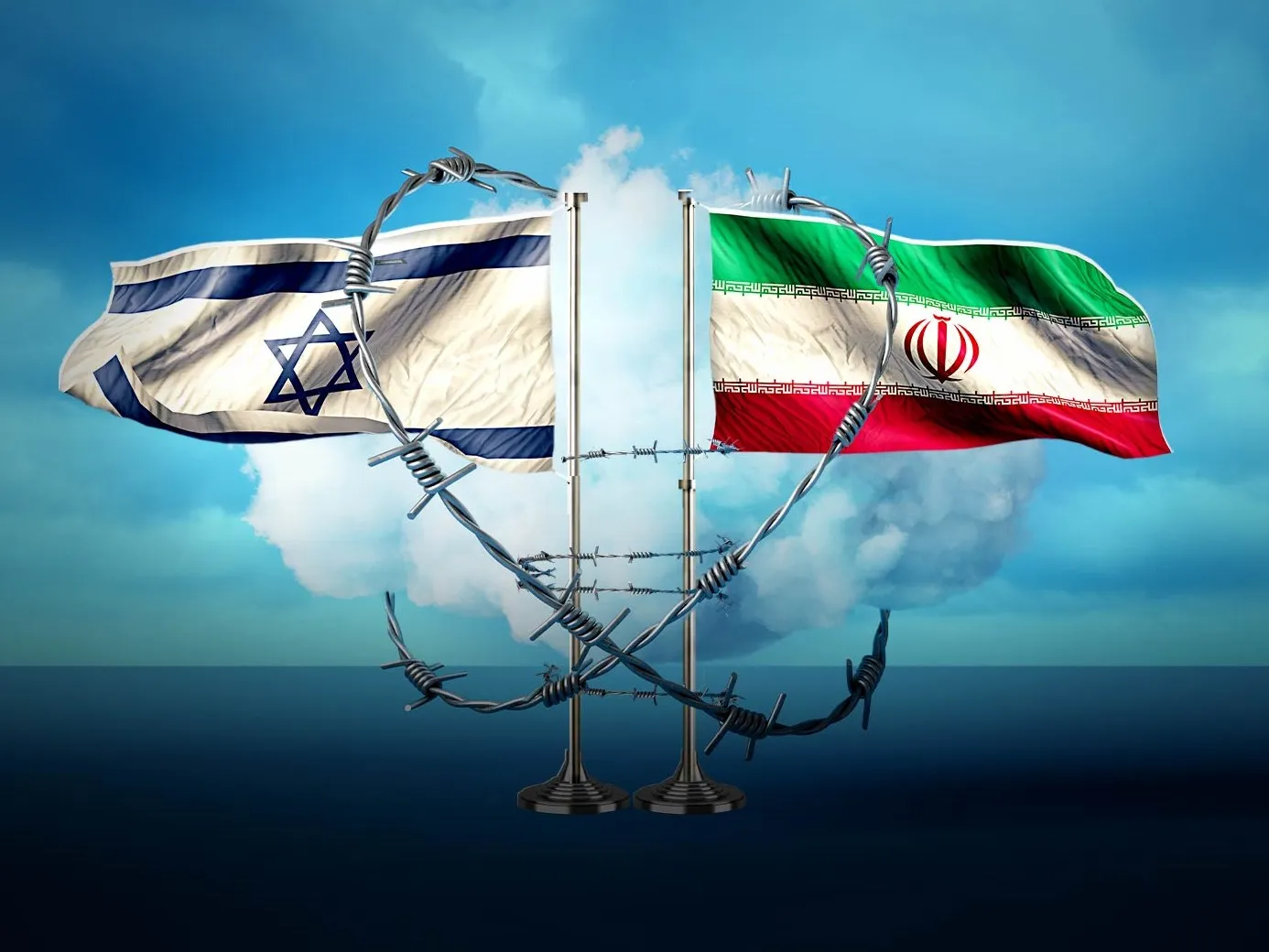
An analysis of the recently declared ceasefire between Iran and Israel is incomplete without a deep understanding of the civilizational, geopolitical, and security-based dimensions of this conflict. The critical question today is whether this ceasefire marks the end of a crisis—or merely represents a temporary tactical pause in a deeper conflict. And if the roots of this confrontation lie in ideological and civilizational layers, what meaningful interpretation can we assign to the notion of a “ceasefire”?
To answer this, one must differentiate between an “operational pause on the battlefield” and the “resolution of strategic contradictions.” According to leading theorists in security studies, security is a multilayered construct in which states operate at various levels of threat, rivalry, and cooperation. Based on this perspective, the Iran–Israel relationship is not merely a tactical conflict but one of existential threat—a form of fundamental negative security that emerges from two competing visions of regional order and the philosophy of power.
A Turning Point or an End to War?
The recent clash marked the first wide-scale direct confrontation between Iran and Israel—initiated officially by Israel under the pretext of preventive self-defense, as outlined in Article 51 of the United Nations Charter. While the conflict may appear to have ended with a ceasefire, a closer reading of events suggests that the ceasefire was less a sign of sustainable balance and more the result of fragile equilibrium and tactical decision-making.
The ceasefire was declared after the United States overtly entered the war by bombing Iran’s nuclear facilities in Fordow, Natanz, and Isfahan. Former President Donald Trump, following this move, shifted his rhetoric, declaring it a major achievement and insisting that the time for peace had come. However, Iran’s retaliatory missile strikes against the American military base in Al-Udeid, Qatar, radically altered the tone of the American leadership. In his first public response following Iran’s counterattack, Trump notably refrained from acknowledging the strike and instead fiercely criticized U.S. media outlets that had downplayed or questioned the success of his earlier assault on Iran’s nuclear facilities.
Simultaneously, Iran’s Foreign Minister met with President Vladimir Putin in Russia. Strategically speaking, these developments represent a pause in active warfare aimed at recalibrating conflict dynamics—not peace in the classical sense.
Civilization Against Civilization: A Conflict of Identity
A vital part of understanding the ceasefire lies in grasping the conflicting identities of Iran and Israel. What elevates this conflict beyond territorial or political dispute is its civilizational and ideological nature. Inspired by an anti-colonial and Islamic worldview, Iran views Israel not as an ordinary state but as a symbol of imperial domination, occupation, and the continuation of the colonial project in the heart of the Islamic world. Concepts such as “global arrogance” and “the eradication of the Zionist regime” emerge from this ideological framework.
Conversely, Israel represents the modern West—founded upon secularism, liberalism, and humanism. It embodies a dual identity: on one hand, a strategic outpost of the U.S.-led modern world order, and on the other, an ethno-religious project based on the return of the Jewish people to their “promised land” with apocalyptic expectations centered on Armageddon. Hence, Israel defines its very existence through “guaranteed strategic superiority” in the region—a superiority that was seriously called into question during the recent conflict.
Ultimately, it must be acknowledged that the current ceasefire is neither peace nor a sign of crisis de-escalation. Rather, it is a tactical intermission within a broader civilizational confrontation, rooted in two opposing visions of global order, humanity, identity, and power. Whether through kinetic aggression, targeted assassinations, sabotage, economic coercion, or information warfare, this conflict is set to persist.
Implications of the Conflict for Iran
Structurally, the war revealed vulnerabilities in Iran’s air defense system. Open corridors in the western provinces, deficiencies in UAV detection, and successful cyberattacks on vital services illustrated that Iran’s multi-layered security architecture requires significant reconstruction. Moreover, the war exposed the continued activity of infiltration networks within decision-making and operational levels of the security apparatus.
However, despite these challenges, social cohesion within Iran notably increased during the conflict. Even outspoken critics of the political establishment rallied behind the leadership, expressing support for the system’s resolve in standing up to a foreign aggressor who had violated Iranian territory.
Implications of the Conflict for Israel
Israel’s failure to achieve its predefined objectives—such as the destruction of Iran’s nuclear industry, the dismantling of its missile infrastructure, and fomenting public discontent aimed at toppling the Iranian regime—stands among the most significant outcomes of the conflict.
Iran not only launched retaliatory missile strikes against the largest U.S. airbase in West Asia, but also carried out over twenty waves of successful drone and missile attacks on Tel Aviv, Haifa, and other Israeli cities—the heaviest occurring minutes before the ceasefire took effect. These attacks demonstrated that Iran’s missile industry had not only survived the war, but had become more precise and resilient compared to the early days of the conflict.
Despite strong U.S. support, Israel emerged from the conflict with a strategic and reputational crisis, for which many have blamed Prime Minister Benjamin Netanyahu. It is not unrealistic to predict that although the ceasefire may hold and superficial calm may persist between the two nations, Netanyahu will face severe internal political turmoil as a consequence of its perceived failure.
Dr. Seyed Hadi Sajedi
Faculty Member, University of Tehran
War and Pause