Millions of Iranians in anti American protests
Iran–Gulf: Washington Faces the Trap of a New War of Attrition
The Pentagon Trapped, Iran Under Pressure, Global Energy Prices Double
No “Military” Way Out Despite Enormous Losses
By Kamal Ben Younes
University Academic and Tunisian Journalist

The confrontation between the United States and Iran has entered a phase in which American military superiority no longer guarantees political victory. After nearly seven months of conflict, Washington still possesses considerable strike capabilities, but the human, financial and strategic costs of the war are rising. Tehran, despite suffering severe losses, retains sufficient asymmetric capabilities to prolong the confrontation and cause lasting disruption across the Gulf. A new war of attrition thus appears to be taking shape at the heart of the Middle East.
This assessment is now being reflected even in American strategic analyses: the conflict appears to have evolved into a war of attrition in which the adversaries still possess sufficient resources to continue hostilities, while facing mounting economic, military and political costs.
This is precisely where the American strategic paradox lies: Washington can win numerous battles without necessarily possessing the means to impose a political outcome consistent with its initial objectives.
A Soaring Military Bill
Recently published figures in the United States illustrate this dynamic.
U.S. military operations had already cost approximately $38 billion by August 1. Subsequent estimates put the bill at around $43.6 billion by early September, including some $28 billion to replace munitions used in the conflict and more than $4.3 billion for equipment lost or damaged.
And the bill continues to rise. Continuing operations, even at a relatively low level of intensity, could cost an additional $2 billion to $3 billion per month.
But the strategic problem goes far beyond the financial dimension.
The conflict is estimated to have consumed between half and two-thirds of U.S. stocks of certain categories of missile interceptors, including Patriot, THAAD, SM-3 and SM-6 systems. Replenishing some of these inventories could take at least five years, even if industrial production is accelerated.
The war with Iran therefore raises a question that extends well beyond the Middle East: how many resources can Washington commit to this theater without undermining its deterrence capabilities on other strategic fronts?
The Paradox of American Power
The United States unquestionably possesses considerable technological, air and naval superiority. Yet the war demonstrates once again that conventional military dominance does not automatically translate into strategic victory.
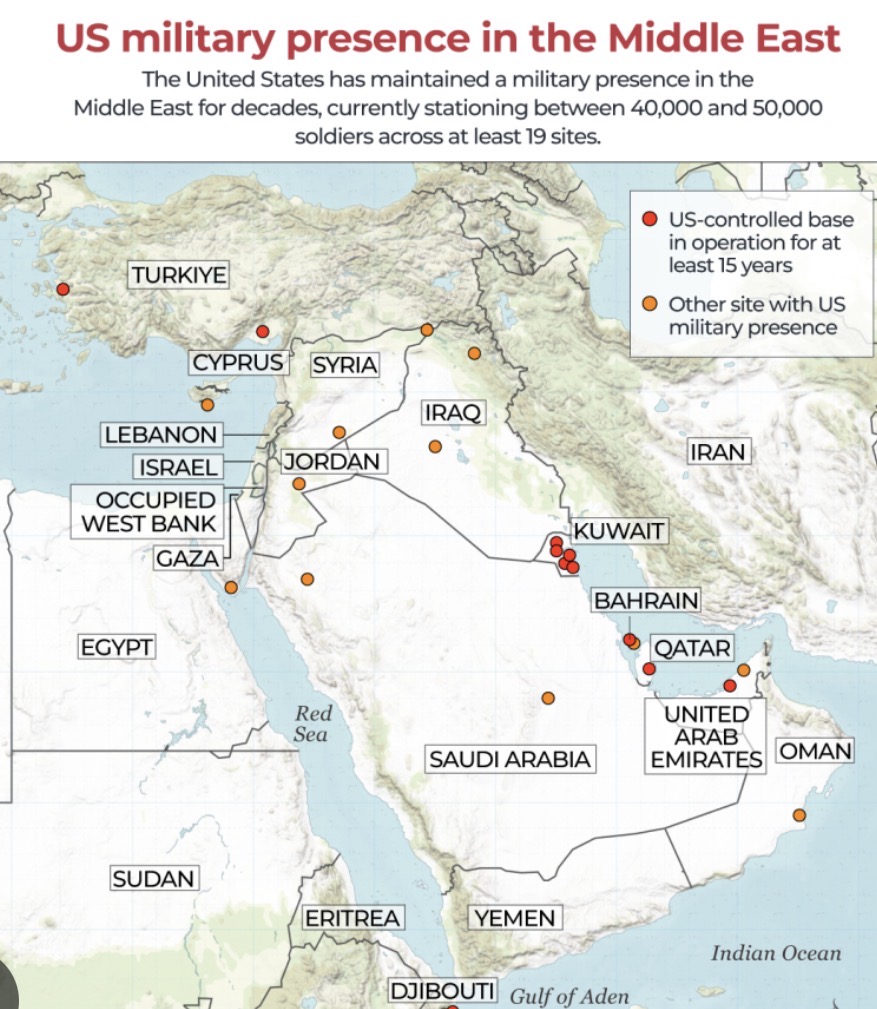
More than 50,000 U.S. military personnel have been deployed within the area covered by the American command in the Middle East to support operations. Iranian strikes have also damaged or destroyed hundreds of buildings and infrastructure facilities at U.S. installations across the region. American diplomatic missions are also estimated to have sustained approximately $184 million in damage.
Iran, meanwhile, is paying a much heavier price in terms of human casualties and destruction. Several thousand Iranians have been killed since the conflict began, including a significant number of civilians. But the destruction of infrastructure or weapons systems does not necessarily eliminate Iran’s ability to pursue a strategy of attrition.
According to some assessments, Iran has retained a significant proportion of its mobile missile launchers and missile arsenal. Reports also indicate that production has resumed at certain underground facilities. These estimates, however, remain difficult to verify independently.
Hormuz: The Real Strategic Multiplier
Geography constitutes one of Tehran’s principal sources of leverage.
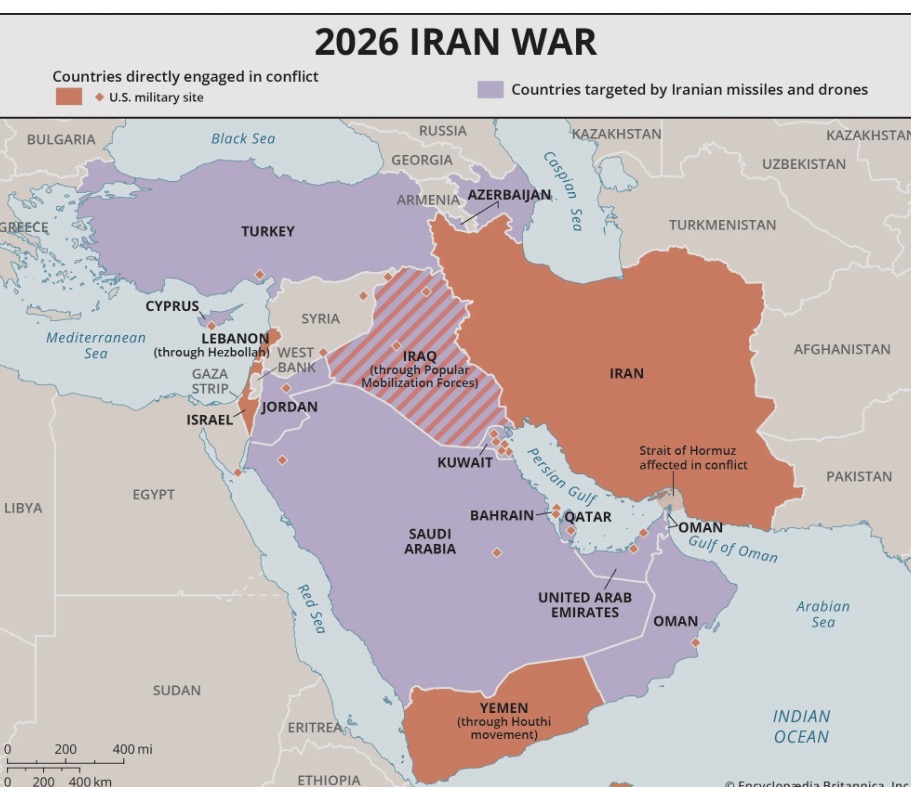
The Strait of Hormuz is only a few dozen kilometers wide, yet it remains one of the world’s most important energy arteries. The current crisis has caused major disruption to oil supplies and international maritime traffic.
Recent shipping data are particularly revealing. Only 17 vessels carrying commodities reportedly crossed Hormuz during the weekend of September 19–20, compared with 37 the previous weekend and approximately 125 vessels per day before the war.
These figures must nevertheless be interpreted cautiously: some vessels are operating with their transponders switched off, while GPS jamming and signal spoofing complicate monitoring. Available statistics may therefore underestimate the actual volume of traffic.
But the overall trend remains striking.
Brent crude, which was trading at approximately $61 per barrel in early January, exceeded $118 at the height of the tensions before remaining at very elevated levels.
The war of attrition is therefore also becoming an international economic war.
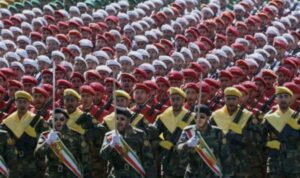
Millions of Iranian Military Personnel and “Volunteers” Back in the Streets to Denounce the American Aggression
Neither an Iranian Victory nor an American Victory
It would nevertheless be excessive to conclude that Tehran is “winning” the confrontation. Iran is suffering considerable human, military and economic losses and remains highly vulnerable because of the exposure of its infrastructure.
Washington, however, faces the opposite problem: its power enables it to destroy, intercept and impose sanctions on a much greater scale than its adversary, without necessarily being able to transform that superiority into a lasting political settlement.
The Pentagon and Washington are therefore not “trapped” in the sense that they are militarily incapable of acting. The trap is instead strategic: intensifying the strikes risks increasing both the costs and regional instability; maintaining the current level of operations prolongs the attrition; withdrawing without an agreement leaves unresolved the issues that triggered the confrontation.
Several trajectories remain possible: continuation of the current confrontation, a fragile ceasefire, renewed military escalation, or the opening of substantive negotiations.
This contradiction probably lies at the heart of the current crisis: the United States possesses the military means to continue the war, but neither Washington nor Tehran appears capable of using force alone to create a viable political outcome.
Strategic history shows that a war without a credible exit mechanism can become increasingly dangerous the longer it continues.
In the Gulf, therefore, this new war of attrition no longer concerns only Iran and the United States. It is placing the Arab Gulf monarchies, energy markets, maritime routes between Asia and Europe and, increasingly, the entire global economy under pressure.
From the Red Sea to the Gulf of Aden: An Expanding Front
An additional factor is now aggravating the strategic cost of the confrontation: its geographical expansion from the Red Sea to the Bab el-Mandeb Strait and the Gulf of Aden, as well as to the economic infrastructure of Saudi Arabia and other Western partners in the region. The multiplication of fronts is gradually transforming a war centered on Iran and the Gulf into a regional crisis affecting energy and commercial routes.
Attacks on Saudi oil facilities and the East-West Pipeline—which enables crude oil to reach the port of Yanbu while bypassing the Strait of Hormuz—have weakened one of the principal alternative routes on which Riyadh and its partners relied to secure exports. At the same time, threats to shipping in the Red Sea and the Gulf of Aden are forcing the United States and its allies to protect several strategic maritime zones simultaneously.
This expansion of the theater of operations is producing a multiplier effect on military and economic costs: more warships and missile-defense systems must be deployed, shipping companies must alter their routes, and hydrocarbon producers must develop far more expensive logistical solutions.
In September, approximately 2.5 million barrels per day are expected to be transferred through ship-to-ship operations in the Gulf of Oman, compared with 1.4 million barrels per day in August. Meanwhile, the cost of transporting one barrel of Gulf crude to China by supertanker has exceeded $30, an exceptional level.
The challenge therefore extends far beyond protecting American military bases. It now involves safeguarding Saudi oil infrastructure, ports, pipelines and the major commercial routes connecting Asia, the Middle East and Europe.
Politically, this regionalization also confronts Saudi Arabia and the Gulf monarchies with a strategic dilemma. They depend on American military protection, while simultaneously seeking to prevent their territories and economic infrastructure from becoming permanent battlegrounds in a confrontation involving Washington, Tehran and their respective regional allies.
The further the conflict expands, the more visible the costs associated with the alliance with the United States become for these states, while Washington must devote increasing military resources to defending its partners and international maritime routes.
The war of attrition is therefore acquiring a new dimension: the objective is no longer simply to exhaust the adversary’s military capabilities, but progressively to increase the economic, energy and political price of continuing the war for the entire U.S. alliance system in the Middle East.