The war on Iran complicates the situation in Tunisia and the region:
Maher Kallal proposes a Maghreb vision to turn the crisis into an economic and political opportunity
-
Practical proposals and recommendations

By Sonia Ftouhi
Journalist and expert in international affairs
Amid ongoing economic and political developments following the U.S.-Israeli offensive against Iran and the outbreak of war in the Gulf, the “Tunisia for Competencies” Association organized a panel discussion to assess the situation and present practical recommendations to decision-makers.
Participants noted that the unprecedented escalation in the Middle East is accelerating economic repercussions across the Arab and Mediterranean regions, placing Maghreb countries at the center of a new test requiring them to reassess their economic and strategic priorities.
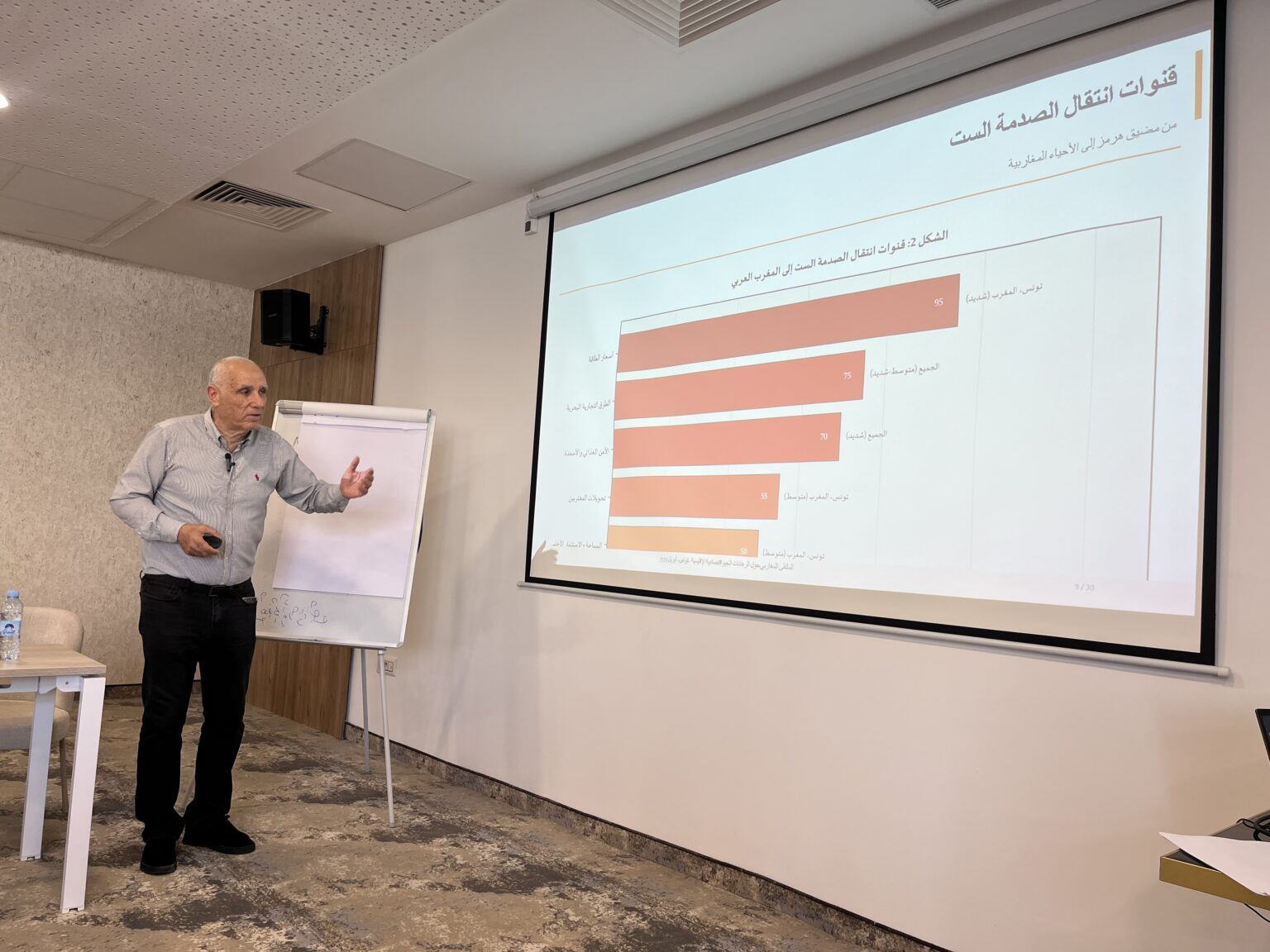
In this context, international expert in economics, technology, and communication Maher Kallal presented an in-depth analysis of the war’s impact on the economies of Tunisia and the Maghreb. He argued that, despite its severity, the crisis could represent a historic opportunity to revive regional integration and strengthen economic recovery paths.
His intervention combined geopolitical and economic analysis, focusing on how external shocks can be transformed into drivers of cooperation and development within the Maghreb region.
The war on Iran: a structural shock
Kallal explained that the war should not be viewed as a temporary regional crisis but as a structural shock, adding to previous disruptions such as the Arab Spring, oil price collapse, COVID-19, and the war in Ukraine.
He highlighted the war’s unique features, including its timing, rapid global impact, the closure of the Strait of Hormuz, damage to energy infrastructure, and shifts in global energy supply dynamics.
Rising oil prices and economic vulnerability
He noted that energy-importing countries like Tunisia and, to a lesser extent, Morocco face increasing pressure due to rising oil and gas prices, affecting public budgets, subsidies, and purchasing power.
Conversely, energy producers such as Algeria and Libya benefit from higher prices and increased European demand.
Strategic messages of the war
Kallal emphasized that the war underscores the global economy’s dependence on critical energy routes, the uneven impact of crises across Maghreb countries, and the opportunity to revive regional integration.
A comprehensive approach for Tunisia
He proposed measures including strengthening social protection, reforming energy subsidies, investing in renewable energy, and diversifying supply sources.
Financially, he recommended establishing a preferential energy credit line with Algeria, diversifying lenders, and avoiding inflationary financing.
Diverging national trajectories
Algeria, he said, has a strategic opportunity to enhance its energy role, Morocco benefits from diversification and adaptability, while Libya stands to gain economically but faces internal instability risks.
The Sahara issue
Kallal identified the Sahara issue as a major obstacle to Maghreb integration, stressing that resolving it could unlock major economic projects.
Europe’s shifting stance
He noted that Europe now sees the Maghreb as a strategic energy partner, potentially accelerating cooperation agreements.
Maghreb integration: the key challenge
In conclusion, Kallal stressed that Maghreb countries must shift from crisis management to opportunity-building through joint projects and coordinated strategies.
He concluded that the region stands at a historic crossroads: either it transforms the crisis into an opportunity for integration, or remains trapped in fragmentation and vulnerability.