Macron Between the Discourse of Human Rights and the Reality of Alignments in Regional Wars
Introduction: A Moral Discourse Tested by Reality
Since the outbreak of the war in the Gaza Strip in October 2023 and the expansion of regional tensions to include Lebanon, Iran, and the Red Sea, France under President Emmanuel Macron has sought to present itself as a diplomatic power advocating de-escalation and respect for international law. Paris regularly emphasizes in its official statements its commitment to protecting civilians and upholding the principles of international humanitarian law.
However, the concrete positions of the French government reveal a clear contradiction: a humanitarian discourse rich in principles contrasted with political practices that often reflect a clear positioning within the Western camp supporting Israel.
This contradiction is not new in French foreign policy, but it has become more visible in the context of the current war in the Middle East, where Paris appears to adopt an approach marked by the selective application of the principles it claims to defend.
Gaza: The Numbers of a Catastrophe and Diplomatic Silence
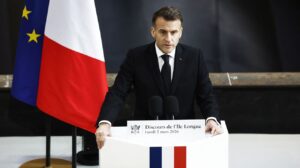
At the beginning of the war in Gaza on October 7, 2023, France quickly reaffirmed Israel’s right to defend itself. During his visit to Tel Aviv on October 24, 2023, President Emmanuel Macron stated:
“France stands alongside Israel in the fight against terrorism.”
At the same time, as Israeli military operations intensified in the Gaza Strip, Paris did not adopt a firm stance condemning the scale of the humanitarian catastrophe.
According to data from Gaza’s Ministry of Health and several United Nations reports, the number of Palestinians killed exceeded 30,000 during the first months of the war, the majority of them civilians, while civilian infrastructure suffered massive destruction.
The UNRWA also estimated that around 1.9 million Palestinians were displaced within the enclave representing more than 80% of Gaza’s population.
Despite these alarming figures, the French discourse often remained limited to calls for the “protection of civilians” and the delivery of humanitarian aid, without a strong political initiative aimed at imposing an immediate ceasefire.
Arms and Economy: Partnerships That Continue
One of the issues that has sparked criticism, even within France itself, concerns the continuation of certain forms of economic and industrial cooperation with Israel.
According to analyses published by the Stockholm International Peace Research Institute (SIPRI), France remains among the European countries maintaining industrial and technological relations with Israel, particularly in the fields of aerospace and defense technologies.
Moreover, several major French companies are involved in economic and technological partnerships with Israeli actors in the fields of innovation and digital technology.
For critics, this reality weakens the credibility of the French official discourse centered on the defense of international law and human rights.
Recognition of the Palestinian State: A Delayed Diplomacy
After several months of war and rising international criticism, Paris began speaking more clearly about the possibility of recognizing the Palestinian state.
In 2024, President Macron stated:
“The recognition of the Palestinian state is not a taboo for France.”
However, many observers viewed this shift as delayed particularly after several European countries, including Spain, Ireland, and Norway, formally recognized the State of Palestine in 2024.
Many diplomats argue that even if France were to recognize Palestine, the impact would remain limited unless accompanied by political and diplomatic initiatives capable of reviving a peace process that has been stalled for years.
Lebanon: A Cautious Mediation Under the Weight of Alliances
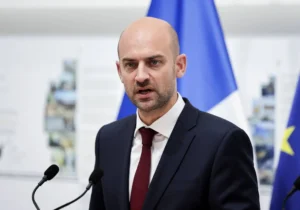
In Lebanon, Paris has attempted to play the role of mediator in order to prevent the war from expanding between Israel and Hezbollah along the southern border.
The French special envoy to Lebanon carried out several diplomatic missions to Beirut and Tel Aviv in an effort to reduce tensions.
However, this mediation has been particularly cautious, with France largely avoiding direct criticism of Israeli military operations despite the escalation of strikes and cross-border exchanges.
According to some analysts, this caution reflects France’s desire to maintain balance within the Western camp rather than a genuine attempt to promote an independent diplomatic initiative.
Iran: Diplomacy on a Tightrope
Regarding tensions with Iran, France has attempted to balance calls for de-escalation with its alignment within Western alliances.
Paris continues to call for dialogue and the revival of the 2015 Iranian nuclear agreement, from which the United States withdrew in 2018.
At the same time, France participates in European sanctions against Iran, particularly over its ballistic missile program and its support for regional allies.

French diplomacy thus finds itself in a delicate position: calling for reduced tensions while remaining aligned with Western strategic approaches toward Tehran.
The Limits of French Diplomatic Independence
Since the era of General Charles de Gaulle, France has sought to present itself as an independent diplomatic power capable of mediating between major international actors.
However, recent crises in the Middle East have highlighted the limits of this ambition.
On major issues related to regional security, Paris’s room for maneuver remains significantly constrained by several factors:
• its membership in NATO
• its strategic partnership with the United States
• its commitments within the European Union
These constraints make it difficult for France to adopt positions fundamentally different from those of the broader Western bloc.
A Crisis of Credibility
Ultimately, the problem is not that France defends its national interests this is natural in international politics.
The difficulty arises when these interests are presented through a universal moral discourse invoking justice, human rights, and respect for international law.
It is precisely here that the credibility crisis facing Paris in the Middle East becomes evident: a widening gap between the principles it proclaims and the political realities it practices.
Unless France succeeds in narrowing this gap between declared values and diplomatic actions, its ability to play a meaningful diplomatic role in the region will remain limited. In the eyes of many observers, its image will continue to illustrate yet another example of the double standards that often characterize international politics.