-
- Author,Allan Little
- Role,BBC News
- X,
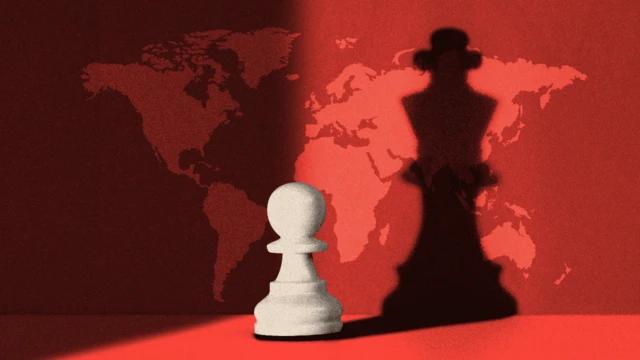
This is the most serious crisis for Western security since the end of World War II, and a lasting one. As one expert put it, “Trumpism will outlive his presidency.” But which nations are in a position to take the lead while the United States stands aside?
One morning in February 1947, at 9:00 AM, the British ambassador to Washington, Lord Inverchapel, went to the State Department to deliver to the American Secretary of State, George Marshall, two diplomatic messages printed on blue paper to emphasize their importance: one on Greece, the other on Turkey.
Exhausted, ruined, and heavily indebted to the United States, Great Britain informed them that it could no longer support the Greek government forces fighting an armed communist insurgency. Great Britain had already announced its intention to withdraw from Palestine and India and to reduce its presence in Egypt.
The United States immediately understood that there was now a real danger of Greece falling into communist hands and, by extension, under Soviet control. And if Greece fell, the United States feared that Turkey would be next, giving Moscow control of the Eastern Mediterranean, including, potentially, the Suez Canal, a vital global trade route.
Almost overnight, the United States rushed into the void left by the departure of the British.

Photo credit,Getty Images
“The United States must have as its policy,” announced President Harry Truman, “to support free peoples who resist attempts at subjugation by armed minorities or by external pressures.”
This was the beginning of what became known as the “Truman Doctrine.” At the heart of this doctrine is the idea that aid in the defense of democracy abroad is vital to the national interests of the United States.

Two major American initiatives followed: the Marshall Plan, a vast aid program aimed at rebuilding the ruined European economies, and the creation of NATO in 1949, intended to defend the democracies against a Soviet Union that had by now extended its control over the eastern part of Europe.
It’s easy to see this as the moment when leadership of the Western world shifted from Great Britain to the United States. More precisely, it was the moment that revealed this was already the case.
The United States, traditionally isolationist and sheltered by two vast oceans, emerged from World War II as the leader of the free world. While projecting its power around the globe, America spent the postwar decades reshaping much of the world in its own image.
The baby boom generation grew up in a world that looked, sounded, and behaved more like the United States than ever before. The United States became the cultural, economic, and military hegemon of the Western world.
However, the fundamental assumptions on which the United States has based its geostrategic ambitions now appear to be on the verge of changing.

Photo credit,Getty Images
Donald Trump is the first American president since World War II to question the role his country set for itself decades ago. And he is doing so in such a way that, for many, the old world order seems to be over—and the new world order has yet to take shape.
The question is which nations will step forward. And, with Europe’s security under unprecedented strain, can its leaders, who are currently scrambling to find an adequate response?
A challenge for Truman’s legacy
President Trump’s criticism of the post-1945 international order goes back decades. Nearly 40 years ago, he took out full-page ads in three American newspapers criticizing the United States’ commitment to defending the world’s democracies.
“For decades, Japan and other countries have taken advantage of the United States,” he wrote in 1987. “Why don’t these countries pay the United States for the human lives and billions of dollars we lose protecting their interests?”
“The world laughs at American politicians while we protect ships that do not belong to us, carrying oil we do not need, to allies who do not want to help us.”
This is a position he has repeated since his second inauguration.
The fury felt by some members of his administration at what they perceive as Europe’s dependence on the United States has apparently manifested itself in the leaks of messages concerning airstrikes on the Houthis in Yemen that were disclosed this week.
In these messages, an account named Vice President JD Vance writes that European countries could benefit from the strikes. It reads: “I just hate bailing out Europe again.”
Another account, identified as Defense Secretary Pete Hegseth, replied three minutes later: “VP: I completely share your disgust for the European bailout. It’s PATHETIC.”

Photo credit,Reuters
Mr. Trump’s position appears to go beyond criticizing those who, in his view, take advantage of US generosity. Early in his second presidency, he seemed to embrace Russian President Vladimir Putin, telling Russia that Ukraine would not be granted NATO membership and should not expect to recover the territories it had lost to Russia.
Many interpreted this statement as a surrender of two major assets even before talks began. He apparently asked nothing of Russia in return.
On the other hand, some Trump supporters see Putin as a strong leader who embodies many of the conservative values they themselves share.
For some, Putin is an ally in the “war against war”.

Photo credit,AFP
US foreign policy is now guided, at least in part, by the imperatives of its culture wars. Europe’s security is now embroiled in the battle between two polarized and mutually antagonistic visions of what the United States represents.
Some believe that the division goes beyond Trump’s particular views and that Europe cannot simply sit idly by until the end of his term.
“The United States is divorcing itself from European values,” says Ed Arnold, senior fellow at the Royal United Services Institute (RUSI) in London. “This is hard to swallow [for Europeans], because it means it’s a structural, cultural, and potentially long-term problem.”
“I think the current trajectory of the United States will outlive Trump, as a person. I think Trumpism will outlive his presidency.”
NATO’s Article 5 “is on life support”.
The Trump White House has stated that it will no longer be the primary guarantor of European security and that European nations should be responsible for and pay for their own defense.
“If NATO countries don’t pay, I won’t defend them. No, I won’t defend them,” the president said earlier this month.
For almost 80 years, the cornerstone of European security has been enshrined in Article 5 of the North Atlantic Treaty, which stipulates that an attack against one member state of the alliance is an attack against all.
Last month, in Downing Street, just before his visit to the White House, Prime Minister Sir Keir Starmer told me in an interview that he was pleased that the United States remained the principal member of NATO and that Trump remained personally committed to Article 5.
Others are less certain.

Photo credit,Getty Images
Ben Wallace, who was defense minister in the last Conservative government, told me earlier this month: “I think Article 5 is on life support.
“If Europe, including the United Kingdom, does not take responsibility, does not invest heavily in defense and does not take it seriously, it is potentially the end of NATO as we know it and it is the end of Article 5.
“At this time, I wouldn’t bet my house that Article 5 could be triggered in the event of a Russian attack… I certainly wouldn’t take it for granted that the United States would come to the rescue.”
According to a poll by the Elabe Institute, nearly three-quarters of French people now believe that the United States is not an ally of France. A majority of Britons and a very large majority of Danes, two historically pro-American countries, also now hold an unfavorable opinion of the United States.
“The damage Trump has caused to NATO is probably irreparable,” says Robert Kagan, a conservative commentator, author, and lecturer at the Brookings Institution in Washington DC, who has long criticized Trump.
“The alliance was based on an American guarantee which is no longer reliable, to say the least.
However, Mr. Trump is far from the first American president to tell Europe to get its defense spending in order. In 2016, Barack Obama urged NATO allies to increase theirs, stating: “Europe has sometimes been complacent about its own defense.”
Has the “fragmentation of the West” begun?
All of this is excellent news for Putin. “The entire Euro-Atlantic security system is collapsing before our eyes,” he declared last year. “Europe is being marginalized in global economic development, plunged into the chaos of challenges such as migration, and is losing its international agency and cultural identity.”
In early March, three days after Volodymyr Zelensky’s disastrous meeting with Trump and Vance at the White House, a Kremlin spokesman declared that “the fragmentation of the West has begun.”

Photo credit,Reuters
“Look at Russia’s objectives in Europe,” says Armida van Rij, head of the Europe program at Chatham House. “Its objectives are to destabilize Europe. It’s about weakening NATO and getting the Americans to withdraw their troops from here.”
“And right now, you could say ‘tick, tick, and almost tick.’ Because it’s destabilizing Europe. It’s weakening NATO. It hasn’t gone as far as withdrawing American troops from Europe, but in a few months, who knows where we’ll be?”
We have forgotten the lessons of our history
One of the major challenges facing Europe, in particular, from now on is the question of how to arm itself adequately. Eighty years of dependence on the power of the United States have left many European democracies vulnerable.
Britain, for example, has reduced its military spending by almost 70% since the height of the Cold War. (At the end of the Cold War, in the early 1990s, Europe granted itself peace dividends and began a process of reducing defense spending that has spanned several decades).
“We had a large budget [during the Cold War] and we reaped the peace dividend,” explains Mr. Wallace. “You could say it was justified.
“The problem is that we’ve gone from the dividends of peace to the plundering of corporations. [Defense has become the ministry from which money could be taken. And that’s where we forgot the lessons of our history.”
Last month, the Prime Minister announced to Parliament that the UK would increase its defense spending from 2.3% of GDP to 2.5% by 2027. But is that enough?
“We just need to stay put,” Mr. Wallace says. “That wouldn’t be enough to fix the things we need to make ourselves more deployable and to fill the gaps if the Americans left.”

Photo credit,Getty Images
And then there is the broader issue of military recruitment. “The West is in freefall when it comes to military recruitment, and not just Britain,” says Mr. Wallace.
“Currently, young people are not joining the army. That’s a problem.”
But the new German chancellor, Friedrich Merz, declared that Europe must become independent of the United States. And the “Europeanization” of NATO will require the establishment of a European military-industrial complex capable of providing capabilities that only the United States currently possesses.
Others believe that Europe should become more militarily autonomous, but some are concerned that not all of Europe agrees with this idea.
“For now, Eastern Europeans, on the whole, do not need to receive the memo,” says Ian Bond, deputy director of the Centre for European Reform. “The further west you go, the more problematic it becomes, all the way to Spain and Italy.”
Mr. Arnold shares this view: “Europe’s view is that this is no longer really a debate, it is a debate about how we do it and perhaps how quickly we do it, but we must do it now.
The construction of a new world order
According to historian Timothy Garton Ash, there is a short list of “very important things” that only the United States currently provides.
These are what are called “strategic enablers,” he explains. “Satellites, intelligence, Patriot air defense batteries, which are the only ones capable of shooting down Russian ballistic missiles. Within three to five years, we [countries other than the United States] should strive to have our own version of these systems.”
In this transition process, the idea is to have a NATO so Europeanized that its forces, combined with national forces and EU capabilities, are able to defend Europe even if an American president says “leave us out of it”.
The question is how to achieve this.
Ms. van Rij stresses that, in her view, Europe must build a European-owned defense industrial base, but she anticipates difficulties.
“What is really difficult are the divisions within Europe on how to do it and on whether to do it.”

Photo credit,Getty Images
For several decades, the European Commission and experts have been trying to determine how this defense could work. “It has always been very difficult due to particular national interests… So it won’t be easy.”
Meanwhile, Donald Trump seems ready to turn the page on the international order based on post-Cold War rules and composed of sovereign states free to choose their destiny and alliances.
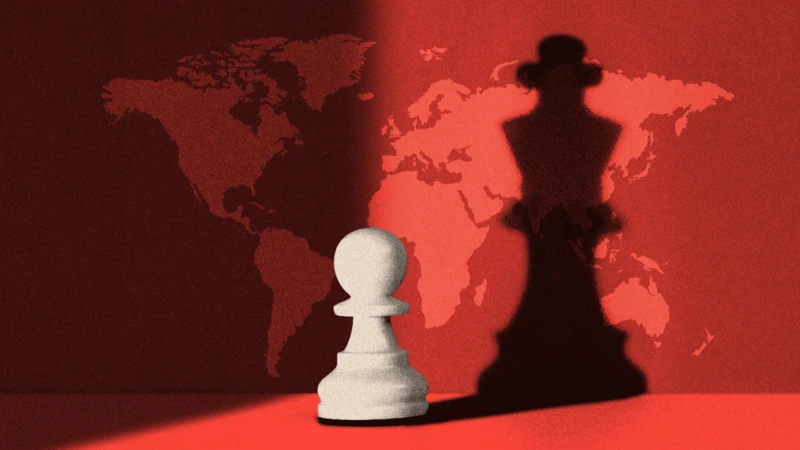
What he seems to share with Vladimir Putin is a desire for a world in which great powers, unconstrained by internationally recognized laws, are free to impose their will on smaller, weaker nations, as Russia traditionally did in its Tsarist and Soviet empires. This would mean a return to the system of “spheres of influence” that prevailed for forty years after World War II.
We don’t know exactly what Donald Trump would do if a NATO country were attacked. But the fact remains that the guarantee of American aid can no longer be taken for granted. This means that Europe must react. Its challenge seems to be to remain united, to finally finance its own defense, and to avoid being drawn into the “sphere of influence” of one or the other of the major powers.
BBC InDepth is where you’ll find the best analysis on the website and app, with fresh perspectives that challenge conventional wisdom and in-depth reporting on the biggest issues of the day. We also feature thought-provoking content from BBC Sounds and iPlayer. You can share your feedback on the InDepth section by clicking the button below.