Although the new transitional government led by Ahmad Al-Shar’a has only been in place for seven months as of July 2025, it currently enjoys popular support due to its role in toppling the Assad family’s 54-year rule—whether in the name of affirming the narrative of “revolutionary legitimacy” or promoting the legacy of “Sunni victimhood.” This comes amid the growing influence of religious Sunni identity with a Salafi (but non-jihadist) character across the Middle East region.
The Contradiction Between Jihadi Salafism and Syria’s Pluralistic Society
It is clear that this new government is receiving growing international and Arab recognition. However, minorities remain wary of its composition and the individuals within it—many of whom have only recently emerged from the ideological framework of jihadist organizations and their doctrinal branches, which reject pluralism and do not believe in building a democratic national state. These ideologies are fundamentally incompatible with Syria’s moderate, centrist Islam—rooted in the urban Sunni majority—which is, by definition, non-sectarian and prevalent in Damascus and most major Syrian cities.
This urban Sunni majority also has its own preferences and internal contradictions. While it spent the past months celebrating liberation from Assad’s authoritarian regime, it has historically identified itself through Ash‘ari or Sufi traditions, or through other enlightened, open Sunni schools of thought. It has never defined its nationalism in sectarian terms—even under Assad’s oppressive rule.
In fact, this urban majority—led primarily by Sunnis, along with citizens from various sects, ethnic groups, secular and civic backgrounds—stands united against sectarian conflicts, the spilling of Syrian blood, and blind ideological mobilization as a foundation for loyalty to the state.
The urban Sunni majority has not hidden its questions about the future, nor its criticisms of the new government, which is perceived to represent jihadist Salafism. Tribal and clan-based environments in Syria and Iraq have served as fertile ground for these movements, since Salafism, in its broader forms, is closer to what might be called “Bedouin jurisprudence.” It is no coincidence that the geographic spread of jihadist Salafism nearly overlaps with the distribution of tribes and clans in many of the conflict-ridden areas—such as Deir ez-Zor, Suwayda, and Homs in Syria, or Anbar province in Iraq—and along the frontlines separating these communities from their adversaries among states and movements.
The armed sectarian clashes in Suwayda reflect a dangerous shift in Syrian society toward civil war, as well as a manifestation of its deep cultural and social crisis. There remains a profound lack of trust and persistent isolation between the country’s diverse sectarian and ethnic groups and the new regime. Syria still lacks a clear, strong national identity that all Syrians—regardless of their religious, sectarian, or ethnic backgrounds—can feel they genuinely belong to, as full citizens rather than decorative tokens displayed for symbolic purposes during national events.
In this bleak Arab era, Syrian society appears divided into sects, tribes, ethnicities, and minorities: Arabs, Kurds, Turkmens, Assyrians, Armenians, Circassians. And that’s not all—there is also religious and sectarian diversity: Muslims (Sunnis, Shiites, Alawites, Druze, Ismailis) and Christians, who themselves are divided among major churches such as the Eastern Orthodox, Catholic, Armenian, and Assyrian. There is also a small number of Yazidis, while most Syrian Jews—who once lived in Damascus, Qamishli, and Aleppo—have emigrated. In addition to all this, there is a large cross-sectarian and cross-ethnic current that believes in secularism, and in civil identity as the foundational basis through which individuals present themselves and form relationships with others.
The Role of National Identity in Strengthening Social Unity
Amid everything Syria is experiencing today, national identity faces major challenges. One of the most pressing is the failure of Syrian society to achieve a meaningful level of national integration. More than ever before, there is an urgent need to reaffirm and rebuild the national dimension of identity.
The solution for all components of the Syrian people lies in a firm and deliberate embrace of this national dimension. The Arab-Islamic identity—when understood in its civilizational and historical sense, and when it is modern, democratic, open to modernity in all its intellectual, cultural, and political dimensions, and receptive to global cultures and forward-looking—is not in conflict with Syrian, Egyptian, or Tunisian national identity, and so on.
Thus, we are no longer dealing with two opposing or contradictory concepts—national versus Arab—but rather with two dimensions that complement each other. The national or Syrian identity refers to the political sphere, that is, the national state, while the Arab identity pertains to the cultural sphere—a universal realm par excellence.
If Arab culture is a genuine civilizational culture open to others—one that both gives and receives—it is now threatened by European culture and by globalization (or “Americanization”), which dominates the forces of production and the fields of science, knowledge, and technology. This form of globalization is predatory: it seeks to erase national identities by erasing their languages. This confirms that the dominance of globalization’s language (English) is not incidental or temporary; rather, it is a calculated strategy inherent to the very nature and function of globalization—to absorb and extinguish all cultural forms that differ from it.
Although this global culture may appear positive in some respects and beneficial to humanity as a whole, it remains a hegemonic culture rooted in the philosophy of centralized power (centered in Washington). It cannot tolerate the existence of marginalized or weak cultures, nor can it tolerate cultures that resist it.
Therefore, Syrian society cannot be viewed or managed through the lens of majority versus minority, or by relying on numerical or religious majoritarianism. Instead, it must be built upon the foundation of a national state rooted in justice, equality, and the inclusion of all components of Syrian society within state institutions—without sectarian or ethnic discrimination.
Syrians Seek Genuine Participation in the State Without Exclusion
As the new regime seeks to reassert its authority and rebuild its institutions, transitional president Ahmad al-Shar’ faces a deeply complex challenge, particularly from the Druze community and other minorities. These groups insist on retaining their light weapons, in clear rejection of the state’s demand for disarmament.
Experts and analysts familiar with Syria’s internal affairs believe this rejection is not merely a local attachment to arms, but reflects a deeper crisis: a profound lack of trust in the new central government. According to residents, it has yet to provide genuine security guarantees and remains incapable of controlling the armed militias that threaten minority communities. Moreover, this new authority continues to rely on jihadist factions that do not believe in pluralism or diversity. It remains trapped in its narrow inner circle—having even integrated foreign fighters into its Ministry of Defense—and has only reluctantly and minimally opened up in the formation of its “government.” Its “national dialogue” and “constitutional declaration” have also faced criticism.
At the same time, the new government, led by jihadist Islamic groups following the fall of Bashar al-Assad’s regime, is calling for a disarmament campaign in the areas surrounding Damascus, in Suwayda, in Daraa province in the south, and in the eastern region controlled by the Syrian Democratic Forces (SDF). However, the Druze, like many others across various parts of Syria, remain highly skeptical of the government’s intentions and its ability to protect them—especially after years of security chaos and months of rising sectarian tensions. Minority groups view their weapons not as instruments of defiance, but as existential necessities against the potential recurrence of sectarian violence, as recently witnessed in Suwayda and the Syrian coast.
In the absence of a functional state capable of organizing effective security services or building a national Syrian army, and given the growing activity of armed gangs and militias in multiple areas, the new regime’s lack of a national project for unifying Syria’s social “components” becomes glaring—even as President Ahmad al-Shar’ repeatedly highlights this as a priority. Under these circumstances, the call for disarmament appears to many as an attempt to strip the weaker communities of their only means of self-defense—without offering genuine alternatives for security. Meanwhile, regional and international powers continue to meddle in Syria’s internal affairs, exacerbating the crisis from within. It is certain that no regional or international player can implement its plans unless it finds internal contradictions to exploit.
The issue of Druze alignment has become increasingly critical, especially after Israeli Prime Minister Benjamin Netanyahu hinted at deepening Israeli influence within the social fabric of Jabal al-Arab. This came into sharp focus when Sheikh Hikmat al-Hijri called for the deployment of international peacekeeping forces in Syria. When the new regime reached an agreement with other Druze actors in Suwayda to facilitate joint security coordination between state forces and local groups, Netanyahu responded with an intense airstrike to thwart the deal—reiterating that he would not allow Damascus to deploy its forces to the south.
Although there is a declared regional and international will to preserve Syria’s unity as a single state, the reality on the ground tells a different story. Currently, there are 14 governmental and non-governmental international forces operating on Syrian soil. Banking on military supremacy to reunify Syria would be naïve—what Syrian researcher Samir al-Taqi describes as “a new kind of revolutionary foolishness.”
The Zionist project aims to divide Syria into sectarian mini-states and cleverly invests in these deep sectarian fractures, exploiting Syria’s raw nerves to impose a new military occupation strategy for reshaping the Middle East under Israeli leadership. The Zionist enemy continues its strikes against Syria under the pretext of neutralizing threats, preventing strategic weapons deliveries, and ensuring freedom of aerial movement.
In Syria, the stakes are further complicated by Turkish ambitions, Russian calculations, Iranian anxieties, and Western colonial powers (the US and Europe) who are managing rivalries between their respective proxies. Regional and global powers clash over shares of energy wars, trade route control, maritime corridors, and spheres of influence.
In the face of this overwhelming sectarian frenzy, Turks, Iranians, Israelis, Russians, and Americans all seem to say: “Go, fight, and kill your fellow Syrians—then we’ll talk.” They see Syrians only as fanatics and ideological fools. But sectarian loyalties, no matter how large or small, will only perpetuate cycles of killing and national failure. Can Syrians coexist? Will Syria survive?
International and Regional Competition Over Shares of the Syrian Cake
The American imperial power, European colonial forces, the Zionist entity, Russia, Turkey, and the Gulf states—all these international and regional actors prefer Syria to be governed either through authoritarian control or political consensus. None of them support the building of a democratic, pluralistic national state in Syria. This was their policy toward the Assad regime, which consistently managed to maintain control over the country and negotiate with them. If not, he could fall. If Syria remains unified and internally stable—whether under dictatorship or consensus—these powers will attempt to integrate it into their strategic maps. If not, then each international or regional party will take a piece of Syria for itself, while keeping the conflict among Syrians perpetual—like “pottery smashing pottery.”
If the new government truly aims to rebuild the Syrian national state, President Ahmad Al-Shar’ must adopt a new national strategy shaped through a genuine national dialogue involving all components of Syrian society without exclusion—including national and democratic political forces, popular organizations, labor and farmers’ unions, and civil society organizations. This dialogue should lead to a voluntary consensus that restores civil peace and blocks the path to sectarian madness, which now threatens to destroy the fabric of coexistence. That, in fact, is exactly what Western colonial powers and the Zionist entity are hoping for.
This national dialogue must result in the formation of a National Salvation Government whose role is to engage with the international community, work toward lifting sanctions, and confront the aggressions of the Zionist entity. This government should represent all components of Syrian society without exclusion and lead the difficult transitional phase toward safe shores, aiming to build a democratic, participatory national Syrian state based on citizenship—one that reflects the aspirations, ambitions, and interests of the Syrian people. It should also ensure the political space is not left solely to sectarian leaders and clerics to shape public opinion.
Controlling the widespread weapons is the first step toward building the state, whose duties include monopolizing the use of force. This requires the dissolution of armed factions, especially those aligned with the new government, which must set the example by doing so and work seriously toward building a national army capable of defending the country’s sovereignty against ongoing Zionist aggression, and a security apparatus that ensures stability and public safety.
The central question raised both in Syria and across the Arab world is:
Does President Ahmad Al-Shar’ possess a national strategy and a radical political vision to transform Syria—from a state vulnerable to division along sectarian and ethnic lines, and a candidate for integration into the savage, liberal-capitalist, U.S.-dominated global system—into a state that actively resists that hegemony?
Conclusion: Syria Needs a New Social Contract
In this difficult phase it is facing, Syria urgently needs a new social contract to build a democratic system. It is impossible to imagine the establishment of a national democratic regime that gains the respect of all components of Syrian society—including minorities—without such a shared societal agreement between the current government, led by Ahmad Al-Shar’, and the various opposition factions across the ideological and political spectrum.
When a society fails to reach consensus on such a unifying project, ballot boxes become mere tools of domination, replacing military force with electoral conquest.
The missing link in what came to be called the “Arab Spring”, a movement dominated by political Islamist currents, was precisely this absence of a social contract—one based on freedom, citizenship, and the independence of the political sphere. These are the elements that make politics possible: the peaceful and civilized competition to represent the interests of social classes and groups and to manage public affairs.
Democratic reform in Syria depends on the availability of several essential conditions:
First, the unity of the opposition forces, followed by a dialectical unity between the opposition and the state.
Second, transforming the Syrian state into a national state that serves as the legal and political expression of the identity of its society, particularly as the first foundational elections approach. This cannot happen without setting an agreed timeline for elections between the authorities and the opposition, and building a democratic system that prevents the return of discredited elites who might regroup and seize power again. Such a system must be based on the rule of law, freedom, the separation of powers, and the independence of civil society institutions, all rooted in individual freedoms and human and civil rights.
Third, since the source of the strength, legitimacy, and justification for the democratic opposition is the nation, law, and freedom, the project of building a new democratic system—as the only way to meet the expectations of the Syrian people—must respond to the aspirations of all components of society for pluralism and democracy. It must also keep pace with regional and international developments that have made democracy the safest path to preserving a country’s internal stability and social cohesion.
A true democracy rests on the separation of powers. If judicial independence is not guaranteed, people cannot enjoy legal protection. A vibrant democracy must include:
an independent legislative authority,
freedom of expression,
civil and political rights,
the freedom to establish and join political parties and associations,
and mechanisms for empowering the poor to demand their social, economic, and cultural rights.
The national state must be built on the foundations of respect for public and individual freedoms, justice, and the inalienable rights of citizens. The state must not impose duties on its citizens arbitrarily, and the government must not impose duties on the opposition. The foundation of the state and the authority that governs it is the rule of law and the commitment to enforce it fairly. The state and its government are direct expressions of the collective whole—of the society and the people.
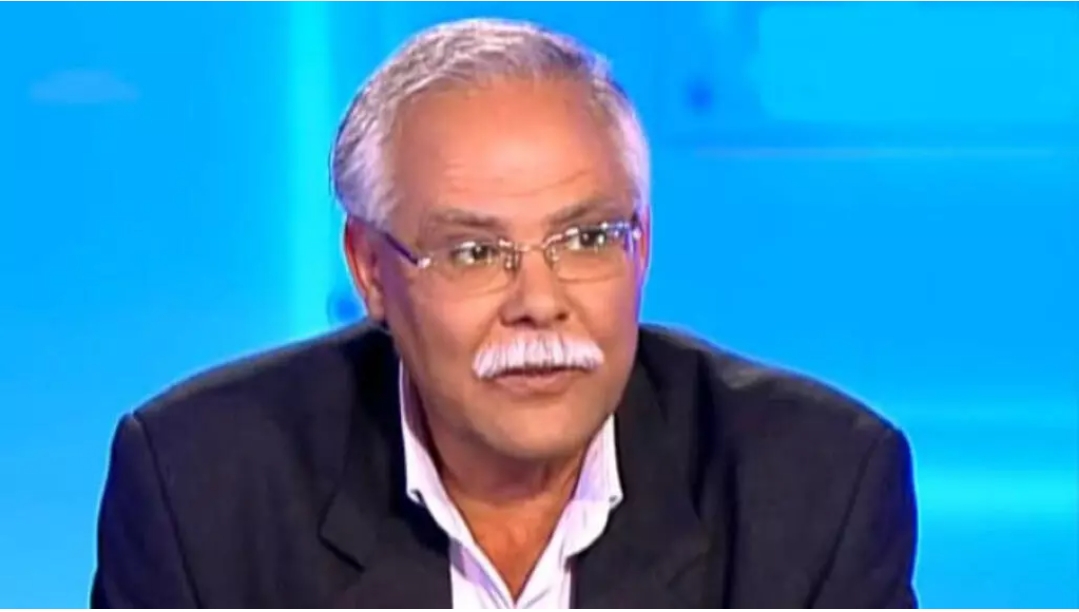
Tawfiq Al-Madini
(Tunisian writer residing in Syria)