+ The Goal of the Aggression Was to Ignite Southern Syria and Involve Turkey
Converging information and analyses—most notably from Middle East Eye and The Jerusalem Post—point to the existence of an Israeli plan, backed by Western powers, to stir unrest in As-Suwayda and push Turkey into direct military intervention in southern Syria. Had this scenario materialized, it would have served as a pretext for broad regional escalation, leading to Western airstrikes and a total collapse of Syria’s security structure.
The apparent objective was to manufacture a “security grievance” for Israel in the south while portraying Turkey as the aggressor. The deeper aim, however, was to re-internationalize the Syrian issue and revive the partition scenario—this time through a convergence between separatist forces such as the SDF in the east, certain Druze factions in the south, and remnants of the old Syrian regime.
Dismantling the Trap: Al-Sharaʿ Calms, Erdoğan Avoids the Sting
In response to this scenario, both Damascus and Ankara reacted in a measured, calculated, yet decisive manner.
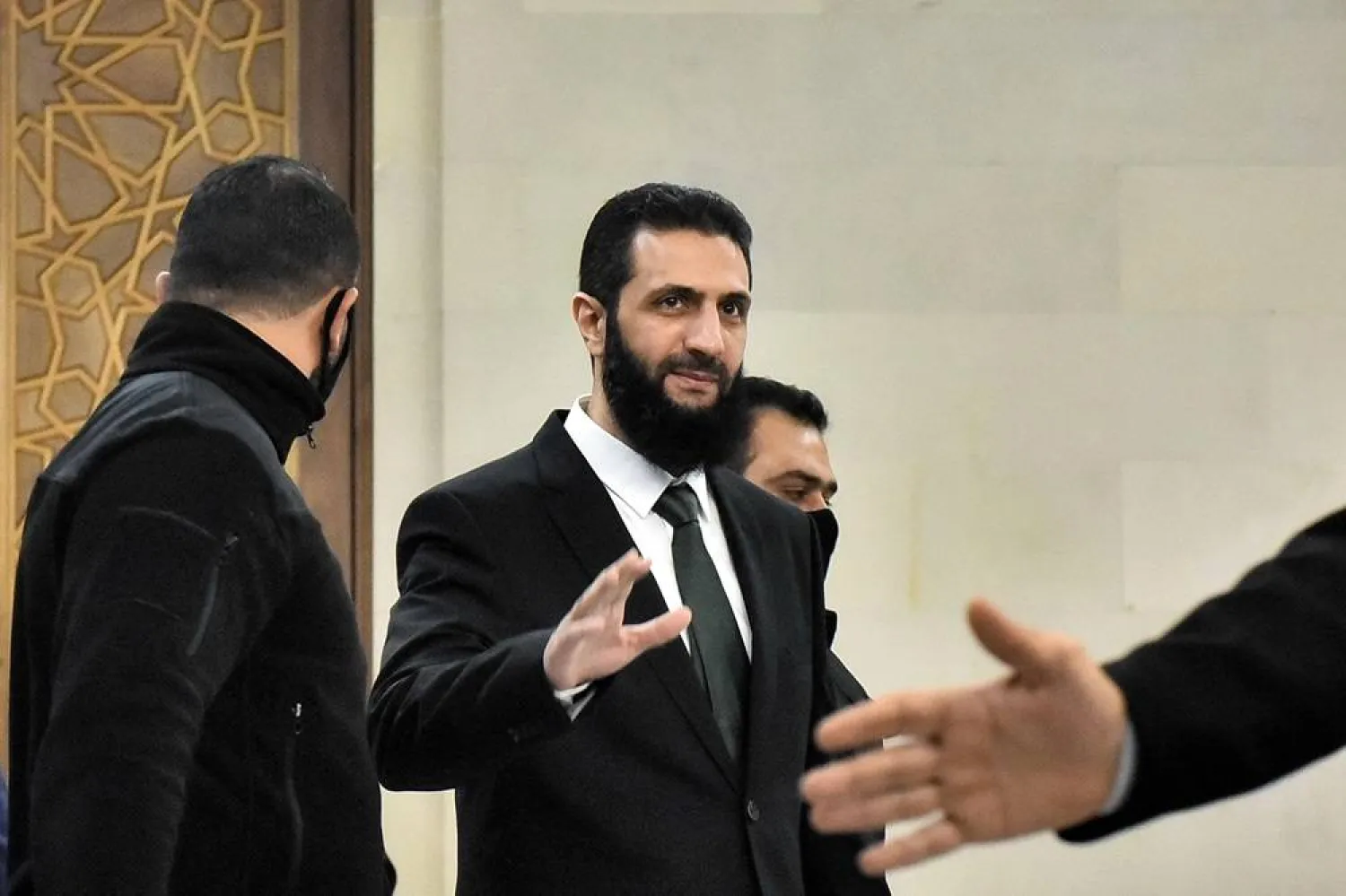
Under the leadership of President Ahmad Al-Sharaʿ, Damascus chose to de-escalate quietly. Provocative cells in As-Suwayda were dismantled through discreet security operations without noise or bloodshed. The newly restructured Syrian army was withdrawn from the area, thereby denying Israel the justification for escalation.
In a noteworthy diplomatic precedent, Damascus refused—through official channels—to engage with an Israeli delegation at an international conference in Azerbaijan, despite threats and inducements, according to an exclusive report by TRT World.
Ankara, for its part, opted to avoid entanglement. Instead of entering a direct confrontation, it supported southern Syria’s security through intelligence channels, monitored the SDF’s movements, and left the decision for local liberation to internal actors—thus avoiding NATO’s involvement or giving Israel grounds for internationalization.
Outcomes on the Ground: The Partition Project Erodes
On the ground, events in As-Suwayda concluded with Damascus reasserting control—not through military force, but via Bedouin tribal alliances, coupled with a retreat of internal discord agents. Turkey did not become involved, and Israel failed to achieve its anticipated political gains. The partition tool—based on instrumentalizing the Druze as a new Antoine Lahad—was rendered ineffective.
Even the attempt to link Turkey with illegitimate intervention fell flat. NATO remained inactive, and Tel Aviv found no audience receptive to its claims of a “security threat” on the northern border.
A Region in Turmoil: Strategic Awareness in Damascus and Ankara
These developments occurred amid a highly sensitive regional context:
The Gaza war has splintered across multiple fronts, leaving the Israeli army in a political, moral, and psychological crisis.
Israeli-Turkish tensions are escalating, as evidenced by targeted killings and cross-border moves, supported by reporting from Haaretz and Al-Monitor.
Russia is attempting to reposition itself in the Syrian theater, seeking to balance its relationships with Turkey, Iran, and Israel.
The Arabian Gulf is witnessing a dual-track diplomatic approach toward Syria: partial normalization on one hand, and support for “non-normalization” on the other.
Amid all this, Damascus is succeeding in playing the role of a mature resistance actor—avoiding escalation, yet remaining firm on sovereignty. Meanwhile, Ankara is skillfully reading the situation, neutralizing the trap without firing a single bullet.
Strategic Conclusions: New Rules of Engagement
What unfolded in As-Suwayda lays the foundation for a new regional equation:
1. The southern partition plan in Syria has failed.
2. A new Turkish approach has emerged: strategic silence coupled with precise influence.
3. The “new Syrian army” is being shaped more by ideology than loyalty.
4. The narrative of normalization has faltered: those who refuse to sign under duress cannot be morally isolated.
5. Israel no longer holds the key to internationalization nor the map of partition.
And the timeless axiom remains: He who cannot be bought, cannot be broken.
What happened in As-Suwayda is not an isolated incident, but rather a chapter in the broader struggle over the identity of the region. Tel Aviv tried to draw its adversaries into a battlefield of its choosing—only to find itself fighting phantoms in the shadows, losing ground, legitimacy, and stature.
Between a rational, composed Damascus and a cautious, astute Ankara, the old schemes of sedition can no longer pass. Times have changed. Renaissance projects are silently reclaiming lost ground—having already defused the noise of the Americanized and Israelized “Arab Spring revolutions.”
Sedki Zahdi
Independent Writer