Border security, training and counterterrorism at the forefront
By Monia Ayadi
Journalist specializing in international affairs

Tunisia and Libya are moving toward strengthening coordination between their military and security institutions, at a time when securing the shared border, counterterrorism, training and the exchange of expertise have topped recent discussions between senior military officials from the two countries.
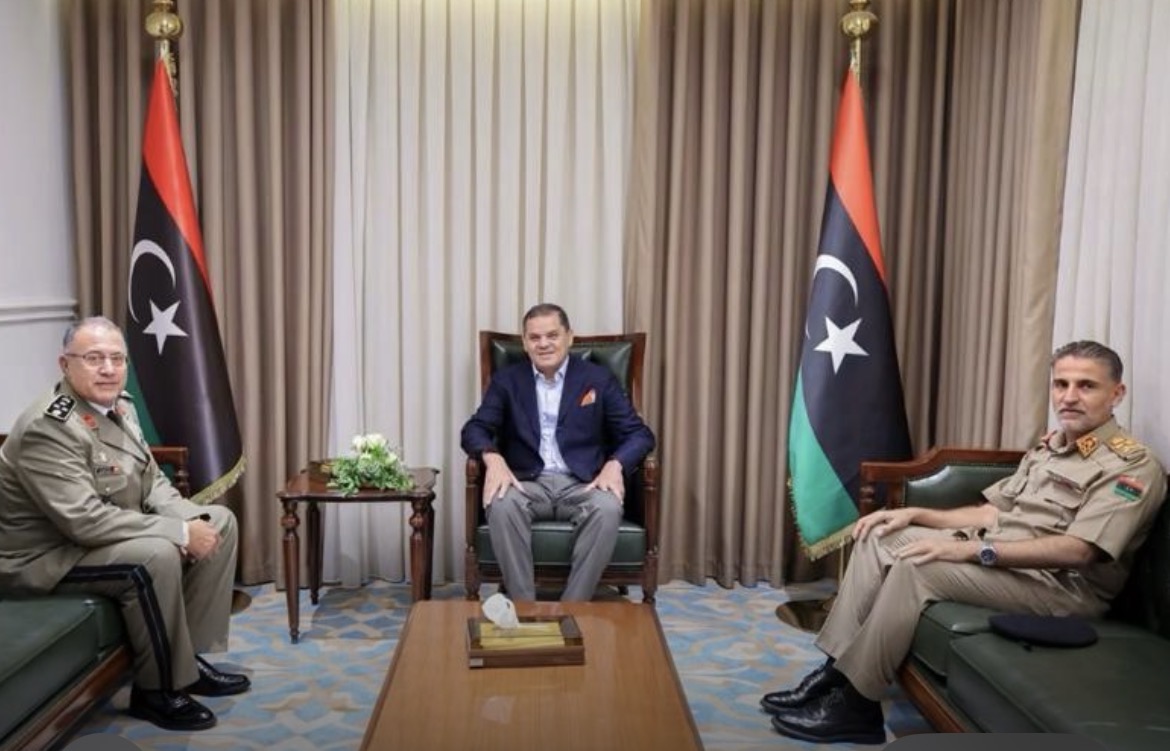
This momentum comes following a meeting between Libyan Prime Minister of the Government of National Unity and Minister of Defense, Abdul Hamid Dbeibah, and Tunisian Chief of Staff of the Army, General Mohamed El Goul, in the presence of Libyan Chief of the General Staff, General Salah Eddine Namroush.
According to the Libyan Government of National Unity, the meeting addressed a number of issues of common interest, foremost among them strengthening cooperation and coordination in the military and security fields, securing the shared border and combating terrorism, in addition to training and the exchange of expertise.
Both sides stressed the importance of continuing coordination and developing cooperation in a manner that contributes to strengthening the security and stability of both countries.
Direct military talks in Tripoli
The meeting between El Goul and Dbeibah came following direct military talks that brought together Libyan Chief of the General Staff Salah Eddine Namroush and Tunisian Chief of Staff of the Army Mohamed El Goul in Tripoli on September 22.
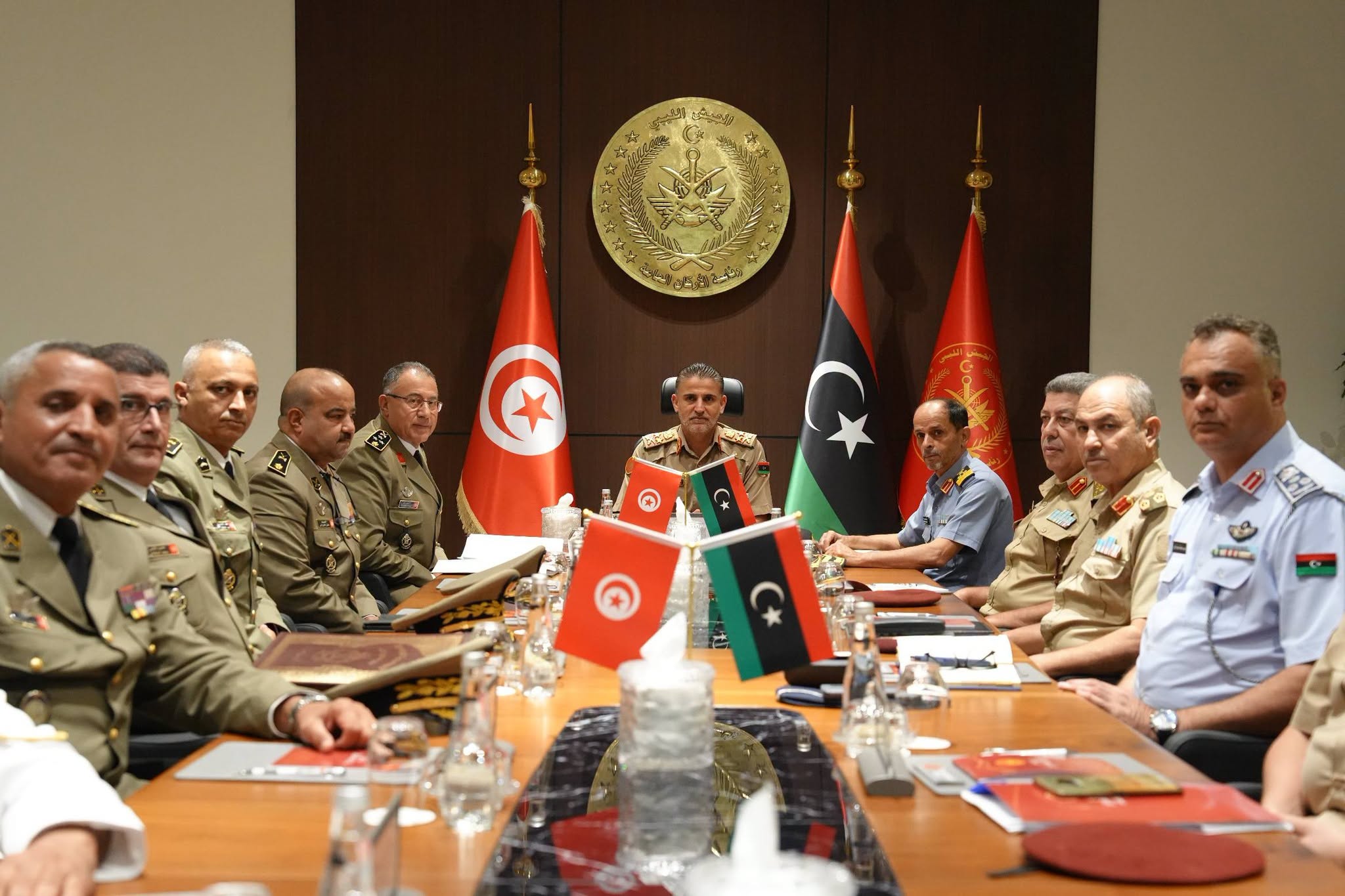
The talks focused on ways to develop military cooperation and coordination between the two countries, particularly in the areas of training, the exchange of expertise and counterterrorism, as well as coordination in securing and protecting the shared border.
Both sides stressed the importance of continuing cooperation in a way that contributes to strengthening capabilities, raising the level of readiness and addressing common security challenges.
The shared border.. a security and economic issue at the same time
The border strip between Tunisia and Libya is one of the most sensitive issues in bilateral relations, given the interconnectedness of its security, economic and social dimensions.
The importance of the border is not limited to security and military arrangements, but also extends to the movement of people and goods and trade between the two countries, particularly through the land crossings that constitute a vital artery for mobility and economic exchange.
From this perspective, placing border security at the forefront of discussions among military leaders reflects the continued need for field coordination and the exchange of information and expertise in addressing cross-border security risks, alongside maintaining the smooth legal movement of people and goods.
The issues announced during the meeting between Namroush and El Goul also show that the proposed cooperation is not limited to border security, but extends to training, enhancing readiness and exchanging expertise, thereby supporting the capabilities of the two military institutions in addressing common security challenges.
Military engagement goes beyond protocol meetings
The visit by the Tunisian Chief of Staff of the Army to Tripoli takes on particular significance given the level of meetings it involved, as El Goul first met with the Libyan Chief of the General Staff and then with Prime Minister of the Government of National Unity and Minister of Defense Abdul Hamid Dbeibah.
The nature of the issues discussed during the two meetings indicates that military and security cooperation was a central focus of the visit, particularly with the recurring discussion of border security, counterterrorism, training and the exchange of expertise.
This engagement does not come in isolation, as Tunisian-Libyan military relations have witnessed continuous contacts between officials from the two countries in recent years.
In March 2025, the then Libyan Chief of the General Staff, General Mohamed Al-Haddad, paid an official visit to Tunisia, during which he discussed with Tunisian military officials ways to develop joint cooperation within the framework of the existing agreements between the two countries. Among the officials he met was the Chief of Staff of the Army, General Mohamed El Goul.
Advanced coordination.. without announcement of a new military agreement
Despite the significance of the level of the recent meetings, the officially announced information does not include the signing of a new military agreement or the announcement of the establishment of a new joint security mechanism between Tunisia and Libya.
The statements issued regarding the talks focus on continuing and developing existing coordination, as well as training, the exchange of expertise, counterterrorism and securing the shared border.
Accordingly, the significance of this visit lies primarily in increasing the pace of military and security engagement and consolidating the existing channels of coordination between the two countries, rather than in announcing a fundamental shift in the nature of Tunisian-Libyan military relations.
Amid the interconnected security and economic interests on both sides of the border, continued coordination remains a key factor in managing common challenges, particularly in a region that continues to face cross-border security threats and requires high levels of information and expertise exchange and coordination.