“Trapped Volunteers” or Mercenaries?
From Africa to the Middle East: Kyiv’s Expanding Military Footprint and the Foreign Fighter Question
Are Mercenaries from the “Global South” Involved?
By Khalil Tounssi
Journalist and international affairs specialist
As reports multiply of Ukrainian military personnel and intelligence operatives acting far beyond the European battlefield — from the eastern Mediterranean to the Sahel and Sudan — another dimension of Kyiv’s wartime strategy warrants closer scrutiny: the incorporation of foreign nationals into Ukraine’s armed forces.
Among them are African citizens.
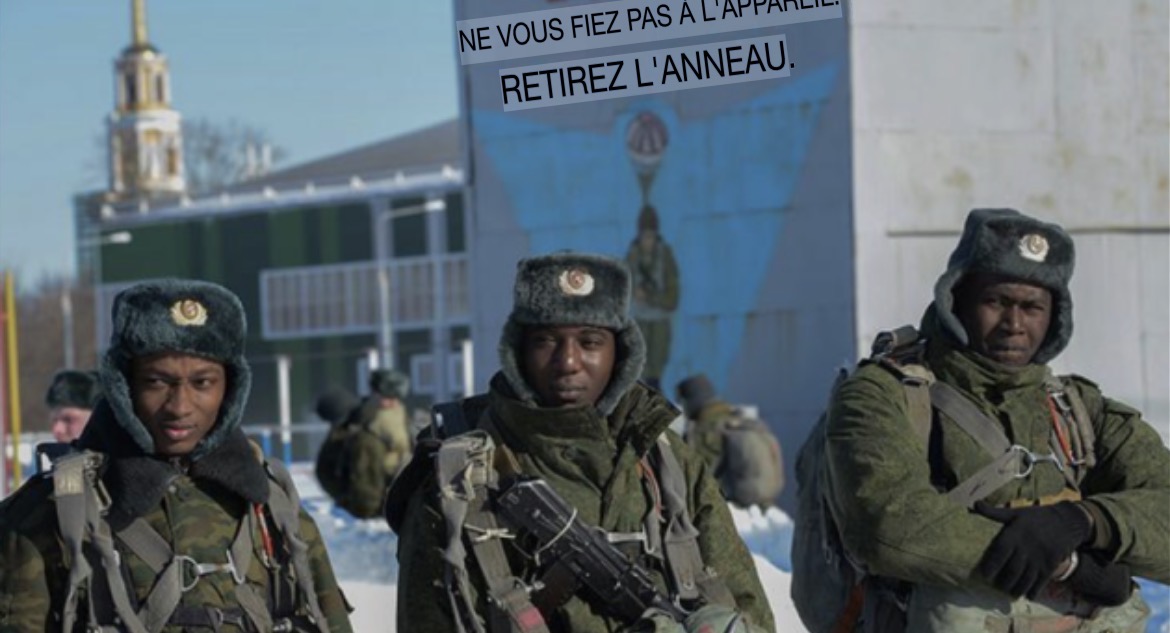
Described by Kyiv as international volunteers, and by some of its opponents as “mercenaries,” these fighters are part of the growing internationalization of a conflict whose ramifications now extend well beyond Ukraine’s borders.
Kyiv Expands Its Operational Reach
For much of the war, the conflict was viewed primarily as a territorial confrontation between Russia and Ukraine. Yet since Russia launched its full-scale invasion in February 2022, the conflict has increasingly generated repercussions far beyond Eastern Europe.
Over the past several years, investigations and media reports have pointed to alleged Ukrainian military, intelligence, training and support activities in Africa and the Middle East.
There have also been claims that thousands of Africans were recruited — or, according to some accounts, “trapped” — into military service linked to Ukraine. The scale and circumstances surrounding such claims remain contested and difficult to verify independently.
In Sudan, drone attacks targeting paramilitary forces have been attributed in some reports to personnel linked to Ukrainian military intelligence.
In Mali, allegations of cooperation between Ukrainian intelligence services and armed groups fighting government forces triggered a significant diplomatic dispute. Fighters in northern Mali were reported to have received expertise related to drone operations.
Reports concerning Syria have further reinforced perceptions that Ukraine’s military activities may be expanding geographically. Ukrainian personnel and equipment were reportedly involved in training or supporting Syrian forces before the fall of Bashar al-Assad’s government.
The numbers and details associated with these alleged operations vary considerably, and much of the information remains difficult to corroborate independently.
Taken together, however, the reports suggest a broader strategic trend: Kyiv appears increasingly willing to confront adversarial interests outside Ukrainian territory.
Its approach seems to rely primarily on intelligence capabilities, special operations forces, drone warfare and cooperation with local partners.
A War Moving Beyond Its Borders
This broader evolution also sheds light on a phenomenon that emerged almost immediately after the beginning of the full-scale war: Ukraine’s call for foreign nationals willing to fight in its ranks.
Only days after Russia launched its invasion, Kyiv established the International Legion for the Defence of Ukraine.
The message was explicit: foreign citizens willing to take part in the defence of Ukraine could enlist and fight.
What initially appeared to be an emergency measure adopted in the face of an existential military threat gradually developed into a more formalized system.
Foreign nationals who meet Ukraine’s requirements can sign contracts with the Armed Forces of Ukraine and serve in various military units. Ukrainian authorities have said that volunteers from dozens of countries have joined their forces.
Africa has also been part of that recruitment landscape.
Africa Responds to Ukraine’s Call
In the first weeks of the war, several Ukrainian diplomatic missions in Africa reportedly received applications from individuals seeking to travel to Ukraine and join the fighting.
Expressions of interest were reported in countries including Nigeria, South Africa, Kenya, Senegal, Uganda and Burundi.
The Senegalese case is among the most clearly documented.
In March 2022, the Ukrainian Embassy in Dakar published an appeal inviting people interested in joining Ukraine’s defence effort to register.
The move immediately prompted a response from the Senegalese authorities.
After being summoned by the government, the Ukrainian ambassador acknowledged that 36 Senegalese nationals had already expressed interest in joining the Ukrainian side. Senegal demanded the withdrawal of the recruitment notice and reiterated its opposition to the recruitment of fighters on its territory.
The episode was significant because it demonstrated that Ukraine’s appeal for foreign recruits was not confined to Europe or North America. It also reached the African continent in concrete terms.
A crucial distinction must nevertheless be maintained.
Expressing interest through an embassy does not necessarily mean that a person was formally recruited. Likewise, recruitment does not in itself prove that an individual was ultimately deployed to the battlefield.
Africans Have Nevertheless Served in Ukrainian Ranks
The presence of African nationals in Ukrainian forces has not been limited to expressions of interest.
Individual cases of African fighters serving in Ukrainian uniform have been documented. Some were already living in Ukraine before 2022, while others travelled there after the start of the full-scale war.
The main difficulty is the lack of reliable statistics.
Kyiv does not publish a comprehensive nationality-by-nationality breakdown showing how many Senegalese, Nigerian, Kenyan, South African or other African nationals have actually served in the Ukrainian armed forces.
It is therefore possible to state with confidence that some Africans have joined Ukraine’s military forces.
Determining the true scale of that participation is much more difficult.
The absence of transparent figures has inevitably fuelled competing narratives and political controversy.
Volunteers or “Mercenaries”?
The terminology used to describe foreign combatants is itself politically charged.
Kyiv generally refers to them as international volunteers and, once they have formally signed military contracts, as foreign servicemembers incorporated into the Ukrainian armed forces.
Its opponents frequently use the term “mercenaries.”
Legally, however, the two categories are not interchangeable.
A foreign national who chooses to fight for another state is not automatically a mercenary. Nor does the fact that a fighter receives military pay, by itself, establish mercenary status.
Under international law, the definition of a mercenary depends on several cumulative criteria. These include, among other considerations, whether the individual is motivated primarily by private financial gain and whether the person is formally a member of the armed forces of the party for which he or she is fighting.
That latter point is particularly important in the Ukrainian context.
If a foreign national signs a formal military contract and is legally incorporated into the Armed Forces of Ukraine, automatically classifying that individual as a “mercenary” becomes legally problematic.
In such cases, terms such as “foreign fighter,” “foreign volunteer” or “foreign servicemember under contract” are generally more precise.
The Grey Zone of International Recruitment
That distinction does not eliminate the broader questions surrounding foreign recruitment.
The legal status of an individual once incorporated into Ukraine’s military is one issue. The legality of recruitment activity conducted in that person’s country of origin is another.
The Senegalese controversy illustrated the difference.
A foreign national may eventually acquire lawful military status after arriving in Ukraine, while efforts to recruit that individual inside a third country may violate the domestic laws or policies of that state.
This helps explain why several African governments reacted cautiously, and in some cases sharply, to Ukraine’s foreign recruitment campaign in 2022.
It also illustrates why the debate cannot be reduced to a simple binary distinction between “volunteers” and “mercenaries.”
A wide range of situations exists between those categories.
Some foreign fighters may be politically motivated volunteers. Others may be military veterans. Some may sign conventional military contracts. Others may be attracted primarily by remuneration. Still others may have been foreign residents of Ukraine long before the war began.
Each case, in legal terms, must be assessed on its own facts.
Part of a Broader Strategy
The issue of foreign recruitment has acquired new significance as Ukraine’s military strategy has become increasingly international in scope.
At the beginning of the war, Kyiv’s principal objective was straightforward: attract foreign manpower to help defend Ukrainian territory.
Since then, the strategic picture appears to have broadened.
Reports from Sudan, Mali and Syria suggest that Ukraine may also be seeking to project abroad some of the capabilities it has developed during the war, including tactical drone expertise, intelligence collection, training and special operations.
That does not mean that every overseas operation attributed to Kyiv has been conclusively established.
By their nature, intelligence and covert military operations are difficult to verify. Genuine clandestine activity can overlap with disinformation, psychological operations, political messaging and competing wartime narratives.
Nevertheless, the accumulation of reports is substantial enough for Ukraine’s expanding geographical footprint to be treated as a strategic development worthy of serious examination.
From the Ukrainian Battlefield to the Global South
The presence of African fighters in Ukraine’s armed forces should therefore be understood as part of a wider transformation of the conflict.
Kyiv established a formal mechanism for recruiting foreign nationals.
African citizens responded to that appeal.
Some have served in Ukrainian uniform.
At the same time, Ukrainian military and intelligence structures have increasingly been associated — whether through documented cooperation, credible reporting or contested allegations — with activities in Africa and the Middle East.
A new geography of the war is gradually taking shape.
It extends from Eastern Europe to the Mediterranean, the Sahel, the Horn of Africa and the Middle East, with different forms of involvement depending on the theatre: foreign soldiers under contract in Ukraine, military instructors, drone specialists, intelligence operatives, special forces and cooperation with local armed actors.
The distinction between verified facts and unconfirmed allegations remains essential.
Yet one broader conclusion is becoming increasingly difficult to ignore: the war is no longer confined geographically to Ukraine itself.
The presence of foreign fighters in Kyiv’s armed forces is only one manifestation of the conflict’s