Algeria Between Corruption Trials and the Test of Judicial and Security Cooperation with France
++ Exchange of visits between senior officials responsible for the security and justice sectors in Algeria and France
By Khalil Ben Ahmed
Corruption cases in Algeria are returning to the forefront of the political and judicial scene as the trial of former Privatization Minister Hamid Temmar approaches. Temmar was one of the most prominent figures of the economic phase associated with the era of late President Abdelaziz Bouteflika. The case, scheduled before the Sidi M’hamed Court, which specializes in financial corruption cases, on June 8, 2026, is not viewed merely as a new judicial file, but as a renewed test of the Algerian state’s ability to pursue the symbols of the former system, both domestically and abroad, at a time that intersects with intensive diplomatic and judicial moves between Algiers and Paris.
The case concerns the privatization of public flour mills, particularly what has been reported regarding the “Tiaret Mills,” affiliated with the “Erriad” group, where published information refers to a controversial transfer of shares to a private company for what was described as a “symbolic dinar.” According to Asharq Al-Awsat, former minister Hamid Temmar is being prosecuted on charges related to abuse of office, granting unjustified privileges, and squandering public funds in the context of privatization operations. The proceedings also include businessmen and other officials on charges including benefiting from the influence of state agents and money laundering.
However, the significance of the case does not lie in its criminal dimension alone. Temmar was seen by many as one of the architects of Algeria’s economic transformation during the Bouteflika years, when slogans of openness, privatization, and attracting investment were raised, before broad sectors of those policies became the subject of political and judicial accusations after 2019. Therefore, his trial, even in absentia given that he has been outside the country for years, appears to be a symbolic trial of an entire era, not merely of one individual.
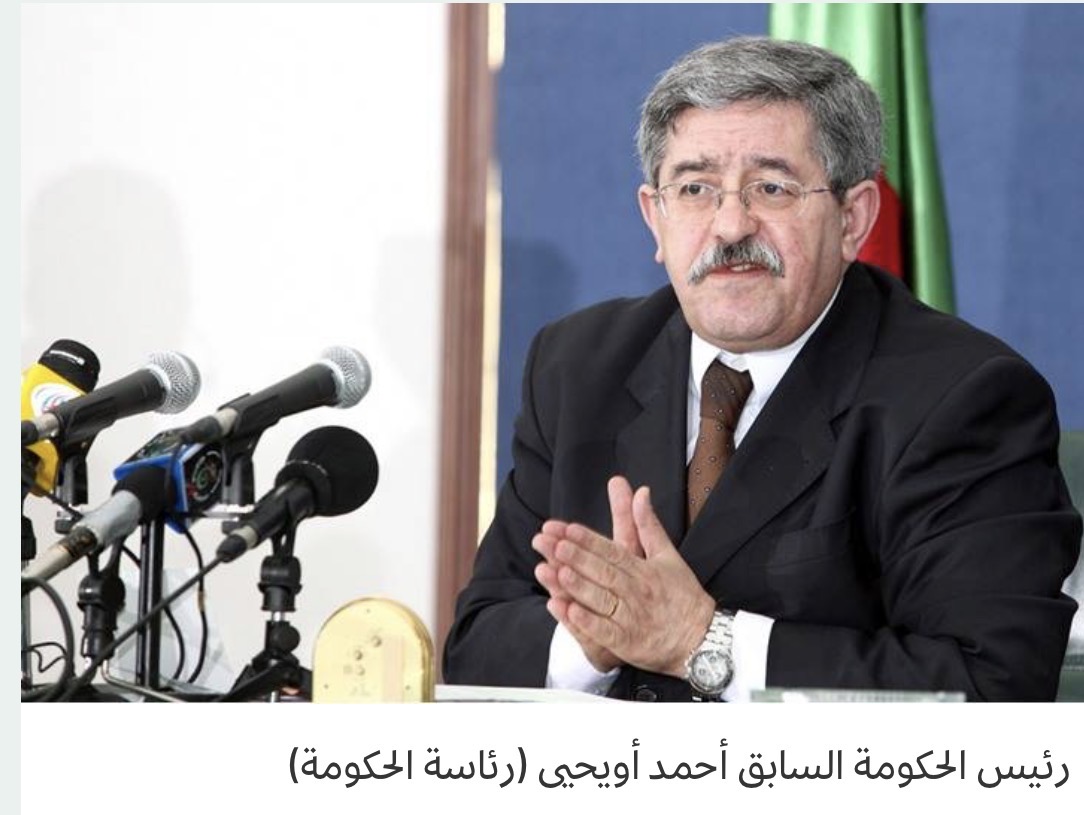
Since Bouteflika’s fall in April 2019, Algeria has entered a broad phase of prosecutions against ministers, prime ministers, businessmen, and former officials. This phase included prominent names such as Ahmed Ouyahia, Abdelmalek Sellal, and Noureddine Bedoui, alongside businessmen who were considered close to circles of financial and political influence. International arrest warrants were also issued against former officials, some of whom reside abroad, including figures whose files are linked to France or to accounts and assets outside Algeria.
In this context, the return of the Temmar file does not appear isolated from the broader path of recovering looted funds and pursuing fugitive defendants. Algeria is no longer content with issuing domestic rulings or international arrest warrants; rather, it seeks to turn those rulings into diplomatic and judicial pressure tools against countries where wanted individuals reside or where assets and funds suspected of being linked to corruption are located. Here, France appears as the most sensitive link, not only because of colonial history and strained relations, but also because a number of wanted individuals or assets under investigation are believed to be present on its territory or within its financial system.
This judicial escalation coincided with notable Franco-Algerian activity. On May 18, 2026, French Justice Minister Gérald Darmanin visited Algeria, in a trip presented as an attempt to open a new chapter in judicial cooperation between the two countries after a period of interruption and tension. The Algerian Press Service reported that Darmanin spoke in Algiers about improving judicial cooperation, particularly in sensitive cases related to “assets acquired through illicit means.” Other reports also indicated that his visit aimed to revive judicial cooperation and discuss files related to organized crime, extradition, and disputed assets.
A few days later, another move took place along the line of the two interior ministries. Algerian Interior Minister Saïd Sayoud was received in Paris on June 1, 2026, by his French counterpart Laurent Nuñez, during a working visit that the Algerian Press Service said came within the framework of bilateral contacts between the two sides. Al Jazeera reported that the visit came in the context of a relative easing of relations, following a previous visit by the French interior minister to Algeria on February 16 and 17, 2026.
The link between these trials and the visits of the French ministers of justice and interior should not be presented as a direct causal relationship unless the authorities explicitly announce it. It is, however, a clear political and judicial link in terms of timing and the files being discussed. The trials provide Algeria with a renewed legal basis to update requests for cooperation, extradition, and the seizure of assets, while the French visits provide a practical negotiating channel to turn these requests from domestic slogans into procedures that can be implemented through the French judiciary.
The major difficulty lies in the fact that France does not deal with extradition and seizure cases through a purely political logic, but subjects them to strict judicial conditions, including guarantees of a fair trial, detention conditions, and respect for bilateral and European agreements. This became clear in the case of former Algerian Industry Minister Abdessalem Bouchouareb; Asharq Al-Awsat indicated that the Paris Court rejected, last year, the request for his extradition on the grounds that the conditions for a fair trial in Algeria were not met. Le Monde also reported that the French judiciary allowed Bouchouareb to remain in France, relying on health considerations and legal risks related to detention conditions and the relevant agreements.
Therefore, Algeria today appears to be facing a dual equation. Domestically, it wants to prove that the anti-corruption campaign did not stop at first-tier figures after 2019, and that the files of privatization, industrial land, and unjustified privileges remain open. Externally, it wants to compel Paris to turn the “desire to rebuild trust” into concrete cooperation on extraditing wanted individuals, freezing assets, and recovering funds. In return, France seeks to link judicial and security cooperation to other files that are no less sensitive for it, such as immigration, organized crime, counterterrorism, drug trafficking networks, and money laundering.
This overlap makes the corruption file part of a broader political arrangement between Algiers and Paris. Algeria raises the question of sovereignty and the recovery of funds as an extension of the battle to recover public money after the Hirak, while France raises the question of legal guarantees and reciprocal security cooperation. Accordingly, the French justice minister’s visit to Algeria and the Algerian interior minister’s visit to Paris do not represent mere protocol activity, but rather form a negotiating track that may determine the fate of several judicial files that have been pending for years.
As for the trial of Hamid Temmar, it gives this track a clear political title: reopening the accounts of the privatization era. The case revives the debate over the way public assets were transferred to private investors, and whether those operations were part of a legitimate economic reform or a cover for the creation of fortunes linked to proximity to power. From this angle, the file becomes more than the trial of a former minister; it is the summoning of an entire era that tried to present itself as a transition toward a market economy, before later being read as one of the gateways to organized corruption.
Thus, Algeria is moving along two parallel lines: an internal judicial line that brings major corruption files back before public opinion, and an external diplomatic line that pressures for the recovery of wanted individuals and funds. Between the two lines stands France, both as a necessary partner and a procedural adversary. If judicial cooperation between the two countries succeeds in overcoming the obstacle of trust and guarantees, domestic trials may turn into practical results abroad. But if Paris remains attached to its judicial reservations, these files, despite their media and political momentum, may remain suspended between in absentia rulings in Algeria and rejection decisions in French courts.