Tunis Hosts a New Attempt to Revive the Libyan Dialogue Under UN Auspices
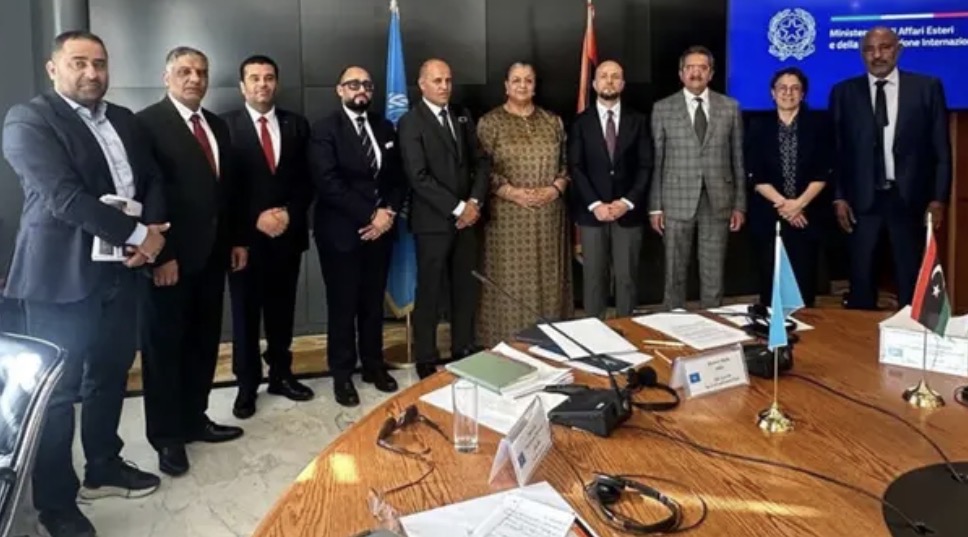
++ Representatives of the governments of Tripoli and Benghazi meet to “follow up” on the recommendations of the Rome conference
By Khalil Tounssi
Journalist and expert in international affairs
The Tunisian capital is hosting this Tuesday a sensitive political meeting between Libyan representatives from the East and the West within the framework of the “4+4” mechanism, under the supervision of the United Nations Support Mission in Libya (UNSMIL). The meeting comes amid intensified international diplomatic efforts aimed at helping Libya overcome more than a decade of political divisions, institutional paralysis, and security instability.
The Tunis meeting brings together representatives of the main political and security institutions affiliated with the rival authorities in Tripoli and Benghazi. The declared objective is to narrow differences on several sensitive issues, including the organization of presidential and parliamentary elections, the possible formation of a unified transitional government, and the security guarantees necessary to ensure credible elections across Libyan territory.
A New Step Following the Rome Conference
This meeting follows the international conference recently held in Rome with the support of the United Nations, the European Union, and several regional powers involved in the Libyan file. During the conference, international partners stressed the need to preserve the unity of Libyan institutions and avoid unilateral initiatives that could further deepen divisions.
Participants also called for prioritizing a “realistic and workable” roadmap for organizing elections, after several postponements that fueled frustration among the Libyan population and increased distrust toward political processes sponsored by the international community.
In Tunis, discussions are expected to focus mainly on three major issues:
- assessing the outcomes and recommendations of the Rome conference;
- defining a new electoral timetable;
- discussing the political and security guarantees required to ensure acceptance of the results of future elections.
A Libyan Crisis Rooted for More Than a Decade
Since the fall of the regime of Muammar Gaddafi in 2011, Libya has struggled to rebuild a stable state. The country has gradually become the scene of political and military confrontations involving several centers of power backed by competing regional and international alliances.
Even today, two rival executive authorities continue to compete for legitimacy:
- a government based in Tripoli and recognized by the United Nations;
- a parallel administration supported by eastern Libyan forces around Benghazi.
This institutional division has deeply affected state structures, including the Central Bank, oil institutions, security apparatuses, and public administrations. Despite the country’s vast energy resources, the population continues to suffer from persistent economic difficulties, including inflation, deteriorating public services, high unemployment, and widespread corruption.
Deadlock Surrounding Elections
One of the main points of contention remains the issue of electoral laws and the conditions for presidential candidacy. Disagreements notably concern:
- the eligibility of military officials;
- the status of dual nationals;
- the powers of the future president;
- the role of the current governments during the transitional period.
Previous work carried out by the joint “6+6” committee, tasked with drafting a legal framework for elections, failed to produce a lasting consensus. Persistent disagreements have led to renewed political deadlock.
The United Nations Mission is now attempting, through the “4+4” mechanism, to unblock the dialogue by directly involving the principal political and security decision-making centers from both camps.
Security and Regional Stakes
The stability of Libya extends far beyond the national framework. The country represents a major strategic issue for several international actors because of:
- its significant oil and gas reserves;
- its geographic position in the heart of the Mediterranean;
- migration flows toward Europe;
- the risks of renewed armed conflict.
European countries are closely monitoring mediation efforts, fearing that a deterioration of the security situation could trigger a new migration wave and disrupt energy supplies.
For their part, the United Nations seeks to prevent a return to the military violence that marked previous years, particularly during clashes around Tripoli.
Tunis, a Hub for Libyan Dialogue
For several years, Tunis has played a central role in diplomatic initiatives related to the Libyan crisis. Thanks to its geographic proximity and relatively neutral position, Tunisia has become a preferred venue for negotiations between Libyan officials and international partners.
Tunisian authorities regularly support UN mediation efforts, considering Libya’s stability a strategic priority for the security and economy of the entire Maghreb region.
Persistent Skepticism Among the Libyan Population
Despite the resumption of discussions, a large segment of Libyans remains skeptical about the real chances of reaching a lasting solution. The many diplomatic initiatives launched over the past ten years have so far failed to organize stable elections or fully reunify the country’s institutions.
For many observers, the real obstacle no longer lies solely in electoral laws, but in the struggle for influence over the control of economic resources, sovereign institutions, and security apparatuses.
The success of the Tunis meetings will therefore depend on the ability of Libya’s different factions to accept genuine political compromises, as well as on the willingness of foreign powers to support a consensual solution rather than competing interests.
As the international community multiplies calls for dialogue, Libyans are now waiting for concrete results capable of ending a decade of political uncertainty and national fragmentation.