The power struggle between Mohamed al-Menfi and Abdelhamid Dbeibah approaches confrontation
+ Disputes over the Foreign Ministry and the command of armed forces in western Libya
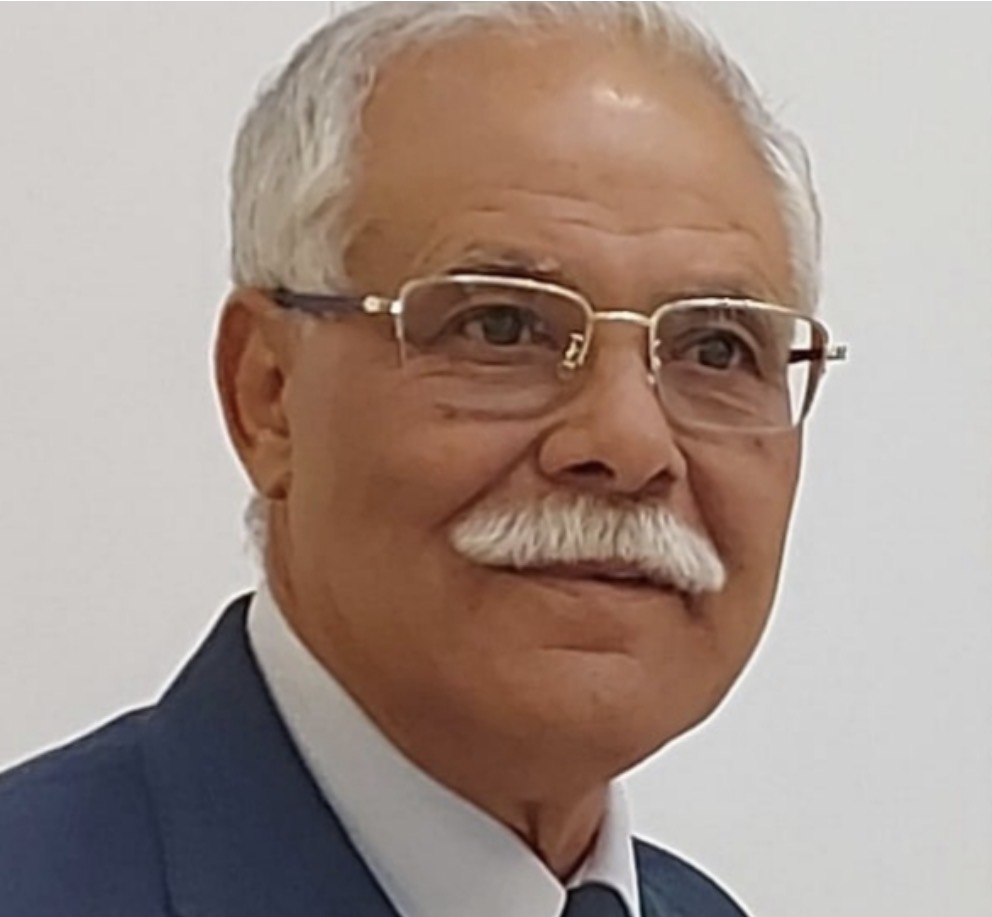
In a new development reflecting the worsening power struggle that has been ongoing for some time between Mohamed al-Menfi, head of Libya’s Presidential Council, and Abdelhamid Dbeibah, prime minister of the Government of National Unity controlling western Libya, Menfi did not hesitate to hint at a “peaceful movement” protected by the state as a solution to confront those who do not respect “established norms.”
This comes amid rising political and security tensions in western Libya, in a scene that appears to be rapidly sliding toward confrontation, given the fragile balance of power in Tripoli and most of the western region, which is controlled by a complex system of armed militias and shifting alliances.
Threat of a “peaceful movement” and implicit warnings
In a post on his X account late Friday night, Menfi expressed his firm rejection of “restricting presidential powers to a limited protocol framework,” stating:
“When presidential powers are confined to a limited protocol framework, the reform project and the fight against corruption and wrongdoing are restricted.”
In language carrying implicit threats, he added:
“With those who do not respect established norms or the spirit of the law, and who selectively apply its texts, the options become difficult: between the logic of force, the force of law through new legislation to correct distortions, or a peaceful movement protected by the state.”
Foreign Ministry crisis and overstepping of authority
This threat pushes Libya’s political crisis closer to a new turning point centered on a power struggle that became public last Sunday, when Menfi sent a letter to Dbeibah requesting the suspension of Taher al-Baour, who was tasked with managing the Foreign Ministry.
Menfi stated that the assignment “within its administrative limits does not grant representative status and does not authorize engaging in activities beyond managing office and organizational matters.” He added that Baour’s external communications constitute “an تجاوز of authority” that could disrupt official channels and create confusion in Libya’s diplomatic stance.
He emphasized that, under his constitutional mandate, he is responsible for ensuring unified external representation of the state, and therefore decided to suspend Baour from performing such duties and nullify any actions related to sovereign functions.
Government reshuffle and Dbeibah’s response
Menfi based his demand on constitutional powers, but observers pointed to underlying motives related to influence and power balances, including Baour’s earlier refusal to extend the mandates of ambassadors close to Menfi.
Last Wednesday, Menfi again criticized the cabinet reshuffle carried out by Dbeibah in March, which kept Baour in his position, describing it as being outside legal and constitutional frameworks and potentially subject to legal challenges.
He stressed that “all actions taken by appointed ministers have no legal effect until they take the official oath.” In response, Dbeibah issued a circular instructing ambassadors and heads of missions not to deal with any official correspondence coming from internal state bodies outside the Foreign Ministry.
He stated that any official communication with administrative, financial, or legal consequences must exclusively go through the Foreign Ministry, holding mission heads fully responsible for compliance.
Diplomatic moves and defiance of decisions
Dbeibah affirmed that the ministry would deal firmly with any violations to ensure unified diplomatic work.
On the same day, it was announced that Taher al-Baour visited Moscow and met with Sergey Lavrov, in clear defiance of Menfi’s request.
According to the statement, Baour presented a briefing on developments in Libya, and both sides stressed the importance of dialogue as a strategic solution to crises, while respecting sovereignty and territorial integrity.
Conflict within the military leaders
Amid this situation, Menfi, as supreme commander of the armed forces, moved to try to remove Major General Salah al-Namroush from his position as commander of the western coastal military zone and appoint another figure loyal to him.
However, Namroush blocked this move by mobilizing supporters within the army.
Officers in western Libya publicly rejected the appointment of any outsider to lead the military region, revealing the depth of the crisis between political leadership and military ranks.
Division within the Presidential Council
Sources close to Dbeibah’s government said the blocking of Namroush’s removal came with support from influential military figures.
Reports also indicate divisions within the Presidential Council: Moussa al-Koni supports Menfi, while Abdullah al-Lafi opposes him, preventing an official decision.
This has further complicated the political landscape in western Libya.
Scenarios open to escalation
Amid this escalating conflict between Menfi and Dbeibah, the situation in western Libya appears close to a deadlock, leaving the door open to multiple scenarios, some of which could deepen the chaos and political divisions that have persisted since 2011.
Jomei Guasmi is expert in international studies