+ A war against Iran is “a major danger”
+ Africa’s marginalization in U.S. strategy: from development partnership to a “theatre of rivalries”
By Kamal Ben Younes
Journalist, analyst
Expert in geostrategic studies
The risks of a new war involving the United States and its “partners” in the Middle East in general, and against Iran in particular, are increasing despite ongoing diplomatic calls for restraint. Escalations are complicating the situation across the world at a time when economic difficulties and environmental transformations are becoming more dangerous.
These escalations are strengthening the position of the far right and extremist movements within different camps in global capitals, within NATO circles, in the Greater Middle East, in Africa, and in Israel.
At a time when the African Union is preparing to organize its 39th summit, development prospects are shrinking in many countries of the Arab-Islamic world, the Global South, and especially in Africa.
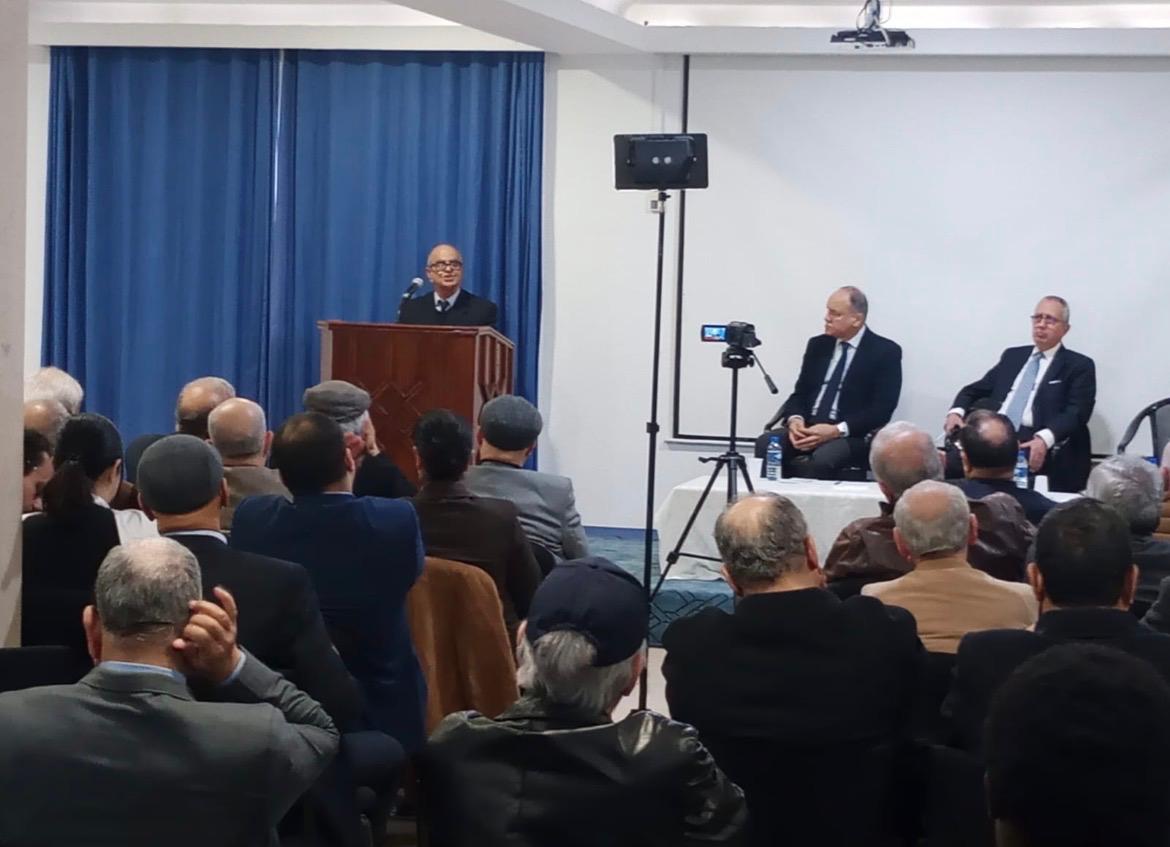
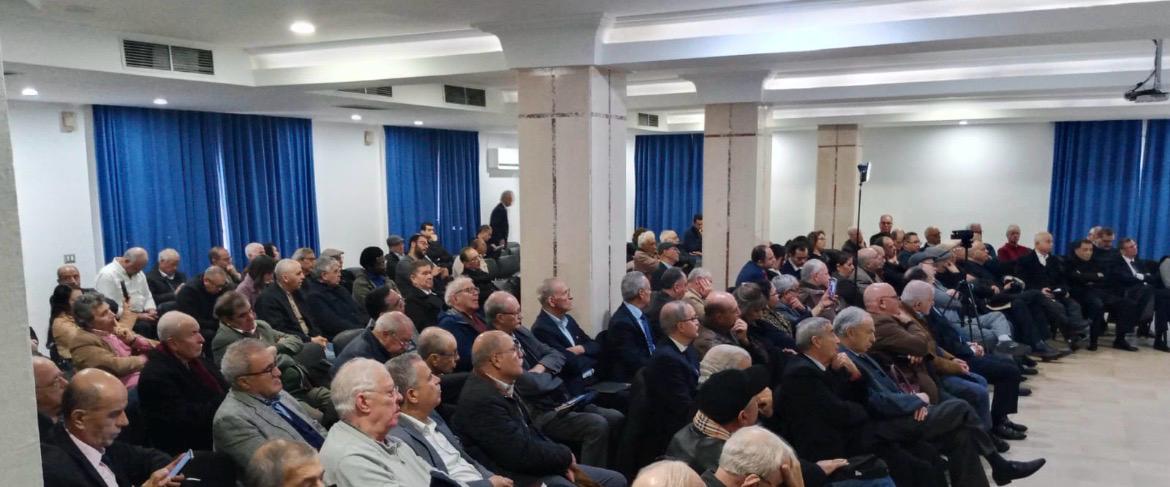
To discuss these challenges and put forward practical suggestions for major national, regional, and international decision-makers, an important conference-debate was organized on Saturday, February 7, at the headquarters of the Association of Alumni of the National School of Administration in Tunis. The event brought together dozens of independent and official experts, academics, journalists, former army officers, ambassadors, and students preparing for diplomatic and economic careers.


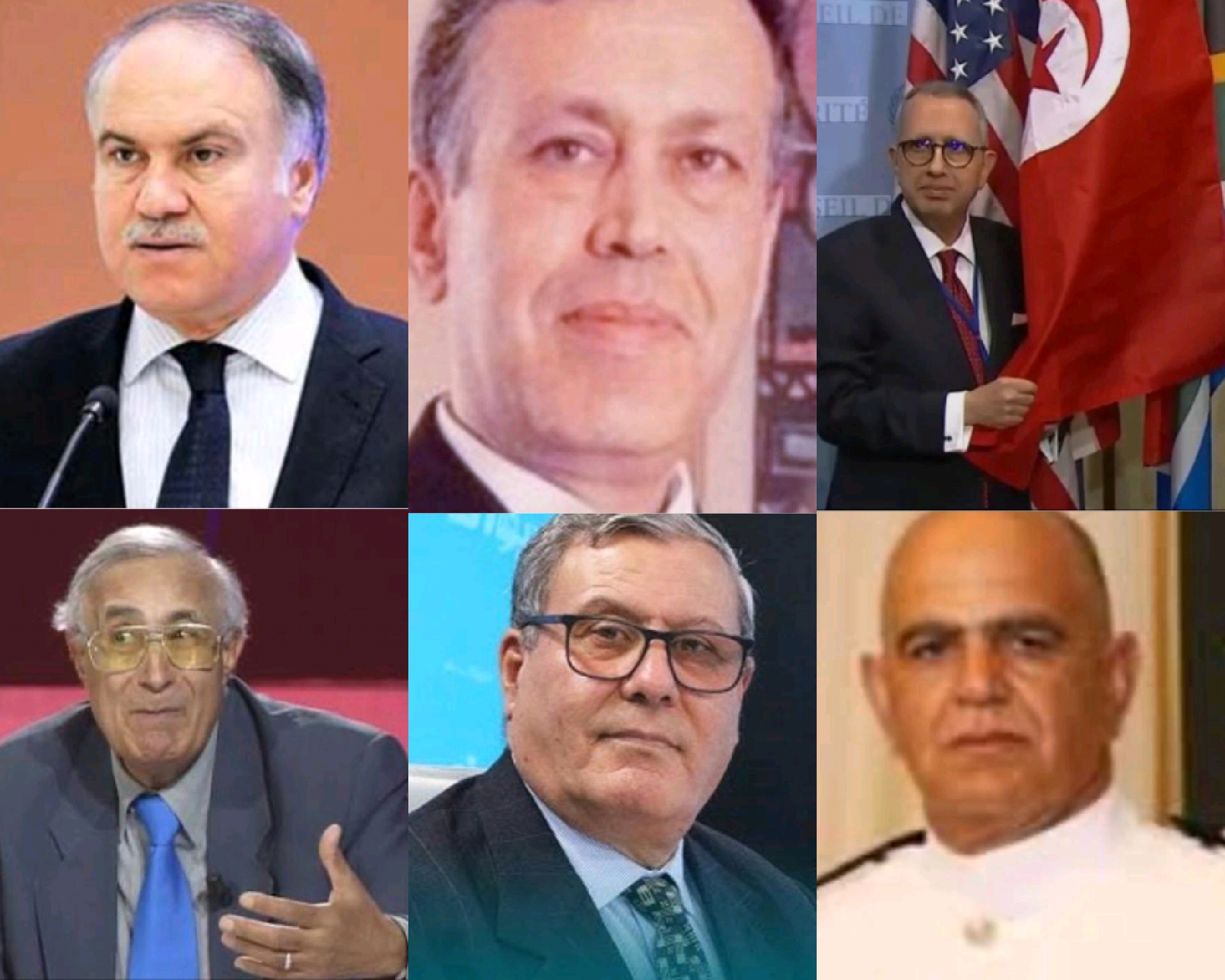
The two main speakers were the international military expert and admiral Ben Jemaa, and the former Minister and Strategic Affairs Adviser at Carthage, Ambassador Hatem Ben Salem. The debate was moderated by former Tunisian Ambassador to New York and expert in multilateral relations, Mocef Baati.
Currency wars between the dollar and other global currencies, new cyber warfare dynamics, as well as wars involving Washington and its allies, were among the main issues discussed and highlighted.
The publication of the 2022 National Security Strategy (NSS), followed by that of 2025, marks a notable evolution in the way the United States perceives the African continent. Although Africa has never been at the core of the U.S. global strategy, it nevertheless occupies a revealing place in Washington’s priorities and doctrinal changes. Between these two documents, the shift from a vision focused on partnership and development to an approach centered on strategic competition is particularly visible.
This transformation reflects less a disengagement than a repositioning: Africa is gradually becoming a space where rivalry between major powers, particularly with China and, to a lesser extent, Russia, is playing out.
Africa as a Partner in the 2022 NSS
The 2022 NSS was part of a liberal and multilateral approach. The African continent appeared as a future actor, driven by strong demographic growth, significant economic potential, and a growing political role in international institutions.
In this strategy, the United States emphasized several key areas: support for democracy and good governance, investment in economic development, cooperation in health and climate matters, and conflict prevention. Africa was described as a partner to be supported in its transformation, rather than as merely a space for security intervention.
The fight against terrorism, particularly in the Sahel and the Horn of Africa, remained an important pillar, but it was framed within a broader approach of stabilization and institutional strengthening. Washington sought to rely on regional organizations, international missions, and development programs to address the root causes of instability.
China was already mentioned as a strategic competitor on the continent, particularly in infrastructure and financing. However, the tone remained measured and diplomatic. The stated objective was to offer an alternative based on transparency, sustainability, and economic partnerships.
NSS 2025: Africa Integrated into Great-Power Rivalry
The 2025 NSS marks a change in tone and priorities. Africa is no longer viewed only as a development partner, but as a strategic space in a world structured by competition between major powers.
This shift does not mean that the continent becomes a central priority at the same level as the Indo-Pacific or Europe. But it is now perceived through a more geopolitical rather than normative lens. The dominant question is no longer only: “How can African development be supported?” but rather: “How can American influence be preserved in the context of growing Chinese and Russian presence?”
In this new reading, several elements gain importance. First, the issue of strategic resources. Critical minerals, essential for advanced technologies and the energy transition, are increasingly central to U.S. concerns. Africa, rich in cobalt, lithium, uranium, and other raw materials, becomes a key stake for American economic security.
Security also remains a central pillar, but with evolving methods. The 2025 NSS places greater emphasis on indirect support to local partners, military training, and intelligence cooperation, rather than direct interventions. The objective is to limit human and financial costs while maintaining influence.
Finally, competition with China becomes a structuring factor. The African continent is now clearly identified as a field where Beijing is consolidating its economic, political, and technological influence through infrastructure, loans, and massive investments.
From Democratic Discourse to Strategic Pragmatism
One of the most striking differences between the two strategies concerns the place given to political values. The 2022 NSS highlighted the promotion of democracy, the fight against corruption, and respect for human rights as pillars of the relationship with Africa.
In the 2025 NSS, these elements remain present but are less central. Priority appears to be given more to stability, security cooperation, and the reliability of partners. This repositioning reflects a more pragmatic approach, in which competition with other powers takes precedence over political transformation goals.
This shift is part of a broader logic: faced with China’s rise, the United States seeks to maintain its influence without imposing conditions perceived as too restrictive by certain African governments.
Africa: Still Secondary, Yet Strategically Essential
Neither in 2022 nor in 2025 is Africa placed at the center of U.S. strategy. Major priorities remain China, Russia, the Indo-Pacific, and national security. However, the perception of the continent is evolving: from a space of humanitarian engagement and development to a secondary but essential strategic arena.
This evolution reflects a growing awareness: the African continent will play a major role in the economic and political balances of the 21st century. Its demographic growth, natural resources, and diplomatic weight make it an unavoidable actor.
Conclusion: A Conceptual Shift Rather Than a Withdrawal
The comparison between the 2022 and 2025 NSS does not reveal an American withdrawal from Africa, but rather a redefinition of priorities. The shift from an approach centered on development and values to a more realistic approach focused on security and great-power competition constitutes the real turning point.
Africa now appears less as a space to be transformed and more as a space to be secured, influenced, and integrated into the broader U.S. global strategy in response to the rise of competing actors. This repositioning marks the continent’s entry into a new phase of its relationship with Washington: that of a key arena in global rivalry, where economic, security, and geopolitical stakes increasingly intersect.